

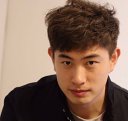
 YANG LI
· 3 previous affiliations
- Tencent (China)Since 2022
- Researcher · Since 2022
- Tencent Hunyuan3DCurrent
- Current
- The University of Tokyo2017–2022
- Assistant Professor · 2021–2022
- PhD student · 2017–2021
58 other authors named YANG LI: Yang Li (Beihang University · 221 papers), Yang Li (Shenzhen Research Institute of Big Data · 132 papers), Yang Li (SalesForce.com · 87 papers), Yang Li (Google (United States) · Google (United Kingdom) · Google DeepMind (United Kingdom) · 84 papers), Yang Li (Amazon (United States) · 71 papers), and 53 more
Research Overview
Yang Li focuses on 3D computer vision, non-rigid reconstruction, and 3D generative modeling. His early work addressed the challenges of tracking and reconstructing dynamic, deformable scenes from visual data. More recently, his research has shifted toward the automated generation of compositional, physics-grounded 3D assets and environments for interactive applications.
Research Trajectory
Currently a researcher at Tencent (Hunyuan3D), Li began his trajectory focusing on visual odometry and simultaneous localization and mapping (SLAM) in complex environments. He introduced hybrid approaches to visual odometry, such as Pose Graph optimization for Unsupervised Monocular Visual Odometry, which combined unsupervised learning with geometric loop closure to correct drift in large-scale estimation. Expanding into dynamic environments, he developed SplitFusion: Simultaneous Tracking and Mapping for Non-Rigid Scenes, a dense RGB-D SLAM framework that uses semantic segmentation to isolate rigid and non-rigid surfaces for independent tracking and reconstruction. To further improve non-rigid tracking, he integrated learnable optimizations into traditional solvers in Learning to Optimize Non-Rigid Tracking, utilizing deep features to help Gauss-Newton optimization avoid local minima during large non-rigid motions.
His focus subsequently deepened on the complexities of non-rigid motion estimation and point cloud registration. In 4DComplete: Non-Rigid Motion Estimation Beyond the Observable Surface, he addressed the challenge of modeling non-rigid dynamics in 4D scene reconstruction under partial observability. He then proposed hierarchical methods for motion decomposition, introducing the Non-rigid Point Cloud Registration with Neural Deformation Pyramid, which represents motion increments across a multi-layer perceptron architecture to handle high-complexity deformations. Continuing in the area of Hierarchical Refinement for Robust Point Cloud Alignment, he developed Lepard: Learning partial point cloud matching in rigid and deformable scenes. This work explicitly disentangled feature and 3D position spaces, utilizing 3D rotary positional embeddings to match partial point clouds effectively across both rigid and deformable contexts.
Transitioning toward broader 3D scene understanding and generative modeling, Li explored knowledge transfer from 2D foundation models. With collaborators, he contributed to 3D Segmenter: 3D Transformer based Semantic Segmentation via 2D Panoramic Distillation, advancing work in Volumetric Transformers for Long Range Dependencies in 3D Data by distilling latent knowledge from aligned 2D panoramas into 3D models. His research then expanded into the automated synthesis of high-fidelity environments. He co-developed BlockFusion: Expandable 3D Scene Generation using Latent Tri-plane Extrapolation, a diffusion-based approach that generates unbounded 3D scenes by extrapolating compressed latent tri-plane representations. Building on tri-plane architectures, he also contributed to Frankenstein: Generating Semantic-Compositional 3D Scenes in One Tri-Plane, a framework that simultaneously generates multiple separated, semantically meaningful shapes rather than a single unified mesh.
Most recently, his work has emphasized compositional, part-aware, and physics-integrated 3D generation. He introduced BAG: Body-Aligned 3D Wearable Asset Generation, a framework utilizing multiview diffusion to produce 3D garments and accessories that automatically conform to specific human body shapes and poses. He also participated in the development of ArtUV: Artist-style UV Unwrapping, an end-to-end deep learning framework that automates the creation of semantically sensible and space-efficient 2D texture maps. Extending generative models to interactive simulations, he collaborated on PhysForge: Generating Physics-Grounded 3D Assets for Interactive Virtual World, which combines vision-language models and diffusion to create assets complete with materials, mass, and functional joints. Further advancing structured 3D understanding, he contributed to Part-X-MLLM: Part-aware 3D Multimodal Large Language Model, formulating 3D tasks as executable programs based on part-level bounding boxes to enable precise, language-driven control over 3D editing and reasoning.
Current Directions
The most recent papers in the evidence address the generation of interactive, physics-grounded, and semantically structured 3D assets. This includes developing multimodal large language models that decompose 3D scenes into editable semantic parts for precise reasoning, as well as frameworks that generate simulation-ready objects endowed with kinematic properties and functional joints. Additionally, recent work investigates the automated generation of body-aligned wearable assets and professional-grade UV unwrapping, streamlining the pipeline for creating high-fidelity, compositional 3D environments for virtual reality and interactive applications.
Profile updated
Loading new papers…
Other researchers whose papers cluster into the same research directions — a proxy for overlapping technical interests and shared intellectual neighborhoods.
See something wrong? Report a mistake