

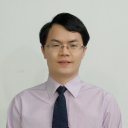
 Yang Feng
· 3 previous affiliations
- New York UniversitySince 2023
- Full Professor · Since 2023
- Columbia University2010–2019
- Associate Professor · 2016–2019
- Assistant Professor · 2010–2016
- Princeton University2006–2010
- PhD student · 2006–2010
5 other authors named Yang Feng: Yang Feng (Chinese Academy of Sciences · 128 papers), Yang Feng (Consortium for Clinical Research and Innovation, Singapore (CRIS) · Agency for Science, Technology and Research · 95 papers), Yang Feng (Nanjing University · 46 papers), Yang Feng (Microsoft (United States) · 13 papers), YANG FENG (10 papers)
Research Overview
Yang Feng focuses on the theoretical and methodological foundations of high-dimensional statistics, machine learning, and network models. His trajectory spans early work in variable screening for ultra-high dimensional data to the development of random subspace ensembles and covariate-adjusted block models. Currently, he investigates advanced statistical learning methods and their applications in biostatistics, including Alzheimer's disease prognosis and cancer subtype classification.
Research Trajectory
Yang Feng’s research began with a focus on the statistical challenges posed by ultra-high dimensional data, where the number of variables vastly exceeds the number of observations. In his early work, he addressed the limitations of standard statistical tools in these environments. As first author of Nonparametric Independence Screening in Sparse Ultra-High Dimensional Additive Models (2009), Feng developed methods to identify relevant predictors in massive datasets without relying on strict parametric assumptions. This foundational work in variable screening established a framework for handling complex, high-dimensional spaces, a theme that would persist throughout his career and extend into survival analysis and genomics.
By the mid-2010s, Feng’s methodological focus expanded to include graphical models and conditional dependence. A significant contribution during this period was A Projection Based Conditional Dependence Measure with Applications to High-dimensional Undirected Graphical Models (2015). Serving as first author, Feng introduced Projected Distance Covariance (P-DCov), a robust framework designed to test conditional independence in high-dimensional data. This approach allowed for the construction of accurate dependency graphs without the often-restrictive assumption that the underlying data follows a Gaussian distribution, thereby broadening the applicability of graphical models to more complex, real-world datasets.
Moving into the 2020s, Feng began exploring ensemble learning and model averaging techniques to improve prediction and classification in high-dimensional settings. In Nested model averaging on solution path for high‐dimensional linear regression (2020), he proposed combining model averaging with regularized estimators—such as lasso, elastic net, and SLOPE—along the solution path. This work provided a systematic investigation into how predictor ordering impacts nested model averaging, demonstrating favorable performance compared to competing methods.
Building on his expertise in variable selection and ensemble methods, Feng co-developed the Random Subspace Ensemble (RaSE) framework. In RaSE: A Variable Screening Framework via Random Subspace Ensembles (2021), he addressed a critical limitation of existing screening methods, which typically ranked predictors based solely on their marginal, individual contributions to the response. By evaluating the quality of random subspaces that cover multiple predictors simultaneously, the RaSE framework successfully captured variables that might be marginally independent but jointly dependent with the response.
Concurrently, Feng established a distinct research thrust in network data analysis and community detection. Recognizing that traditional network models often rely exclusively on edge information, he sought to integrate additional data modalities to improve detection accuracy. As the senior author on PCABM: Pairwise Covariates-Adjusted Block Model for Community Detection (2023), Feng introduced a generalization of the widely used stochastic block model (SBM). The PCABM incorporated pairwise covariate information, relaxing the strong assumption that all nodes within a community are stochastically equivalent, and provided maximum likelihood estimators for both the covariates and community assignments.
Throughout his trajectory, Feng has consistently translated his methodological advancements into collaborative biomedical applications. Operating as a middle author and statistical collaborator, he has participated in clinical studies applying high-dimensional analysis to oncology and neurodegeneration, such as investigating the association of hyperglycemia and molecular subclass on survival in IDH-wildtype glioblastoma.
Current Directions
The most recent papers in the evidence indicate that Feng is currently advancing ensemble classification frameworks while continuing his collaborative work in biostatistics. Methodologically, he is extending the RaSE framework to more complex classification tasks. As senior author of Multi-label Random Subspace Ensemble Classification (2024), Feng introduced mRaSE, which adapts the random subspace approach for multi-label classification. This work aggregates weak learners across optimally chosen subspaces to improve prediction performance while simultaneously providing model-free feature ranking. Recent publications also highlight ongoing methodological work in latent multilayer graphical models for complex, interdependent systems.
In parallel, Feng remains actively engaged in applied clinical research. Recent collaborative work investigates the associations between hippocampal transverse relaxation time (T2) and amyloid-beta accumulation in cognitively normal aging adults, contributing statistical expertise to the identification of early neuropathological changes in preclinical Alzheimer's disease. He also continues to participate in multi-institutional cohort analyses predicting outcomes in neuro-oncology, bridging the gap between rigorous statistical learning and impactful medical research.
Profile updated
Loading new papers…
Other researchers whose papers cluster into the same research directions — a proxy for overlapping technical interests and shared intellectual neighborhoods.
See something wrong? Report a mistake