

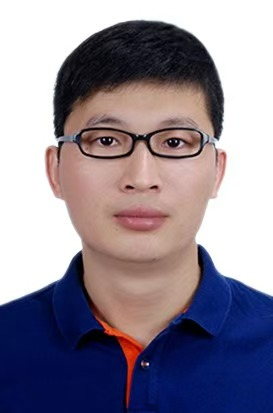
 Yanbei Liu
· 1 previous affiliation
- Tiangong UniversitySince 2019
- Associate Professor · Since 2019
Research Overview
Yanbei Liu focuses on graph neural networks, self-supervised representation learning, and intelligent healthcare applications. His early work explored semi-supervised learning and disentangled representations, gradually evolving toward sophisticated contrastive learning frameworks for complex graph structures. Currently, he investigates optimal transport methods for continual graph learning and the application of dual graph networks to medical image analysis.
Research Trajectory
Yanbei Liu's research trajectory began with investigations into multi-view learning and matrix factorization, as seen in his early work on Adaptive Multi-view Semi-supervised Nonnegative Matrix Factorization. By 2020, his focus shifted toward the structural complexities of graph neural networks (GNNs). He addressed the challenge of disentangled representation learning in graph convolutional networks by proposing Independence Promoted Graph Disentangled Networks, which aimed to separate independent latent factors—such as distinct social interactions or hobbies—that are often entangled in holistic neighborhood aggregations. During this period, he also explored community structures in graphs through Community enhanced graph convolutional networks.
Parallel to his foundational work in graph learning, Liu began applying these techniques to complex medical diagnostics. In 2021, he contributed to Incomplete multi-modal representation learning for Alzheimer's disease diagnosis, addressing the challenge of missing modalities in clinical data. This intersection of graph theory and healthcare deepened with the development of a Structural Attention Graph Neural Network for Diagnosis and Prediction of COVID-19 Severity in 2023. This framework integrated multi-source information, including chest CT features, latent lung structural distributions, and non-imaging patient data, to predict the conversion time from mild to severe cases.
Returning to core GNN architectures, Liu sought to improve semi-supervised learning by better utilizing unlabeled data. He introduced Self-Consistent Graph Neural Networks for Semi-Supervised Node Classification, a framework designed to enrich supervision information through the self-consistency of unlabeled nodes. Concurrently, he advanced the research direction of Preserving Semantic Identity in Graph Contrastive Learning. His work on Multi-Scale Subgraph Contrastive Learning challenged the standard assumption that augmented graph views inherently form positive pairs, demonstrating that multi-scale structural complexities require more nuanced semantic consistency checks. He expanded on these contrastive techniques in 2024 with Cross-scale contrastive triplet networks for graph representation learning.
Liu also addressed the ubiquity of heterogeneous graphs—networks containing multiple types of nodes and links. He developed HGBER: Heterogeneous Graph Neural Network With Bidirectional Encoding Representation, an unsupervised framework that moves beyond the simple concatenation of meta-paths to capture more complex, bidirectional relationships between different structural patterns.
In recent years, his methodological toolkit has expanded to include optimal transport and adversarial learning. To address class imbalance and low data utilization in pseudo-labeling, he proposed Graph Neural Networks With Adaptive Confidence Discrimination. He also refined graph contrastive learning further with Multiscale Subgraph Adversarial Contrastive Learning. His integration of optimal transport theory into self-supervised frameworks is evident in HGOT: Self-supervised Heterogeneous Graph Neural Network with Optimal Transport and, most notably, in SAOT: Self-Supervised Continual Graph Learning with Structure-Aware Optimal Transport. The latter framework mitigates "structural drift" in evolving data streams by aligning the global topology of a graph with its representation space. Alongside these theoretical advancements, Liu continues to push the boundaries of medical imaging, recently developing Label-Aware Dual Graph Neural Networks for Multi-Label Fundus Image Classification to capture explicit interaction similarities and pathological correlations in complex fundus diseases.
Current Directions
Recent work investigates the intersection of optimal transport theory and continual learning in dynamic graph environments. The most recent papers in the evidence address the challenge of structural drift—the distortion of node relationships over time—by using structure-aware optimal transport to align global graph topologies with representation spaces. Additionally, Liu is actively exploring adversarial contrastive learning techniques to refine multi-scale subgraph representations. In the applied domain, his current research focuses on intelligent healthcare, specifically utilizing label-aware dual graph architectures to model complex pathological correlations in multi-label medical image classification, such as early fundus disease diagnosis.
Profile updated
Loading new papers…
Other researchers whose papers cluster into the same research directions — a proxy for overlapping technical interests and shared intellectual neighborhoods.
See something wrong? Report a mistake