

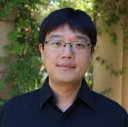
 Yanan Sui
· 3 previous affiliations
- Tsinghua UniversitySince 2019
- Associate Professor · Since 2021
- Assistant Professor · 2019–2021
- Stanford University2018–2019
- Postdoc · 2018–2019
- California Institute of Technology2011–2018
- Postdoc · 2016–2018
- PhD student · 2011–2016
Research Overview
Yanan Sui focuses on machine learning for control, safe optimization, and neuro-musculoskeletal modeling. His early research established foundational methods for safe exploration in sequential decision-making and Bayesian optimization. More recently, his work addresses the high-dimensional control of complex embodied systems, applying deep reinforcement learning to human-centered robotics and biomechanical simulation.
Research Trajectory
Sui’s early research established foundational approaches to sequential decision-making under uncertainty. In Clinical online recommendation with subgroup rank feedback, he addressed the multi-armed bandit problem in the context of online clinical experimental design, where strategies must be iteratively recommended based on noisy, difficult-to-quantify rewards. He subsequently expanded this focus to continuous optimization, introducing methods to balance exploration and exploitation while strictly adhering to safety constraints in Safe Exploration for Optimization with Gaussian Processes. Continuing in this vein, he developed frameworks for multi-dueling bandits with dependent arms in Multi-dueling Bandits with Dependent Arms and advanced the scalability of safe learning through Stagewise Safe Bayesian Optimization with Gaussian Processes.
By 2020, Sui’s work increasingly applied safe optimization and reinforcement learning to complex, safety-critical environments, contributing significantly to the research direction of Safe Reinforcement Learning with Zero Training Violations. With collaborators, he proposed the SNO-MDP algorithm in Safe Reinforcement Learning in Constrained Markov Decision Processes to optimize policies in constrained settings. He later directed research on scaling these guarantees to large-scale problems using local generalized linear function approximations in Safe Policy Optimization with Local Generalized Linear Function Approximations. During this period, he also explored how algorithms could learn from human input and behavior. He participated in developing COSPAR, an algorithm that personalizes robotic assistance by learning from user comfort feedback, detailed in Preference-Based Learning for Exoskeleton Gait Optimization. In the broader area of Stabilizing the Minimax Game of Adversarial Imitation Learning, he co-authored Imitation with Neural Density Models, which introduced a non-adversarial framework for imitation learning via density estimation of an expert's occupancy measure.
Parallel to his work in control, Sui contributed to diagnostic machine learning, particularly in the area of Universal Speech Biomarkers for Cross-Linguistic Clinical Diagnostics. In Parkinsonian {C, he collaborated on a high-accuracy classification system for Parkinson’s Disease using a Mandarin Chinese speech corpus. This research demonstrated that natural conversation provides a stronger diagnostic signal than repetitive tasks, advancing the fields of Spontaneous Speech as a Cognitive Stress Test and Feature Learning Directly from Raw Audio Waveforms.
In recent years, Sui has focused extensively on the intersection of reinforcement learning, biomechanics, and embodied intelligence, particularly addressing the challenge of controlling ultra-high-dimensional systems. To scale Bayesian optimization to massive datasets and complex tasks, his group introduced FocalBO in Scalable Bayesian Optimization via Focalized Sparse Gaussian Processes. Applying these scalable methods to biology, he led the development of DynSyn in DynSyn: Dynamical Synergistic Representation for Efficient Learning and Control in Overactuated Embodied Systems, a bio-inspired framework that groups actuators by dynamical correlation to master musculoskeletal models with hundreds of muscles. This directly advanced the research direction of How the Nervous System Resolves Motor Redundancy, a theme he continued in Motion Control of High-Dimensional Musculoskeletal Systems with Hierarchical Model-Based Planning, which achieved near-real-time, zero-shot control of a 700-muscle human model using hierarchical model-based planning.
Sui’s recent trajectory also emphasizes whole-body simulation and human-robot interaction. In Human Sensory-Musculoskeletal Modeling and Control of Whole-Body Movements, he directed the creation of SMS-Human, a comprehensive model integrating precise anatomical representations with multimodal sensory inputs. This foundational modeling enabled further breakthroughs in simulating balance and locomotion. His lab developed hierarchical control pipelines to study static balance, falling dynamics, and exoskeleton assistance in Bipedal Balance Control with Whole-body Musculoskeletal Standing and Falling Simulations, and created collaborative simulation frameworks for optimizing wearable robotics in Wearable Robotics Assisted Bipedal Balance and Locomotion Control with Whole-body Musculoskeletal Simulations. To bridge the gap between simulation and real-world clinical assessment, he also oversaw the development of an AI-enhanced virtual reality environment for monitoring mobility and cognition in the elderly, detailed in A Virtual Reality-Integrated System for Behavioral Analysis in Neurological Decline. Most recently, in Scalable Exploration for High-Dimensional Continuous Control via Value-Guided Flow, he introduced QFLEX, a reinforcement learning framework that uses probability flows to overcome the curse of dimensionality in continuous control tasks.
Current Directions
The most recent papers in the evidence indicate a strong focus on the intersection of deep reinforcement learning, biomechanical simulation, and wearable robotics. Current work investigates how to efficiently control ultra-high-dimensional continuous systems, such as human musculoskeletal models with hundreds of actuators, by replacing random exploration noise with value-guided probability flows. Additionally, recent research addresses the simulation of complex human behaviors—including bipedal locomotion, static balance, and falling—using comprehensive whole-body models that integrate multimodal sensory feedback. These simulated environments are increasingly being used to optimize the design and control parameters of exoskeletons and wearable robotics safely and efficiently, while parallel efforts employ virtual reality and motion capture to analyze neurological and age-related functional decline in ecologically valid settings.
Profile updated
Loading new papers…
Other researchers whose papers cluster into the same research directions — a proxy for overlapping technical interests and shared intellectual neighborhoods.
See something wrong? Report a mistake