

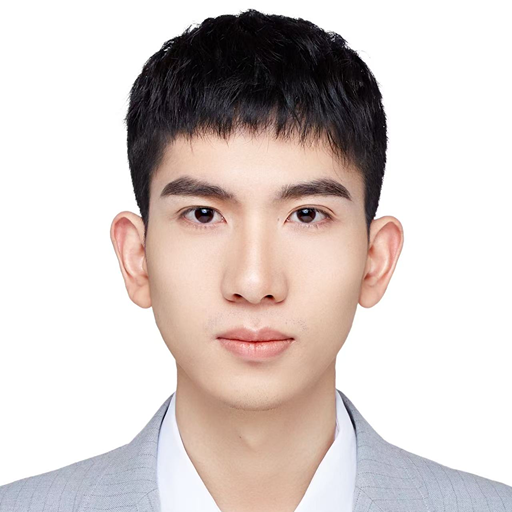
 Yan Zhuang
· 2 previous affiliations
- Tencent (China)Since 2026
- Researcher · Since 2026
- PhD student · 2022–2026
- MS student · 2019–2022
5 other authors named Yan Zhuang: Yan Zhuang (Nanjing University of Aeronautics and Astronautics · 202 papers), Yan Zhuang (University of Virginia · 2 papers), Yan Zhuang (2 papers), Yan Zhuang (Icahn School of Medicine at Mount Sinai · Mount Sinai · 1 paper), Yan Zhuang (Fudan University · 1 paper)
Research Overview
Yan Zhuang focuses on multimodal sentiment analysis, emotion recognition, and robust representation learning under missing data conditions. His work explores how to effectively fuse diverse modalities—such as audio, video, and text—while addressing practical challenges like structural missingness and semantic alignment. Recently, his research emphasizes uncertainty-aware fusion and knowledge distillation to improve multimodal learning in resource-constrained scenarios.
Research Trajectory
The core of Yan Zhuang’s research addresses the complexities of Multimodal Sentiment Analysis (MSA), particularly the challenges of aligning, fusing, and maintaining the robustness of representations drawn from diverse data streams. His early work focused on refining how neural networks process and combine these streams at different levels of granularity. In 2024, he introduced GLoMo: Global-Local Modal Fusion for Multimodal Sentiment Analysis. This work addressed a common limitation in MSA methodologies, which traditionally relied on global representations—such as the mean of all token representations—while overlooking the nuanced details present in local, consecutive token clusters. By integrating both global and local information, the framework provided a more sophisticated mechanism for modal fusion.
Building on the need for better representation alignment, his research expanded into contrastive learning techniques. In Multi-Level Contrastive Learning for Multimodal Sentiment Analysis (2025), he tackled the shortcomings of existing contrastive methods that were largely restricted to pairwise modalities and applied prior to fusion. This multi-level approach ensured the consistency of interactions across multiple modalities simultaneously, preserving overall sample consistency. Around the same time, he developed R3DG: Retrieve, Rank, and Reconstruction with Different Granularities for Multimodal Sentiment Analysis (2025). This framework intelligently processed audio and video information across multiple granularities to maintain high performance while significantly reducing computational costs, contributing directly to the research direction of Hierarchical Multi-Granularity Alignment for Video Understanding.
A major and defining theme in Zhuang’s subsequent work is the handling of missing modalities—a pervasive issue in real-world deployments where, for example, a video might lack an audio track. Rather than attempting to artificially reconstruct missing data from limited intra-sample information, he proposed novel mechanisms to leverage cross-sample cues. In Hyper-Modality Enhancement for Multimodal Sentiment Analysis with Missing Modalities (2025), he introduced a framework that borrows semantically relevant features from other samples within a training batch, utilizing an uncertainty-aware mechanism to build robust sentiment predictions. This methodology advances several interconnected research areas, including Uncertainty Aware Multimodal Fusion, Adaptive Learning for Structural Multimodal Missingness, and the broader domain of Semantic Collision and False Negatives in Contrastive Learning.
He further refined this approach in Intra-sample and Intra-modal Enhancement for Multimodal Sentiment Analysis with Missing Modalities (2025). This work explicitly addressed the impracticality of requiring full modality representations to guide the reconstruction process in resource-constrained environments, instead extracting modality-specific information from surrounding samples to compensate for missing inputs.
Beyond foundational MSA architectures, Zhuang has applied multimodal learning principles to broader affective computing and social media tasks. He explored predictive modeling in FAME: Fusion-Aware Multi-modal Ensemble for Social Media Popularity Prediction (2025). Additionally, in collaborative work on conversational AI, he participated in the development of Enhanced Emotion Recognition in Conversations Through Hybrid Context Encoding and Latent Dependency Mining (2025). This research addressed the two-stage paradigm of Emotion Recognition in Conversations (ERC), proposing methods to better capture intra-dialogue emotional continuity and untangle complex, latent emotional dependencies that standard language models struggle to detect.
Most recently, Zhuang has investigated knowledge distillation as a solution for the optimization instability caused by missing data. In CMAD: Correlation-Aware and Modalities-Aware Distillation for Multimodal Sentiment Analysis with Missing Modalities (2026), he introduced a unified distillation framework designed to enforce multi-level representation alignment. By preserving both feature similarities and high-order correlation structures between teacher and student models, the CMAD framework mitigates representation inconsistency under varying missing-modality conditions.
Current Directions
The most recent papers in the evidence indicate a sustained focus on the robustness and efficiency of multimodal learning systems, particularly when deployed in imperfect, real-world environments. A primary objective of this current work is developing frameworks that can maintain high predictive accuracy even when structural modalities are entirely missing or corrupted. To achieve this, recent research investigates advanced knowledge distillation techniques—specifically correlation-aware feature distillation—and uncertainty-aware fusion mechanisms. These approaches aim to stabilize model optimization and align representations without relying on complete data inputs or computationally expensive reconstruction processes. Additionally, recent collaborative efforts point toward an ongoing interest in the complexities of emotion recognition within conversational contexts, with a focus on better modeling latent emotional dependencies and semantic continuity across extended dialogues.
Profile updated
Loading new papers…
Other researchers whose papers cluster into the same research directions — a proxy for overlapping technical interests and shared intellectual neighborhoods.
See something wrong? Report a mistake