

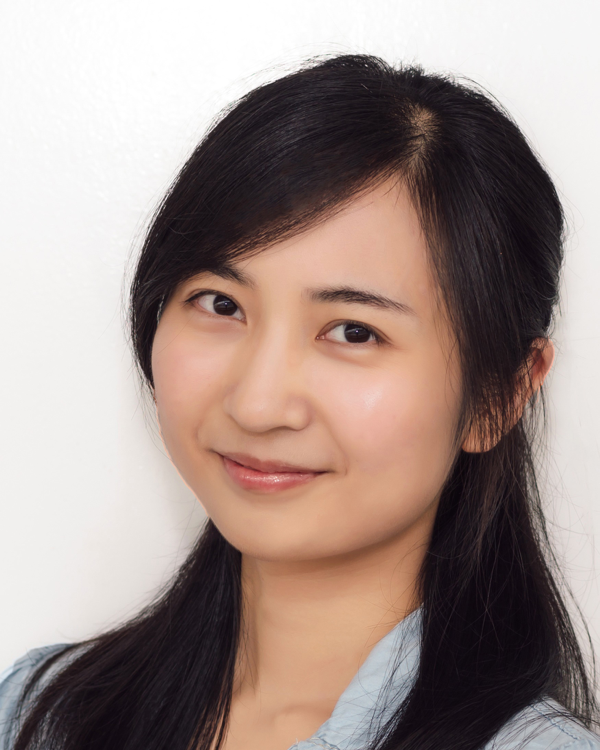
 Yan Wang
· 2 previous affiliations
- East China Normal UniversitySince 2020
- Full Professor · Since 2020
- Johns Hopkins University2017–2020
- Postdoc · 2017–2020
24 other authors named Yan Wang: Yan Wang (Macquarie University · 1,300 papers), Yan Wang (Nvidia (United States) · 145 papers), Yan Wang (Wayne State University · 136 papers), Yan Wang (Tsinghua University · 111 papers), Yan Wang (Tencent (China) · 49 papers), and 19 more
Research Overview
Yan Wang focuses on medical image analysis, semi-supervised learning, and computational pathology. His early research developed robust segmentation frameworks for multi-organ and tubular structures in CT scans, addressing challenges like label scarcity and low contrast. More recently, his work explores frequency-domain image deblurring, vision-language model reasoning, and neural operators for high-precision microscopic imaging.
Research Trajectory
Wang's early research included computer vision applications such as On Branded Handbag Recognition (2016), before establishing a primary focus on medical image analysis. By 2018, he was developing robust frameworks for segmenting complex anatomical structures in CT scans. To address the negative impact of annotation errors, he introduced a sample selection strategy based on a Relaxed Upper Confident Bound in Training Multi-organ Segmentation Networks with Sample Selection by Relaxed Upper Confident Bound. This approach intelligently filters challenging training samples to stabilize learning. He expanded on multi-organ segmentation by designing a two-stage organ-attention network with reverse connections, detailed in Abdominal multi-organ segmentation with organ-attention networks and statistical fusion. This work leveraged local structural similarity across viewing directions to improve accuracy, contributing to the broader area of Delineating Ambiguous Boundaries in Low-Contrast Images. He also addressed the geometric challenges of segmenting vessels and cylinder-like shapes in Deep Distance Transform for Tubular Structure Segmentation in CT Scans, combining classical distance transforms for skeletonization with modern deep learning to capture cross-sectional radii.
A major theme in Wang's subsequent work is mitigating the need for exhaustive, voxel-level annotations in clinical datasets. In 2021, he proposed the Inductive Attention Guidance Network (IAG-Net) in Learning Inductive Attention Guidance for Partially Supervised Pancreatic Ductal Adenocarcinoma Prediction. This approach jointly learned a global image-level classifier and a local segmentation model using only partial supervision—relying on cheaper image-level tags to offset the lack of costly per-voxel labels—advancing the research direction of Label Efficient Semi-Supervised Medical Image Segmentation. He continued to direct research in this area, addressing distribution mismatches between labeled and unlabeled data. In Bidirectional Copy-Paste for Semi-Supervised Medical Image Segmentation, his team utilized a Mean Teacher architecture to encourage consistent semantics across data types in both inward and outward directions. Similarly, MagicNet: Semi-Supervised Multi-Organ Segmentation via Magic-Cube Partition and Recovery introduced a data augmentation strategy guided by prior anatomy—specifically the fixed relative locations and variable sizes of organs—to regularize training and reduce mismatch.
Parallel to his medical imaging research, Wang has investigated the fundamental robustness and optimization of deep learning systems. He conducted a comprehensive analysis of performance degradation caused by environmental inconsistencies in SysNoise: Exploring and Benchmarking Training-Deployment System Inconsistency, revealing the limited effectiveness of standard robustness techniques against deployment noise. He has also explored multimodal reasoning and continual learning. In Causal-CoG: A Causal-Effect Look at Context Generation for Boosting Multi-Modal Language Models, his group developed a prompting strategy that generates and engages contextual information to improve the factual precision of visual question answering. To address open-domain continual learning for vision-language models, his team introduced DPeCLIP in Boosting Open-Domain Continual Learning via Leveraging Intra-domain Category-aware Prototype, utilizing category-aware prototypes to identify new tasks and preserve learned knowledge without catastrophic forgetting.
Another significant branch of Wang's recent trajectory focuses on image deblurring and computational pathology. Moving away from purely spatial end-to-end architectures, he investigated frequency-domain representations for blur patterns in Intriguing Findings of Frequency Selection for Image Deblurring, demonstrating that simple frequency selection can reveal critical information about blur direction and level. This insight informed the development of LoFormer: Local Frequency Transformer for Image Deblurring, which models long-range dependencies efficiently in the frequency domain while preserving fine-grained details. Applying advanced architectures to high-precision pathology, his lab developed SpecTr: Spectral Transformer for Microscopic Hyperspectral Pathology Image Segmentation to model intra- and inter-scale contexts in hyperspectral data, capturing biochemical properties invisible to the naked eye. They also tackled the cost of manual annotations in histopathology with Advancing Stain Transfer for Multi-Biomarkers: A Human Annotation-Free Method Based on Auxiliary Task Supervision, generating virtual immunohistochemistry images from standard H&E stains by using automatically generated masks from consecutive sections. Most recently, his team adapted Discontinuous Galerkin principles to neural operators in Discontinuous Galerkin Neural Operator for Pathology Defocus Deblurring, effectively modeling spatially varying and discontinuous optical blur in microscopic images.
Current Directions
The most recent work in the evidence points toward two primary research directions. First, Wang is advancing computational pathology through the application of sophisticated neural architectures to microscopic imaging. This includes developing annotation-free methods for virtual stain transfer across multi-biomarkers and utilizing neural operators—specifically those inspired by Discontinuous Galerkin methods—to resolve spatially varying optical blur in high-resolution pathology slides. Second, he is investigating the reasoning capabilities and adaptability of vision-language models. This research focuses on improving the factual precision of multimodal models through causal context generation and designing prototype-based methods to stabilize open-domain continual learning without catastrophic forgetting.
Profile updated
Loading new papers…
Other researchers whose papers cluster into the same research directions — a proxy for overlapping technical interests and shared intellectual neighborhoods.
See something wrong? Report a mistake