

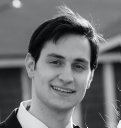
 Yair Schiff
· 7 previous affiliations
- Cornell TechSince 2022
- Graduate Research Assistant · Since 2023
- Graduate Teaching Assistant · 2022–2023
- Cornell UniversityCurrent
- Current
- PhD student · 2022
- Nvidia (United States)Since 2026
- PhD Intern · Since 2026
- Student Researcher · 2023
- IBM2019–2022
- Cognitive Software Developer · 2019–2022
- New York University2017–2019
- MS student · 2017–2019
- University of Pennsylvania2010–2014
- Undergrad student · 2010–2014
Research Overview
Yair Schiff focuses on discrete diffusion models, genomic foundation models, and the evaluation of deep neural network generalization. His early work explored topological data analysis for molecular generative models and robust measures of network performance. More recently, his research centers on advancing masked diffusion models for discrete data and developing long-range, equivariant architectures for biological sequence modeling.
Research Trajectory
Yair Schiff's research trajectory begins in the domain of molecular generative models, where he investigated how to evaluate and improve the latent spaces of networks trained on chemical data. In Characterizing the Latent Space of Molecular Deep Generative Models with Persistent Homology Metrics and its accompanying preprint, he utilized Topological Data Analysis (TDA) to demonstrate that models trained on 1D text strings (SMILES) can consistently capture complex 3D structural information. This line of inquiry continued with Augmenting Molecular Deep Generative Models with Topological Data Analysis Representations, which explicitly integrated TDA representations into the generative process to improve molecular design.
Concurrently, he explored broader questions of model evaluation and robustness. In Predicting Deep Neural Network Generalization with Perturbation Response Curves, he introduced a framework to assess network generalization by measuring accuracy changes across varying levels of training sample perturbation, providing a more robust alternative to standard generalization metrics.
By 2024, his focus expanded to complex sequence modeling and physical systems. He developed methods for emulating chaotic systems, such as weather and fluid dynamics, in DySLIM: Dynamics Stable Learning by Invariant Measure for Chaotic Systems. This work introduced a regularization framework that forces neural networks to respect a system's long-term statistical distribution, preventing trajectory blow-up and improving physical realism.
In the domain of genomics, he addressed the challenges of modeling long-range token interactions and the reverse complementarity of DNA. He introduced the Caduceus architecture, detailed in Caduceus: Bi-Directional Equivariant Long-Range DNA Sequence Modeling and an earlier workshop presentation. Built on the efficient Mamba architecture, Caduceus incorporates bi-directionality and reverse-complement equivariance directly into the model, advancing the broader area of Symmetric Weight Tying for Efficient Representation Learning and enabling strong performance on long-range genomic tasks.
A major theme of his recent trajectory is the advancement of discrete diffusion models. In Simple Guidance Mechanisms for Discrete Diffusion Models (first shared as a 2024 preprint), he adapted classifier-free and classifier-based guidance for discrete data domains like DNA and molecules. This work contributed to the research directions of Unified Variational Objectives for Discrete Diffusion and Scaling Discrete Diffusion for Large Language Models.
Building on this foundation, he addressed the error accumulation problem inherent in masked diffusion models (MDMs). In Learn from Your Mistakes: Self-Correcting Masked Diffusion Models (and its associated artifact), he proposed the ProSeCo framework. This approach trains MDMs to perform both unmasking and correction, allowing the model to revise previously generated tokens and significantly advancing the area of Iterative Token Revision for Masked Diffusion Models. Further refining the theoretical grounding of MDMs, he collaborated on DUEL: Exact Likelihood for Masked Diffusion via Deterministic Unmasking. This work unified leading MDM sampling strategies to enable exact likelihood computation under the test-time distribution, providing MDMs with proper perplexity metrics for the first time.
Current Directions
The most recent papers in the evidence address the limitations and theoretical foundations of masked diffusion models (MDMs) for discrete generation. A primary focus is on iterative refinement and self-correction, enabling models to revise previously generated tokens to prevent error accumulation during parallel decoding. Additionally, recent work investigates the mathematical properties of MDM sampling strategies, seeking to establish exact likelihood computations and proper perplexity metrics that align with test-time distributions rather than relying on loose bounds.
Profile updated
Loading new papers…
Other researchers whose papers cluster into the same research directions — a proxy for overlapping technical interests and shared intellectual neighborhoods.
See something wrong? Report a mistake