

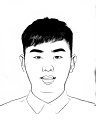
 Xuri Ge
· 2 previous affiliations
- Shandong UniversitySince 2024
- Assistant Professor · Since 2024
- University of Glasgow2020–2024
- PhD student · 2020–2024
Research Overview
Xuri Ge focuses on multimodal information retrieval, computer vision, and efficient representation learning for foundation models. His trajectory spans early work in image captioning and cross-modal alignment to recent architectures that drastically reduce the computational overhead of large-scale recommendation and search systems. Currently, he investigates retrieval-augmented generation, multi-objective recommendation, and parameter-efficient fine-tuning for vision-language models.
Research Trajectory
His early research addressed the semantic gaps in multimedia content, focusing on how visual and textual information can be more effectively aligned. He developed Colloquial Image Captioning (2019), introducing a topic-guided multi-discriminator model designed to capture colloquialism and sentiment diversity in image descriptions, moving beyond plain, literal caption generation. He subsequently advanced cross-modal alignment in Structured Multi-modal Feature Embedding and Alignment for Image-Sentence Retrieval (2021). This work constructed intrinsic semantic structures to bridge visual regions and textual words, seeking explicit inter-modal structural correspondences to improve retrieval performance.
As he completed his doctoral studies at the University of Glasgow and transitioned to an academic faculty role at Shandong University, his focus shifted heavily toward the efficiency and scalability of foundation models in real-world systems. Contributing to the area of Bridging the Temporal Modality Gap in Multimodal Learning, he introduced IISAN: Efficiently Adapting Multimodal Representation for Sequential Recommendation with Decoupled PEFT (2024). This framework decoupled trainable parameters from frozen backbones, drastically cutting GPU memory usage and accelerating training while maintaining accuracy, aligning with the broader direction of The Semantic Primacy of Text in Multimodal Recommendation. Concurrently, he addressed the challenges of long-document search in CFIR: Fast and Effective Long-Text To Image Retrieval for Large Corpora (2024). By breaking documents down into entities and summaries and utilizing a decoupled encoder architecture, this work significantly reduced retrieval times, advancing research directions such as Decoupled Dual Encoders for Efficient Multimodal Retrieval and Multi-Vector Embeddings for Multi-Aspect Information Retrieval.
In 2025, he continued to refine cross-modal architectures for fine-grained understanding. He developed Hire: Hybrid-Modal Interaction with Multiple Relational Enhancements for Image-Text Matching., which explicitly models both intra-modal and inter-modal relationships to achieve more robust image-text correspondence. Similarly, The DenseCap-Guided Attention Network For Image-Text Matching utilized fine-grained semantic cues from dense captioning to prevent mismatches between images and texts at a granular level.
Directing research on parameter-efficient adaptation, he oversaw the development of CROSSAN: Towards Efficient and Effective Adaptation of Multiple Multimodal Foundation Models for Sequential Recommendation (2025). This plug-and-play framework employed a Mixture of Modality Expert Fusion mechanism to leverage multiple heavy-duty models simultaneously without exploding computational costs. In a related effort to optimize vision-language models, his group guided work on Double-Filter: Efficient Fine-tuning of Pre-trained Vision-Language Models via Patch&Layer Filtering (2025). Expanding into reinforcement learning for sequential recommendation, he oversaw research exploring Beyond Accuracy: Decision Transformers for Reward-Driven Multi-Objective Recommendations (2025). This approach addressed the instability of traditional offline reinforcement learning by dynamically adjusting objective weights during inference to balance conflicting user experience metrics like diversity and novelty.
Exploring generative AI applications, he developed LLMPopcorn: An Empirical Study of LLMs as Assistants for Popular Micro-video Generation (2025), a framework combining Retrieval-Augmented Generation (RAG) and Chain-of-Thought reasoning to automate the creation of engaging short-form video content. Recognizing the community's need for scalable models, he also organized The 1st EReL@MIR Workshop on Efficient Representation Learning for Multimodal Information Retrieval at The Web Conference 2025, addressing the critical bottleneck that while large multimodal models are powerful, they are often too massive for real-world production.
Most recently, his collaborative efforts have expanded into educational technology and automated bidding systems. In 2026, he directed work on LLM supporting knowledge tracing leveraging global subject and student specific knowledge graphs, integrating large language models with structured knowledge representations. Additionally, he participated in developing DRIVE: Distributional and Retrieval-Augmented Bidding with Value Evaluation (2026), a framework utilizing multimodal Gaussian Mixture Models and historical bid retrieval to overcome the "average action" trap in offline auto-bidding, contributing to the broader area of Efficient Representations for Large Scale Vector Retrieval.
Current Directions
The most recent papers in the evidence indicate a strong focus on scaling multimodal foundation models for real-world deployment through parameter-efficient fine-tuning and decoupled architectures. Recent work investigates the integration of Large Language Models with structured knowledge graphs for domain-specific applications like knowledge tracing, as well as the use of retrieval-augmented generation to enhance automated content creation and decision-making processes. Furthermore, his research addresses multi-objective optimization in sequential recommendation, utilizing decision transformers and reinforcement learning to balance diverse user experience metrics beyond simple accuracy.
Profile updated
| Paper | Venue | Year |
|---|---|---|
| 3SHNet: Boosting image-sentence retrieval via visual semantic-spatial self-highlightingGitHubXuriGe1995/ | Information Processing & Management | 2024 |
| IISAN: Efficiently Adapting Multimodal Representation for Sequential Recommendation with Decoupled PEFTGitHubGAIR-Lab/ | SIGIR | 2024 |
Loading new papers…
Other researchers whose papers cluster into the same research directions — a proxy for overlapping technical interests and shared intellectual neighborhoods.
See something wrong? Report a mistake