

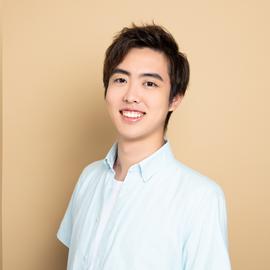
 Xuran Pan
· 1 previous affiliation
- Tsinghua UniversityCurrent
- Current
- PhD student · 2018–2024
- Undergrad student · 2014–2018
Research Overview
Xuran Pan focuses on model architecture design, 3D computer vision, and graph neural networks. His trajectory spans from early work in semantic data augmentation and 3D point cloud processing to the development of highly efficient vision transformers. Most recently, his research addresses multimodal large language models and generalized visual segmentation.
Research Trajectory
His early research explored techniques for improving deep network generalization and processing irregular 3D data. In 2019, he contributed to Implicit Semantic Data Augmentation for Deep Networks, proposing an online method to translate training samples along semantic directions within deep feature spaces. Moving into 3D computer vision, he introduced 3D Object Detection With Pointformer in 2021. This work presented a transformer backbone specifically designed to learn context-dependent region features from irregular 3D point clouds, advancing the broader research direction of Attention Based Geometric Refinement for 3D Point Clouds.
In 2022, his focus expanded significantly into foundational model architecture design, particularly bridging the gap between convolutions and self-attention. He developed ACmix in On the Integration of Self-Attention and Convolution, demonstrating that the two paradigms share a computational core and can be elegantly combined with minimal overhead. Concurrently, he collaborated on Vision Transformer with Deformable Attention, which mitigates the excessive memory costs of dense attention by introducing data-dependent sparse attention, contributing to the area of Deformable Attention for Adaptive Visual Sampling.
Beyond core architectures, his 2022 work also explored resource-constrained 3D modeling, multimodal representation learning, and graph structures. He addressed the challenge of sparse inputs in neural radiance fields with ActiveNeRF: Learning Where to See with Uncertainty Estimation, incorporating uncertainty estimation and active learning to improve novel view synthesis. To enhance multimodal pre-training, he introduced Knowledge-CLIP in Contrastive Language-Image Pre-Training with Knowledge Graphs, a framework that injects semantic connections from knowledge graphs into the pre-training process. Additionally, he proposed a flexible graph attention mechanism in PLAM: A plug-in module for flexible graph attention learning.
In 2023, his architectural research concentrated heavily on optimizing Vision Transformers (ViTs) for efficiency and scalability. He addressed challenges in the research area of The Low-Rank Bottleneck in Efficient Attention by proposing FLatten Transformer: Vision Transformer using Focused Linear Attention, which achieves linear complexity without sacrificing expressiveness. He further refined local attention mechanisms in Slide-Transformer: Hierarchical Vision Transformer with Local Self-Attention, offering an efficient alternative to sparse global or windowed attention. Building on his earlier work with deformable attention, he introduced DAT++: Spatially Dynamic Vision Transformer with Deformable Attention, enabling ViTs to adaptively select spatial regions of interest rather than relying on rigid, hand-crafted attention patterns.
His most recent work in 2024 continues to balance computational efficiency with complex multimodal reasoning. He participated in a comparative analysis of attention mechanisms for high-resolution images in Bridging the Divide: Reconsidering Softmax and Linear Attention. Expanding into complex vision-language tasks, he collaborated on GSVA: Generalized Segmentation via Multimodal Large Language Models. This work addresses Generalized Referring Expression Segmentation (GRES) by leveraging multimodal large language models to handle multiple targets and absent referents, advancing research directions such as Reasoning Segmentation with Multimodal Large Language Models and Absence-Aware Training to Suppress Hallucinations. Finally, he continued his foundational work on graph structures with A unified framework for convolution-based graph neural networks.
Current Directions
The most recent papers in the evidence indicate a dual focus on scaling efficient attention mechanisms and advancing multimodal reasoning. One major direction involves optimizing Vision Transformers for high-resolution processing by bridging the gap between softmax and linear attention, ensuring computational efficiency without sacrificing representation power. Concurrently, recent work investigates generalized visual segmentation, utilizing multimodal large language models to parse complex spatial relationships and handle challenging scenarios like multi-target or absent-referent expressions. He also maintains an ongoing interest in unifying convolution-based approaches within graph neural networks.
Profile updated
Loading new papers…
Other researchers whose papers cluster into the same research directions — a proxy for overlapping technical interests and shared intellectual neighborhoods.
See something wrong? Report a mistake