

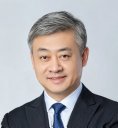
 Xuelong Li
· 4 previous affiliations
- Northwestern Polytechnical UniversitySince 2018
- Full Professor · Since 2018
- China TelecomSince 2024
- Full Professor · Since 2024
- Full Professor · 2009–2018
- Birkbeck, University of London2004–2009
- Reader · 2004–2009
1 other author named Xuelong Li: Xuelong Li (1 paper)
Research Overview
Xuelong Li focuses on artificial intelligence, imaging, and image processing, with a particular emphasis on bridging computer vision and embodied robotics. His trajectory spans foundational work in dimensionality reduction and multiview clustering to recent advances in generative modeling and reinforcement learning for autonomous systems. Currently, his research addresses the integration of large language models with physical control and the optimization of reasoning agents.
Research Trajectory
Li’s early research addressed foundational challenges in pattern classification, image retrieval, and dimensionality reduction. In the mid-2000s, he explored ensemble methods for multimedia information management, such as in Asymmetric Bagging and Random Subspace for Support Vector Machines-Based Relevance Feedback in Image Retrieval. He subsequently collaborated on systematic frameworks for spectral analysis-based algorithms. This included work on Geometric Mean for Subspace Selection, which addressed the tendency of linear dimensionality reduction steps in Fisher's linear discriminant analysis to merge close classes, and Patch Alignment for Dimensionality Reduction, which provided a unified framework for understanding the common properties of various dimensionality reduction algorithms.
In 2010, he introduced Deterministic Column-Based Matrix Decomposition, offering a deterministic alternative to random sampling for matrix approximation that closely approximates singular value decomposition. During this period, he also contributed to applied image processing, participating in the development of Color to Gray: Visual Cue Preservation., an algorithm designed to maintain important visual cues when transforming color images into grayscale formats.
Over the subsequent years, his focus expanded to scalable graph fusion and clustering, contributing to the broader area of Scaling Graph Manifold Learning with Anchor Points. He developed Multiview Clustering: A Scalable and Parameter-Free Bipartite Graph Fusion Method, which coalesces multiple view-wise graphs in a self-supervised manner without intractable hyperparameters. He later oversaw the development of Fast Clustering With Anchor Guidance, a model that utilizes the prior knowledge of bipartite graphs to handle large-scale clustering problems and out-of-sample extensions efficiently.
Li has held professorships at the Chinese Academy of Sciences and Northwestern Polytechnical University before becoming CTO of China Telecom and director of TeleAI. Under his direction, his research group has increasingly focused on embodied artificial intelligence, robotic control, and the intersection of large language models (LLMs) with physical environments. Much of this recent work falls within the area of Bridging the Embodiment Gap in Robot Learning. His lab developed Kinematic-aware Prompting for Generalizable Articulated Object Manipulation with LLMs, advancing the research direction of Zero-Shot Sim-to-Real Transfer for Robotic Control by encoding an object's kinematic structure into text to generate precise 3D motion waypoints. They also explored the direction of Video Generation as a Foundation for Robot Planning with Learning an Actionable Discrete Diffusion Policy via Large-Scale Actionless Video Pre-Training, a framework that pre-trains a discrete diffusion model on human videos to guide real-world robotic actions through imagined future outcomes. In humanoid robotics, his team introduced KungfuBot: Physics-Based Humanoid Whole-Body Control for Learning Highly-Dynamic Skills, contributing to the broader area of Bridging the Exteroceptive Sensing Gap in Robotic Locomotion by combining motion-filtering with adaptive tracking to enable robots to master highly dynamic skills like martial arts. Expanding their simulation and embodied agent efforts, Li's group also introduced $γ$-Scape: An Agent-Centric World for Mobile Embodied Intelligence, providing a persistent simulation platform and task benchmark that pairs executable programs and contact-rich interaction feedback to support mobile manipulation and recursive self-improvement.
Most recently, Li's group has advanced the architecture and optimization of LLMs and generative models. In the domain of multi-agent systems, his team developed HAMLET: A Hierarchical and Adaptive Multi-Agent Framework for Live Embodied Theatrics, which combines structured narrative planning with an embodied performance engine to transform prompts into real-time interactive dramas. To improve the efficiency of LLM agents interacting with external tools, they introduced AgentVocab: Structure-Aware Vocabulary Adaptation for Efficient LLM Agents, which adapts model vocabularies to better represent structured tool-calling patterns. They also addressed model security with Metis: Learning to Jailbreak LLMs via Self-Evolving Metacognitive Policy Optimization, treating red-teaming as an iterative, inference-time optimization problem.
In generative modeling, his lab proposed Visual Implicit Autoregressive Modeling, which replaces deep explicit layers with a single implicit equilibrium layer to drastically reduce parameter counts in image generators while allowing inference-time compute trade-offs. They also introduced ViewMask-1-to-3: Multi-View Consistent Image Generation via Multimodal Discrete Diffusion Models, shifting multi-view generation to a discrete sequence modeling approach, and OmniVDiff: Omni Controllable Video Diffusion for Generation and Understanding, a unified framework handling multiple visual modalities simultaneously. Finally, to enhance reasoning in specialized domains, his team developed Group Verification-based Policy Optimization for Interactive Coding Agents, a reinforcement learning algorithm that solves credit assignment issues by integrating real-time, step-level execution feedback. Li's team also advanced post-training alignment for visual generation with Generator-Aligned Reward Modeling with Target-Aware Bounded Optimization for Visual Generation, introducing support-matched reward supervision and bounded optimization to prevent reward overoptimization while enhancing specific visual attributes. To connect 3D scene dynamics directly with generative video models, they developed TelePhysica: Agentic Reconstruction of Physically Interactive Scenes, which uses a closed-loop coding agent to reconstruct multi-regime physical simulations from a single photograph and condition video diffusion on verified physical trajectories. Turning to collaborative robotics, Li also oversaw the creation of DeCoNav-Act: Benchmarking Collective Physical Capability in Multi-Robot Mobile Manipulation, a simulated benchmark designed to evaluate whether language-guided robot teams establish usable physical states and handoffs across shared-space parallel tasks and physical dependencies.
Current Directions
The most recent papers in the evidence indicate a strong focus on the optimization, deployment, and physical grounding of large language models and multimodal generative architectures. A major theme is refining reinforcement learning and inference-time optimization for reasoning agents, addressing challenges in the area of Why Reinforcement Learning for Large Models Is Computationally Expensive. This includes developing new policy optimization algorithms that leverage step-level execution feedback for coding tasks, as well as metacognitive loops for automated red-teaming.
Additionally, his group is actively investigating novel architectures for visual generation. This work seeks to bypass the limitations of continuous latent diffusion and deep explicit layers by exploring discrete visual tokenization, implicit equilibrium layers, and unified diffusion models that can simultaneously handle video generation and understanding across multiple modalities. In robotics and physical modeling, current efforts continue to bridge the embodiment gap by building agent-centric persistent simulation worlds, grounding video diffusion in verified physical mechanics, and translating large-scale video pre-training into robust control policies.
Profile updated
Loading new papers…
Other researchers whose papers cluster into the same research directions — a proxy for overlapping technical interests and shared intellectual neighborhoods.
See something wrong? Report a mistake