

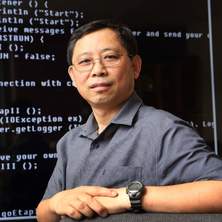
 Xue Li
· 2 previous affiliations
- The University of QueenslandSince 2001
- Full Professor · Since 2001
- Current
- MS student · 1987–1990
- Queensland University of Technology1992–1997
- PhD student · 1992–1997
6 other authors named Xue Li: Xue Li (4 papers), Xue Li (3 papers), Xue Li (1 paper), Xue Li (Molecular Imaging / Magnetic Resonance Technology Lab (MIMRTL) · 1 paper), Xue Li (Harbin Institute of Technology · 1 paper), and 1 more
Research Overview
Xue Li focuses on data mining, machine learning, and social network analysis, with a particular emphasis on privacy-preserving data mining, knowledge graph completion, and recommender systems. His work involves the development of algorithmic frameworks for complex data environments, ranging from early statistical foundations and network security to contemporary challenges in computer vision and robust video-text retrieval.
Research Trajectory
The trajectory of Li’s research reflects a transition from theoretical statistics and systems engineering toward high-dimensional data analysis and deep learning. In the early 1990s, his work was grounded in mathematical foundations, specifically the CONVERGENCE RATES OF THE STRONG LAW OFLARGE NUMBERS FOR A MIXING SEQUENCE, which explored the limits of independent conditions in mixing sequences. This period established a rigorous analytical basis for handling stochastic processes, which would later inform his approach to data mining and signal processing.
By the early to mid-2000s, Li’s focus shifted toward applied systems and network security. During this phase, he investigated the reliability of VLSI interconnections and the implementation of secure communication protocols. His contributions to network defense included the development of an Algorithm of dynamic memory based on residual antigen for intrusion detection, which utilized biological immune system metaphors to improve the efficiency and resource utilization of intrusion detection systems. This work signaled an increasing interest in adaptive, bio-inspired algorithms for managing system security.
In the 2010s, Li’s research expanded into signal processing and the burgeoning field of the Internet of Things (IoT). He contributed to the development of Algorithms for automatic cleaning of backscatter ionograms, a critical task for filtering noise and interference in radiowave propagation systems. Simultaneously, he explored the application of IoT architectures for public safety, specifically in the design of long-distance fire prevention monitoring systems. This period was characterized by the application of data processing techniques to real-time sensor networks and environmental monitoring.
In recent years, Li has concentrated on the optimization of deep learning models for video understanding and cross-modal retrieval. This work addresses the "temporal tax" associated with high-dimensional video data, seeking to balance computational efficiency with predictive accuracy. He has participated in the development of the Mitigating the Computational Overhead of 3D Convolutions theme, which investigates how to effectively capture motion and temporal dependencies without the prohibitive cost of standard 3D convolutions.
Current Directions
Li’s current research is centered on enhancing the robustness and efficiency of machine learning models in the presence of distribution shifts and noisy data. A significant portion of this work involves Spatiotemporal Factorization for Efficient Video Networks, aiming to reduce the parameter count of video models while maintaining their ability to recognize complex actions.
His recent collaborative work in computer vision includes the development of the ODD-VOD framework, detailed in Object Detection Difficulty: Suppressing Over-aggregation for Faster and Better Video Object Detection. This research introduces a metric to quantify the difficulty of individual video frames, allowing the system to skip redundant feature aggregation for "easy" frames and thereby achieving significant speed improvements in video object detection.
Furthermore, Li is engaged in addressing the fragility of retrieval models under real-world conditions. He contributed to the development of the HAT-VTR framework in Robust Test-time Video-Text Retrieval: Benchmarking and Adapting for Query Shifts. This work focuses on test-time adaptation to counteract "hubness"—a phenomenon where a small number of videos dominate search results—ensuring that video-text retrieval remains accurate even when faced with query shifts like motion blur or environmental noise.
Beyond computer vision, Li maintains an interest in the intersection of data science and pedagogy. This is reflected in research regarding Bidirectional Intercultural Curriculum Design, which examines how contrastive learning principles can be applied to language acquisition and cultural education to prevent "cultural aphasia" in bilingual environments.
Representative Work
The following papers represent key milestones in Li's research, illustrating the shift from statistical theory to modern machine learning applications:
- CONVERGENCE RATES OF THE STRONG LAW OFLARGE NUMBERS FOR A MIXING SEQUENCE (1994): Establishes early theoretical foundations in probability and statistical convergence.
- Algorithm of dynamic memory based on residual antigen for intrusion detection (2007): Demonstrates the application of biological metaphors to network security and dynamic memory management.
- Algorithms for automatic cleaning of backscatter ionograms (2011): Details signal processing techniques for noise reduction in radiowave sounding systems.
- Object Detection Difficulty: Suppressing Over-aggregation for Faster and Better Video Object Detection (2023): Proposes a difficulty-aware framework to optimize the speed and accuracy of video object detection.
- Robust Test-time Video-Text Retrieval: Benchmarking and Adapting for Query Shifts (2026): Introduces a benchmark and adaptation framework for improving the reliability of cross-modal retrieval systems.
Profile updated
Loading new papers…
Other researchers whose papers cluster into the same research directions — a proxy for overlapping technical interests and shared intellectual neighborhoods.
See something wrong? Report a mistake