

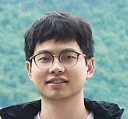
 Xuanyao Chen
· 5 previous affiliations
- Hedge FundSince 2025
- Portfolio Manager · Since 2025
- Proprietary Trading Firm2023–2025
- Quantitative Researcher · 2023–2025
- Tsinghua University2021–2023
- Doctor of Philosophy - PhD, Computer Science · 2023
- Research Intern · 2021–2022
- Research Intern · 2022–2023
- Fudan University2019–2023
- Undergrad student · 2019–2023
- Research Intern · 2020–2021
Research Overview
Xuanyao Chen focuses on the development of unified sensor fusion architectures and the theoretical foundations of multi-modal learning, particularly within the context of 3D perception for autonomous systems. This work spans the design of query-based transformer frameworks for detection and tracking, the integration of perception and prediction modules, and the mathematical justification for multi-modal feature aggregation. By moving away from modality-specific heuristics toward unified, end-to-end pipelines, Chen addresses fundamental challenges in how heterogeneous sensor data—such as LiDAR, cameras, and radar—can be effectively synthesized to model complex dynamic environments.
Research Trajectory
The evolution of Chen’s research reflects a transition from the theoretical analysis of data integration to the engineering of robust, scalable perception systems for robotics and autonomous driving. In the early stages of this trajectory, Chen contributed to the formal understanding of Shared Latent Spaces for Multimodal Data Integration. This work sought to provide theoretical justifications for why fusing multiple data streams—such as images and text or disparate biological signals—consistently outperforms uni-modal approaches. By examining how features from different modalities are encoded into a common latent representation, this research established a foundation for more complex architectural interventions in multi-sensor environments.
Following this theoretical groundwork, Chen’s focus shifted toward the practical challenges of Bridging the Modality Gap in Cross-Modal 3D Perception. In autonomous driving, the reliance on a heterogeneous mix of sensors often leads to fragmented system designs where each sensor type requires a customized processing branch. Chen addressed this by developing unified frameworks that treat sensor fusion as a feature sampling problem rather than a late-stage heuristic. This period was marked by the introduction of query-based mechanisms, which allow a model to adaptively extract relevant information from any combination of sensors, thereby simplifying the perception pipeline and reducing the need for manual tuning.
The trajectory further expanded to include the temporal dimension of perception, specifically multi-camera tracking and trajectory prediction. Chen’s work in this area moved beyond static 3D detection to model the spatial and appearance coherence of objects over time. By utilizing 3D track queries, Chen investigated methods to maintain object identity across multiple camera views and through occlusions without relying on explicit similarity metrics. This evolution culminated in efforts to unify perception and prediction, addressing the "information bottleneck" that occurs when these modules communicate only through limited interfaces like bounding boxes. This holistic approach aims to reduce error propagation and improve the reliability of autonomous decision-making.
Current Directions
Chen’s recent work and emerging research themes indicate a growing interest in the efficiency and robustness of large-scale multi-modal models. As these systems grow in complexity, the computational cost of processing high-dimensional sensor data becomes a significant barrier. Consequently, Chen is exploring Generalizing Model Pruning Across Diverse Neural Architectures to identify and eliminate redundancy within the attention mechanisms used for sensor fusion. This direction aligns with the broader objective of making 3D perception systems deployable on edge hardware without sacrificing accuracy.
In parallel, Chen is investigating Non-uniform Sparsity Allocation for Efficient Neural Networks. Rather than applying uniform pruning across all layers of a perception model, this research focuses on identifying which components—such as the feature samplers or the transformer decoders—are most critical for maintaining performance. This granular approach to model compression is essential for balancing the high-capacity requirements of multi-modal fusion with the real-time constraints of robotics.
Another significant area of current focus is the optimization of the training process itself. Chen is examining Decoupled Staged Training for Multimodal Fusion to mitigate the "lazy student" problem, where a model over-relies on the most informative sensor (such as LiDAR) and fails to learn robust features from secondary modalities (such as cameras). By decoupling the learning of modality-specific representations from the fusion logic, this work aims to ensure that each sensor contributes optimally to the final output. Additionally, Chen continues to explore Constraining Model Complexity for Robust Low Data Generalization, seeking to maintain model performance in scenarios where high-quality labeled 3D data is scarce or noisy.
Representative Work
Unified Sensor Fusion and 3D Detection
As the lead author of FUTR3D: A Unified Sensor Fusion Framework for 3D Detection, Chen proposed a framework designed to accommodate arbitrary sensor configurations. The core of this work is the Modality-Agnostic Feature Sampler (MAFS), which uses 3D reference points to sample features from any available sensor modality, whether it be camera images, LiDAR point clouds, or radar returns. By employing a transformer decoder with a set-to-set loss, FUTR3D avoids the traditional reliance on late fusion heuristics and complex post-processing steps like Non-Maximum Suppression (NMS). This work represents a significant step toward a truly general-purpose perception engine that can be deployed across different vehicle platforms with minimal architectural changes.
Multi-Camera Tracking via 3D Queries
In MUTR3D: A Multi-camera Tracking Framework via 3D-to-2D Queries, Chen served as a primary contributor to an end-to-end framework for consistent 3D tracking across multiple unsynchronized cameras. The methodology introduces the concept of the "3D track query," which serves as a persistent representation of an object across both space and time. Unlike prior methods that rely on matching object appearances or spatial coordinates between frames, MUTR3D uses these queries to directly sample features from multi-camera images. This approach inherently handles the challenges of depth estimation and visual occlusions, providing a more coherent understanding of dynamic scenes in complex urban environments.
Theoretical Foundations of Multi-Modal Learning
Chen participated in the theoretical investigation presented in What Makes Multi-Modal Learning Better than Single (Provably). This research addresses the lack of formal justification for the empirical success of deep multi-modal learning. The study analyzes a popular fusion framework that encodes features from disparate modalities into a common latent space. By providing mathematical proofs for the performance gains associated with multi-modal aggregation, this work offers a rigorous basis for the design of the more applied sensor fusion architectures that Chen would later develop. It highlights the importance of latent space alignment in ensuring that complementary information from different sensors is effectively captured.
Integrated Perception and Prediction
In the work ViP3D: End-to-end Visual Trajectory Prediction via 3D Agent Queries, Chen contributed to a pipeline that unifies visual perception and trajectory prediction. Traditional autonomous driving stacks often treat these as isolated modules, leading to information loss and the accumulation of errors. ViP3D addresses this by employing sparse agent queries that persist from the initial raw video input through to the final trajectory prediction. This end-to-end approach allows the prediction module to exploit rich, low-level visual information that is typically discarded by standard perception interfaces. Chen’s involvement in this research underscores a commitment to holistic system design, where the boundaries between sensing and reasoning are increasingly blurred to improve overall safety and performance.
Profile updated
| Paper | Venue | Year |
|---|---|---|
| MUTR3D: A Multi-camera Tracking Framework via 3D-to-2D QueriesGitHuba1600012888/ | CVPR | 2022 |
Loading new papers…
Other researchers whose papers cluster into the same research directions — a proxy for overlapping technical interests and shared intellectual neighborhoods.
See something wrong? Report a mistake