

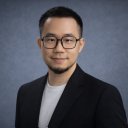
 Xu Zheng
· 4 previous affiliations
- Current
- PhD student · 2023–2026
- Researcher · 2026
- INSAIT2025–2026
- Researcher · 2025–2026
- Northeastern University2015–2023
- MS student · 2020–2023
- Undergrad student · 2015–2019
3 other authors named Xu Zheng: Xu Zheng (Florida International University · 15 papers), Xu Zheng (University of Electronic Science and Technology of China · 4 papers), Xu Zheng (Xidian University · 2 papers)
Research Overview
Xu Zheng focuses on multimodal visual understanding, omnidirectional vision, and real-time streaming video generation. His doctoral research develops robust learning algorithms that span perception and reasoning, particularly for heterogeneous sensor suites and spherical panoramas. Recently, his work emphasizes multimodal foundation models and the mitigation of modality bias in large-scale vision-language architectures.
Research Trajectory
In 2025, Zheng's research heavily emphasized semantic segmentation and the integration of heterogeneous modalities. Exploring the area of Aligning Latent Spaces Across Heterogeneous Neural Architectures, he developed frameworks for zero-shot semantic segmentation that bridge dense visual features with abstract text concepts. This included Partial CLIP is Enough: Chimera-Seg for Zero-shot Semantic Segmentation, which utilizes a partial vision-language encoder to achieve strong segmentation performance without the computational overhead of a full visual encoder. He also introduced a novel training strategy in Split Matching for Inductive Zero-shot Semantic Segmentation, decoupling the matching process for seen and unseen classes to prevent models from suppressing unannotated candidate regions during inference.
A major theme in his trajectory is the research direction of Robust Multimodal Perception through Modality Agnostic Fusion. To address the vulnerability of autonomous systems to missing sensors, he introduced BiXFormer: A Robust Framework for Maximizing Modality Effectiveness in Multi-Modal Semantic Segmentation. This work replaces tight feature fusion with a loosely coupled, mask-based classification approach, allowing different modalities to specialize while remaining resilient to test-time sensor failures. He further advanced this domain with MemorySAM: Memorize Modalities and Semantics with Segment Anything Model 2 for Multi-modal Semantic Segmentation, adapting a foundational video segmentation architecture to process diverse sensor inputs—such as RGB, LiDAR, and depth—as sequential frames. Recognizing that multi-modal models often over-rely on a single dominant sensor, he proposed a parameter-free regularization method in Reducing Unimodal Bias in Multi-Modal Semantic Segmentation with Multi-Scale Functional Entropy Regularization to force balanced information utilization across all available modalities.
This investigation into unimodal reliance naturally extended to foundation models. In a comprehensive position paper, initially released as a preprint and subsequently published at ICLR 2026, MLLMs are Deeply Affected by Modality Bias (and its ICLR 2026 version), he systematically diagnosed how Multimodal Large Language Models disproportionately rely on language while under-utilizing visual inputs, proposing a structured research roadmap to mitigate this imbalance. Zheng has also synthesized broader trends in the field, including work related to the area of Inference Time Compute Scaling for Complex Reasoning, by leading a comprehensive survey on Retrieval Augmented Generation and Understanding in Vision: A Survey and New Outlook. This survey details how external knowledge bases can ground vision models to reduce hallucinations in both generative and reasoning tasks.
Parallel to his work on modality bias, Zheng has made significant contributions to the area of Distortion Aware Computer Vision for Spherical Panoramas and the broader direction of Adapting Perspective Priors to Omnidirectional Vision. To overcome the field-of-view disparities and distortions inherent in 360-degree imagery, he developed OmniSAM: Omnidirectional Segment Anything Model for UDA in Panoramic Semantic Segmentation, which adapts foundational segmentation models for panoramic domains. He also guided research in omnidirectional spatial understanding, developing the CFpano dataset and the Pano-R1 model in Omnidirectional Spatial Modeling from Correlated Panoramas to enable cross-frame visual question answering in spherical scenes.
Moving into 2026, his research expanded into robustness and low-level vision, touching upon the direction of Training Resource Optimization for Multi-Teacher Knowledge Distillation. He participated in developing FERD: Fairness-Enhanced Data-Free Adversarial Robustness Distillation, a framework that addresses vulnerabilities in specific classes during data-free knowledge transfer by dynamically generating synthetic data for weak classes. Additionally, he contributed to Efficient Degradation-agnostic Image Restoration via Channel-Wise Functional Decomposition and Manifold Regularization, which introduced MIRAGE, a compact, all-in-one model for handling multiple types of image corruption—such as noise, rain, and haze—through specialized feature branches and manifold regularization.
Current Directions
The most recent papers in the evidence address adversarial robustness in data-free distillation and efficient, degradation-agnostic image restoration. Recent work investigates how to maintain robust fairness across all classes when transferring defensive capabilities without original training data. Additionally, ongoing research explores compact, unified architectures for low-level vision tasks, utilizing manifold regularization and functional decomposition to handle composite image corruptions simultaneously. Furthermore, his recent focus on foundation models seeks to systematically diagnose and mitigate modality bias in Multimodal Large Language Models, ensuring that visual inputs are fully utilized alongside language.
Profile updated
Loading new papers…
Other researchers whose papers cluster into the same research directions — a proxy for overlapping technical interests and shared intellectual neighborhoods.
See something wrong? Report a mistake