

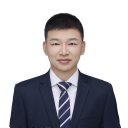
 Xu Zhang
· 3 previous affiliations
- Xidian UniversitySince 2023
- Assistant Professor · Since 2023
- Current
- Chinese Academy of Sciences2021–2023
- Postdoc · 2021–2023
- Beijing Institute of Technology2011–2021
- PhD student · 2015–2021
- Undergrad student · 2011–2015
21 other authors named Xu Zhang: Xu Zhang (Google DeepMind (United Kingdom) · 60 papers), Xu Zhang (12 papers), Xu Zhang (Alibaba Group (China) · 9 papers), Xu Zhang (Peking University · 6 papers), Xu Zhang (Southeast University · 5 papers), and 16 more
Research Overview
Xu Zhang focuses on personalized federated learning, generative flow networks, and multi-agent continuous control. Early work addressed the challenges of statistical heterogeneity and local overfitting in distributed systems through sparse optimization and variational Bayesian inference. More recently, the research emphasis has shifted toward improving exploration and task-specific adaptation in reinforcement learning using meta-learning and generative flow frameworks.
Research Trajectory
The trajectory begins in the domain of distributed machine learning, specifically addressing the communication bottlenecks, limited client computing capabilities, and statistical diversity inherent in federated networks. With collaborators, Zhang contributed to the development of a sparse personalized federated learning scheme designed to mitigate these issues. This work, detailed in Personalized Federated Learning via Maximizing Correlation with Sparse and Hierarchical Extensions, incorporated approximated L1-norms and correlation metrics between client and global models into the standard loss function. The resulting architecture improved performance on diverse client data while simultaneously reducing computational and communicational loads.
Building on these foundations, Zhang led efforts to tackle the twin challenges of data heterogeneity and local overfitting through probabilistic methods. This research intersects with several broader areas, including the research direction Robust Federated Learning under Statistical Heterogeneity and the area of Regularizing Federated Learning with Global Knowledge Distillation. In Personalized Federated Learning via Variational Bayesian Inference, Zhang introduced pFedBayes, a framework that treats neural network weights as probability distributions rather than point estimates. By utilizing a trained global model as a flexible prior, the variational Bayesian inference approach provides reliable uncertainty quantification and maintains accuracy even when local client data is extremely limited. This contribution also advances the broader field of Parameter Efficient Bayesian Neural Networks.
By 2024, the research expanded into reinforcement learning and exploratory control tasks, with a particular focus on Generative Flow Networks (GFlowNets). GFlowNets aim to generate diverse trajectories from a distribution where final states are proportional to the reward, serving as a powerful alternative to traditional reinforcement learning. Zhang collaborated on extending these networks to multi-agent systems, where individual-flow matching constraints had previously limited their application. The paper Multi-agent Continuous Control with Generative Flow Networks proposes a decentralized method to enable multiple agents to perform cooperative exploration for compositional continuous objects, effectively adapting GFlowNets for continuous joint-control problems.
Continuing the investigation into generative flow frameworks, Zhang contributed to methods for boosting exploration performance across distinct tasks. In Meta Generative Flow Networks with personalization for task-specific adaptation, the focus shifted to meta-learning and task-specific adaptation. The work introduces a personalized meta-learning approach to enhance reinforcement learning on new tasks, supported by formal convergence analysis to ensure the stability and reliability of the personalized method.
Current Directions
The most recent papers in the evidence indicate a sustained focus on generative flow networks and their application to complex control environments. Current work investigates how meta-learning and personalization techniques can accelerate task-specific adaptation in reinforcement learning, particularly within the research direction of Meta-Learning for Heterogeneous Task Distributions. Additionally, there is an ongoing interest in scaling these exploratory frameworks to handle multi-agent cooperation and continuous action spaces, aligning with the broader area of Reinforcement Learning for Continuous Action Spaces and the research direction Hierarchical Optimization for Learning to Learn.
Profile updated
| Paper | Venue | Year |
|---|---|---|
| Multi-Agent Continuous Control with Generative Flow NetworksGitHubisluoshuang/ | arXiv | 2024 |
Loading new papers…
Other researchers whose papers cluster into the same research directions — a proxy for overlapping technical interests and shared intellectual neighborhoods.
See something wrong? Report a mistake