

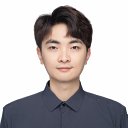
 Xiyu Wang
· 5 previous affiliations
- The University of SydneySince 2022
- PhD student · Since 2023
- Researcher · 2022
- Tsinghua University2022–2023
- Intern · 2022–2023
- Researcher · 2021–2022
- Australian National University2019–2020
- MS student · 2019–2020
- Jilin University2013–2017
- Undergrad student · 2013–2017
1 other author named Xiyu Wang: Xiyu Wang (Nanyang Technological University · 1 paper)
Research Overview
Xiyu Wang focuses on the development and optimization of generative models, particularly Diffusion Probabilistic Models (DPMs), and the advancement of unsupervised domain adaptation techniques. Their research addresses critical bottlenecks in machine learning, such as the "labeled data gap" and the computational inefficiencies inherent in high-fidelity image synthesis. By integrating adversarial learning, cross-attention mechanisms, and structural constraints, Wang’s work seeks to make deep learning models more robust to domain shifts and more capable of learning from limited or multimodal data sources.
Research Trajectory
Wang’s early research contributions began in 2020 with a focus on applied sensing and privacy. During this period, they participated in the development of a Privacy-Preserving Camera-based Monitoring and Tracking System for Parking Spaces, which explored the balance between utility in computer vision and the ethical necessity of data privacy in public spaces. This early work established a foundation in handling real-world data constraints, a theme that would evolve into a more theoretical investigation of data scarcity and domain shifts.
By 2023, Wang’s focus shifted toward the fundamental challenges of Statistical Alignment for Domain Invariant Representations. As neural networks often latch onto domain-specific noise rather than core semantic features, Wang explored methods to ensure models remain performant when moving from a source domain to a target domain. This period was characterized by an emphasis on Transferable Attention for Domain Invariant Representations, utilizing Transformer architectures to bridge the gap between disparate datasets. This work also touched upon the complexities of Black Box Domain Adaptation via Knowledge Distillation, addressing scenarios where source data or model weights are inaccessible due to privacy or proprietary restrictions.
In 2024 and 2025, Wang’s trajectory moved deeply into the mechanics of Diffusion Probabilistic Models. While DPMs had emerged as a powerful alternative to Generative Adversarial Networks (GANs), they remained heavily dependent on massive datasets and significant computational resources. Wang’s research during this time focused on transfer learning strategies that allow DPMs to function effectively with extremely limited target data—sometimes as few as ten images. This involved developing novel adversarial noise selection strategies to improve the efficiency of the iterative denoising process.
Most recently, in 2025 and 2026, Wang has expanded their scope to include large-scale multimodal data alignment and the refinement of text-driven image editing. This evolution represents a move toward "foundation model" thinking, where the goal is to create high-fidelity systems capable of navigating complex, multi-modal environments—such as global financial markets—while maintaining structural integrity and semantic accuracy in generative tasks.
Current Directions
Wang’s current research is centered on three primary pillars: the efficiency of generative pipelines, the structural fidelity of edited content, and the creation of robust multimodal datasets. A significant portion of their recent work addresses the "structural drift" common in text-guided image-to-image translation, where standard guidance methods often lead to spatial mismatches. By investigating the inherent trade-offs between semantic accuracy and structural integrity, Wang is developing self-guided editing frameworks that reduce GPU memory consumption and computational overhead.
Furthermore, Wang is leading efforts to bridge the gap between numerical forecasting and qualitative analysis through the development of massive, multi-modal datasets. This direction aims to provide a high-fidelity foundation for AI models in specialized domains like finance, where aligning news, tables, and price series is essential for navigating market complexities.
Representative Work
In Unsupervised Domain Adaptation via Bidirectional Cross-Attention Transformer, Wang introduced a novel approach to the problem of domain shift. Recognizing that standard attention mechanisms often fail to capture the nuances of target domains without labels, this work utilized a bidirectional cross-attention framework. The method allows the model to iteratively align features between the source and target domains, ensuring that the learned representations are truly domain-invariant rather than merely overfitted to the source distribution.
Wang’s work on Bridging Data Gaps in Diffusion Models with Adversarial Noise-Based Transfer Learning addressed the data-hungry nature of DPMs. The paper introduced the DPMs-ANT framework, which employs a "min-max" adversarial noise selection strategy. By identifying and utilizing the most informative noise patterns during the transfer learning process, the framework enables DPMs to achieve high-quality image generation even when the target dataset is minimal. This contribution significantly reduced the training time and data requirements that previously limited the practical application of diffusion models in niche domains.
The methodology for efficient transfer was further refined in Efficient Transfer Learning in Diffusion Models via Adversarial Noise. In this research, Wang analyzed the distinct differences between GAN-based and DPM-based transfer learning, specifically focusing on the iterative denoising integral. The proposed TAN (Transfer via Adversarial Noise) strategy provides a structured way to adapt pre-trained models to new tasks without the catastrophic forgetting or structural collapse often seen in simpler fine-tuning approaches.
In a shift toward large-scale data infrastructure, Wang served as the senior author for FinMultiTime: A Four-Modal Bilingual Dataset for Financial Time-Series Analysis. This 112.6 GB dataset is a significant contribution to the field of financial AI, aligning news, financial tables, K-line charts, and price series across both US and Chinese markets. The project reflects Wang’s interest in creating the necessary data foundations for complex, multi-modal reasoning in high-stakes environments.
Addressing the computational costs of generative AI, Efficient Self-Guided Editing for Text-Driven Image-to-Image Translation tackles the problem of structural drift in classifier-free guidance (CFG). Wang identified that the unconditional branch in standard CFG often generates spatial mismatches during editing. By developing a self-guided mechanism that steers predictions without the need for an expensive additional reconstruction branch, this work provides a more resource-efficient path for high-fidelity image manipulation.
Finally, Wang contributed to the development of DiffusionPose: Learning Structure-Guided Diffusion Model for 2D Human Pose Estimation. This work reimagined pose estimation as a generative denoising process rather than a standard regression or classification task. By iteratively refining keypoint heatmaps through a diffusion process guided by human structural constraints, the model achieved notable accuracy gains on benchmarks like COCO and CrowdPose, demonstrating the versatility of diffusion frameworks beyond simple image generation.
Profile updated
Loading new papers…
Other researchers whose papers cluster into the same research directions — a proxy for overlapping technical interests and shared intellectual neighborhoods.
See something wrong? Report a mistake