

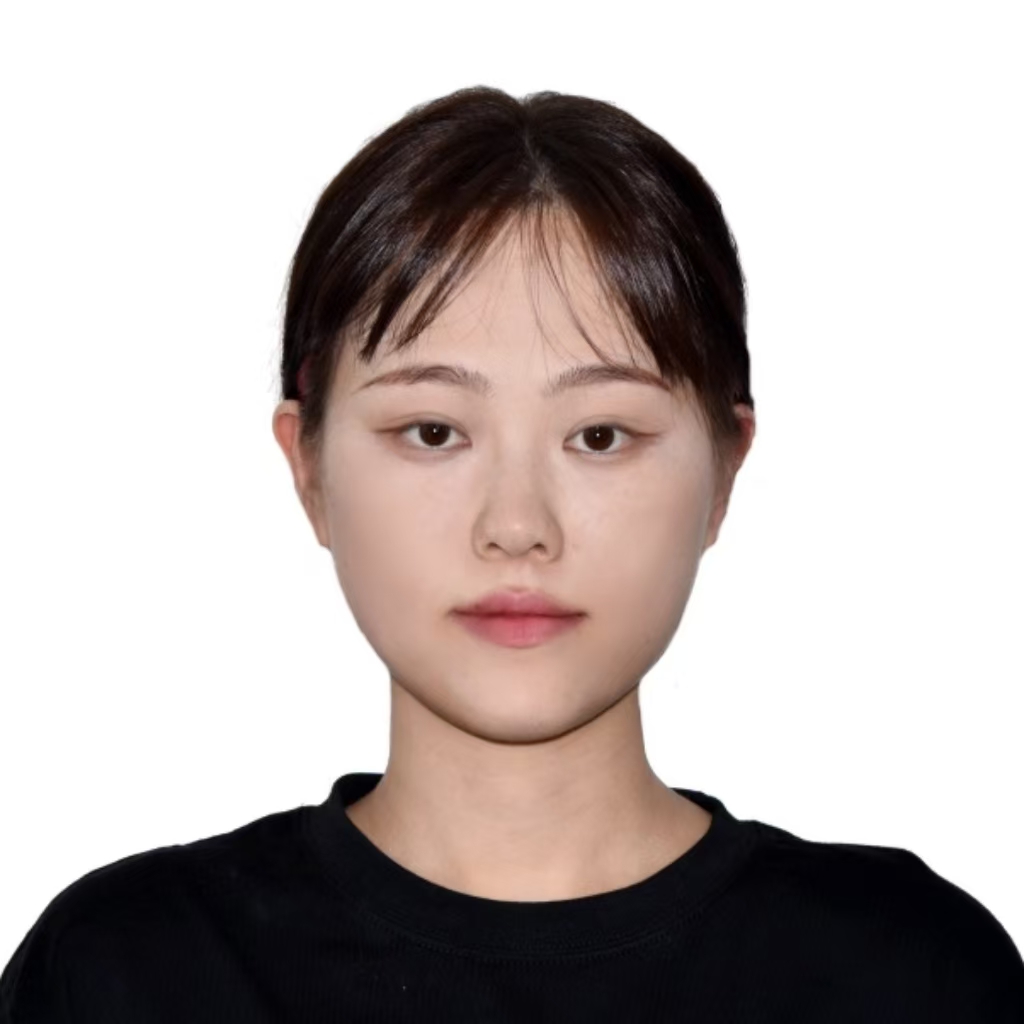
 Xinyu Geng
· 3 previous affiliations
- PhD student · 2025–2028
- Current
- Harbin Institute of Technology2022–2025
- MS student · 2022–2025
- Undergrad student · 2018–2022
Research Overview
Xinyu Geng focuses on the development of efficient neural architectures, interpretable deep learning for medical imaging, and multimodal autonomous agents. His trajectory spans foundational improvements to capsule networks and hybrid state estimation models, moving toward robust reasoning in vision-language systems. Currently, he investigates reinforcement learning and synthetic training pipelines for complex web-based research agents.
Research Trajectory
Geng’s early work focused on foundational architectural improvements, particularly addressing the computational inefficiencies that have historically limited the scalability of capsule networks. In 2024, he introduced OrthCaps: An Orthogonal CapsNet with Sparse Attention Routing and Pruning. By integrating a novel capsule pruning strategy with orthogonal sparse attention routing, this architecture drastically reduced parameter counts to approximately 1.2% of standard models while preserving or enhancing accuracy. This work effectively eliminated the redundant computations and iterative bottlenecks characteristic of traditional capsule designs.
During the same period, Geng contributed to the research direction of Neural Augmentation of Classical Bayesian Filters. In Nonlinear Kalman Filtering based on Self-Attention Mechanism and Lattice Trajectory Piecewise Linear Approximation, he and his collaborators developed the Attention Kalman Filter (AtKF). This hybrid framework embeds a simplified self-attention mechanism into the traditional Kalman filter to dynamically compensate for noise and model inaccuracies. To resolve the training instability often seen when applying recurrent architectures to recursive state estimation, the team designed a parallel pre-training strategy utilizing Lattice Trajectory Piecewise Linear (LTPWL) approximation alongside batch estimation techniques. This research also intersects with the broader area of Modeling Long-Range Temporal Dependencies with Transformers.
In 2025, Geng extended his foundational work on capsule networks into the applied domain of healthcare, specifically advancing the area of Interpretable Architectures for Medical Image Diagnosis. He developed ParseCaps: An Interpretable Parsing Capsule Network for Medical Image Diagnosis to overcome the limitations of standard deep learning models in clinical settings, where interpretability is as critical as accuracy. Because traditional capsule networks often struggle with shallow structures that limit their representational capacity, ParseCaps utilizes sparse axial attention routing and a parse convolutional capsule layer. This combination constructs a parse-tree-like hierarchy, successfully increasing model depth and capturing complex spatial relationships without sacrificing the transparency required for clinical diagnosis.
Concurrently, Geng's research expanded into the evaluation and enhancement of large multimodal systems. He participated in collaborative work investigating the limitations of Vision Large Language Models (VLLMs) when handling real-time or knowledge-intensive queries. In Detecting Knowledge Boundary of Vision Large Language Models by Sampling-Based Inference, the research team proposed a sampling-based method to identify the limits of a model's internal knowledge. By detecting these boundaries, the system can selectively trigger Retrieval Augmented Generation (RAG) only when necessary, mitigating the computational expense of indiscriminate retrieval while maintaining performance. This contribution advances the research direction of Aligning Language Models to Their Knowledge Boundaries and touches upon the area of Reducing Contextual Noise for Robust Reasoning.
Building on these insights into multimodal reasoning and system efficiency, Geng recently shifted focus toward the design of advanced autonomous agents. He introduced WebWatcher: Breaking New Frontiers of Vision-Language Deep Research Agent, a multimodal system engineered to navigate the complex visual and textual environments of the modern web. By integrating a diverse set of tools—including optical character recognition, code interpreters, and web search capabilities—with a training pipeline based on reinforcement learning and synthetic data, WebWatcher demonstrates significant improvements on high-difficulty reasoning benchmarks such as Humanity’s Last Exam (HLE). This work actively drives forward the research direction of Synthetic Trajectories for Scaling Autonomous Agents.
Current Directions
The most recent papers in the evidence indicate a strong focus on the reasoning capabilities and practical deployment of large multimodal models. Current work investigates the design of autonomous vision-language agents capable of executing complex, multi-step research tasks across the web. This involves developing sophisticated training pipelines that leverage reinforcement learning and synthetic pedagogical data to improve tool use, such as code interpretation and dynamic web search.
Additionally, recent collaborative efforts address the reliability of these large models by mapping their intrinsic knowledge boundaries. By establishing when a model should rely on its internal weights versus when it must query external databases via retrieval-augmented generation, this line of research aims to create more efficient, honest, and robust artificial intelligence systems for knowledge-intensive applications. Together, these directions reflect a broader commitment to scaling the reasoning capabilities of autonomous agents while ensuring their outputs remain grounded and computationally efficient.
Profile updated
Loading new papers…
Other researchers whose papers cluster into the same research directions — a proxy for overlapping technical interests and shared intellectual neighborhoods.
See something wrong? Report a mistake