

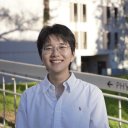
 Xinyi Ni
· 7 previous affiliations
- Deloitte (United States)Since 2019
- Researcher · 2025–2030
- PhD student · 2019–2024
- Google (United States)Since 2026
- Software Engineer, AI/ML · Since 2026
- University of CaliforniaCurrent
- Current
- TikTok2025–2026
- Machine Learning Scientist · 2025–2026
- University of California, Davis2019–2024
- Research Assistant · 2019–2024
- Research Intern · 2024
- Zhejiang University2015–2019
- Undergrad student · 2015–2019
Research Overview
Xinyi Ni focuses on risk-sensitive reinforcement learning, algorithmic robustness, and the development of autonomous agents. Her early work established robust policy gradient methods and reward-free exploration frameworks using advanced risk measures. Recently, her research has expanded into retrieval-augmented generation and scalable tool creation for large language models.
Research Trajectory
Ni’s research initially concentrated on foundational problems in reinforcement learning (RL), specifically addressing how agents can optimize policies while managing tail risks and uncertainty. Her early trajectory is defined by the integration of coherent risk measures into Markov Decision Processes (MDPs) to ensure algorithmic robustness and efficiency. In Policy Gradient Based Entropic-VaR Optimization in Risk-Sensitive Reinforcement Learning (2022), she applied the entropic value-at-risk (EVaR) measure to robust RL algorithm design. This work introduced a trajectory-based policy gradient method capable of estimating gradients for EVaR-involved objective functions, allowing the policy to iteratively converge to a local optimum.
Continuing this focus on risk-aware frameworks, Ni explored alternative risk measures to handle environmental uncertainty. This included the development of Robust Risk-Sensitive Reinforcement Learning with Conditional Value-at-Risk (2024), which utilized Conditional Value-at-Risk (CVaR) to further stabilize learning in volatile environments. Building on these CVaR formulations, she and her collaborators introduced a novel paradigm in Risk-Sensitive Reward-Free Reinforcement Learning with CVaR (2024). This research decoupled exploration from specific reward signals, proposing an algorithm that allows an agent to learn safe, near-optimal policies for any downstream reward function after only a single phase of exploration. By achieving near-optimal sample complexity, this work significantly advanced the research direction of State Augmentation for Risk Sensitive Reinforcement Learning. Her theoretical contributions to risk measures culminated in Risk-Sensitive Reinforcement Learning With ϕ-Divergence-Risk (2025), which generalized risk-sensitive optimization using $\phi$-divergence frameworks.
Following her doctoral research, Ni transitioned to a role as a Machine Learning Scientist at TikTok. Concurrently, her academic focus expanded significantly into the architecture of large language models (LLMs), autonomous agents, and information retrieval systems. A major theme of this recent work is bridging the gap between unstructured human-readable documentation and machine-executable actions. In ToolFactory: Automating Tool Generation by Leveraging LLM to Understand REST API Documentations (2025), Ni contributed to an open-source pipeline that transforms messy REST API documentation into functional tools for LLM agents. Utilizing a fine-tuned model alongside a parameter-inference system, the framework specifically targets scientific research APIs, contributing to the broader area of Autonomous LLM Agents for Scientific Discovery.
This focus on scalable agentic frameworks was further developed in Doc2Agent: Scalable Generation of Tool-Using Agents from API Documentation (2025). Here, Ni and collaborators designed a pipeline that implements an autonomous "generate-validate-refine" loop to create Python-based tools from API documentation. This approach demonstrated substantial performance improvements on web-based benchmarks while drastically reducing the operational costs associated with direct API-calling methods.
In parallel with her work on tool-using agents, Ni has investigated methods to improve the factual accuracy and contextual awareness of LLMs. In Multiple Abstraction Level Retrieve Augment Generation (2025), she introduced MAL-RAG, a system that moves beyond traditional fixed-size text chunking. By indexing documents at four distinct hierarchical levels—multi-sentence, paragraph, section, and document—the system combines granular snippets with high-level summaries. Demonstrated in complex domains such as Glycoscience, this approach aligns with work in the area of Hierarchical Multi-Granular Indexing for Retrieval Augmented Generation and provides a structured solution to the limitations of vanilla RAG architectures.
Current Directions
Ni’s most recent papers indicate a strong focus on the intersection of large language models, external tool integration, and structured knowledge retrieval. While her earlier work established rigorous mathematical foundations for risk-sensitive decision-making, her current research investigates how autonomous agents can reliably interact with complex, real-world software environments.
A primary open problem in her recent work is the automated synthesis of executable code from unstructured documentation. By developing pipelines that parse REST APIs and generate validated Python tools, she is addressing the scalability bottlenecks that currently limit LLM agents in specialized or scientific domains. Additionally, her work on hierarchical retrieval-augmented generation suggests an ongoing interest in optimizing how models access and synthesize multi-scale information, ensuring that AI systems can maintain structural integrity and factual correctness when reasoning over long or highly technical contexts.
Profile updated
Loading new papers…
Other researchers whose papers cluster into the same research directions — a proxy for overlapping technical interests and shared intellectual neighborhoods.
See something wrong? Report a mistake