

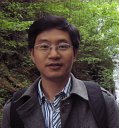
 Xinhui Ma
· 5 previous affiliations
- University of HullSince 2015
- Lecturer · Since 2015
- Abertay University2012–2015
- Lecturer · 2012–2015
- University of Cambridge2010–2011
- Postdoc · 2010–2011
- University of Strathclyde2007–2010
- Postdoc · 2007–2010
- University of Birmingham2002–2007
- PhD student · 2002–2007
Research Overview
Xinhui Ma focuses on the intersection of eXtended Reality (XR) and Artificial Intelligence (AI), with a particular emphasis on Digital Twin technology, Deep Learning, and Explainable AI. His research spans the development of robust geometric modeling techniques to the application of predictive AI models in Digital Health, Green Energy, and Advanced Manufacturing. Currently a Lecturer at the University of Hull, Ma’s work increasingly addresses the requirements for Responsible AI and the environmental impact of industrial infrastructures, integrating high-dimensional data representation with decentralized learning frameworks.
Research Trajectory
Ma’s research trajectory began with a focus on the mathematical foundations of geometric modeling and surface representation. Between 2007 and 2015, his work primarily addressed the challenges of processing large-scale point clouds and dense meshes, which are foundational to computer-aided design (CAD) and computer vision. Early contributions involved developing methods for curvature estimation and data reduction that preserved the topological integrity of 3D surfaces. This period was characterized by a rigorous approach to geometric accuracy, ensuring that simplified models remained faithful to original scanned data.
Starting around 2018, Ma transitioned toward the application of Deep Learning to solve complex classification and prediction problems in diverse domains. This shift saw the integration of his expertise in geometric data with emerging neural network architectures. His work expanded into Digital Health, specifically targeting the early detection of neurodegenerative diseases, and into precision agriculture, where he utilized generative models to overcome data scarcity in plant pathology. This evolution reflects a broader move from purely geometric problems to the development of intelligent systems capable of interpreting multi-modal and heterogeneous data.
In recent years, Ma has focused on the scalability and interpretability of AI systems. His current work explores advanced architectures such as quaternion-valued neural networks for 3D rotation modeling and hierarchical federated learning for decentralized data environments. This recent phase emphasizes "Responsible AI," seeking to create models that are not only high-performing but also explainable and ethically grounded, particularly when applied to critical infrastructure like offshore wind farms.
Current Directions
Ma’s current research is heavily invested in the development of Explainable Predictive AI models. A primary application of this work is the assessment of the environmental impact of offshore wind farms, a project that utilizes Digital Twin technology to simulate and predict ecological outcomes. By focusing on explainability, Ma aims to provide stakeholders with transparent insights into how AI-driven predictions are generated, which is essential for policy-making and environmental stewardship.
Furthermore, Ma continues to advance the field of XR through the integration of Mixed Reality (MR) and Virtual Reality (VR) with real-time AI. This involves creating more immersive and responsive Digital Twins for advanced manufacturing and health monitoring. His interest in Responsible AI also extends to ensuring that these immersive systems are designed with user privacy and data security in mind, particularly in the context of federated learning where data remains localized on client devices.
Representative Work
Ma’s contributions are evidenced by a series of papers that track his evolution from geometric modeling to advanced AI architectures. The following works represent key milestones in his research:
In Shape preserving data reduction for 3D surface points, Ma addressed the computational burden of processing massive 3D point clouds. As the first author, he developed a method for reducing the number of points in a dataset while maintaining the essential geometric features of the surface. This work was critical for improving the efficiency of CAD systems and downstream manufacturing processes without sacrificing the fidelity of the digital model.
Continuing his focus on surface representation, Subdivision surface fitting to a dense mesh using ridges and umbilics introduced a novel approach to fitting subdivision surfaces to complex meshes. By utilizing topological features such as ridges and umbilics, Ma provided a more robust framework for capturing the intricate details of dense meshes. This first-author paper demonstrated a sophisticated understanding of differential geometry applied to computational mesh processing.
Ma’s transition into medical AI is highlighted by A Multi-Modal Deep Learning Approach to the Early Prediction of Mild Cognitive Impairment Conversion to Alzheimer's Disease. As a significant contributor to this work, he helped develop "MudNet," a deep learning model designed to simultaneously predict the progression of Mild Cognitive Impairment (MCI) and the specific time-to-conversion to Alzheimer’s Disease. This research emphasized the importance of multi-modal data integration in clinical decision-making.
In the domain of precision agriculture, Ma contributed to GANs-Based Data Augmentation for Citrus Disease Severity Detection Using Deep Learning. This paper addressed the common problem of limited labeled datasets in specialized fields. By using Generative Adversarial Networks (GANs) to augment image data, the research improved the accuracy of disease severity detection in citrus crops, providing a scalable solution for reducing financial losses in the agricultural sector.
Ma’s recent work on high-dimensional neural architectures is represented by Asymptotically Stable Quaternion-valued Hopfield-structured Neural Network with Periodic Projection-based Supervised Learning Rules. This paper explores the use of quaternions to represent 3D rotations and postures more effectively than traditional vector-based methods. Ma’s contribution involved ensuring the asymptotic stability of the network, which is vital for maintaining smooth and predictable trajectories in robotic and XR applications.
Finally, as a senior author, Ma published HFL-GAN: scalable hierarchical federated learning GAN for high quantity heterogeneous clients. This work addresses the challenges of training generative models across a large number of decentralized and heterogeneous clients. The hierarchical federated learning framework proposed in this paper allows for scalable AI training while preserving data privacy, a cornerstone of his current focus on Responsible AI.
Profile updated
Loading new papers…
Other researchers whose papers cluster into the same research directions — a proxy for overlapping technical interests and shared intellectual neighborhoods.
See something wrong? Report a mistake