

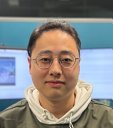
 Xingjian Leng
· 3 previous affiliations
- CanvaSince 2025
- Research Intern · Since 2025
- Australian National UniversitySince 2020
- Doctor of Philosophy - PhD, Computer Science · 2024–2028
- Current
- Bachelor of Advanced Computing (Research and Development) (Honours) · 2020–2023
- Academic Tutor · 2022–2023
- Research Intern · 2024
Research Overview
Xingjian Leng focuses on latent generative modeling, representation alignment, and the end-to-end optimization of deep neural networks. His early work explored reinforcement learning for physical sensor configurations and out-of-distribution generalization in computer vision. More recently, his research centers on streamlining the training of diffusion models and normalizing flows by jointly optimizing variational autoencoders and generative transformers.
Research Trajectory
Leng's early research investigated spatial optimization and robust visual representations. In 2023, he introduced Optimizing Camera Configurations for Multi-View Pedestrian Detection, which developed a reinforcement learning framework combined with a transformer-based generator to automatically design camera layouts. Evaluated in a custom interactive simulation environment, this approach outperformed traditional coverage-based heuristics designed by human experts. This work intersected with the broader research direction of Permutation Invariant Transformers for Tabular Data, applying structured sequence modeling to physical configuration problems.
Expanding his focus to model robustness, he collaborated on the development of broad evaluation testbeds for computer vision. The resulting paper, CIFAR-10-Warehouse: Broad and More Realistic Testbeds in Model Generalization Analysis (2024), introduced a large-scale expansion of the standard CIFAR-10 dataset featuring 180 diverse, out-of-distribution domains. By integrating real-world image searches with diffusion-generated content, this work demonstrated that existing models struggle significantly more with realistic environmental variety than with standard synthetic corruptions.
By 2025, Leng's trajectory shifted deeply into generative AI, specifically targeting the architectural bottlenecks in latent variable models. He contributed to SimFlow: Simplified and End-to-End Training of Latent Normalizing Flows, a framework that stabilizes the joint training of variational autoencoders (VAEs) and flow models. By fixing the VAE encoder's variance to a constant, the method eliminates the need for complex, multi-stage denoising pipelines. This contribution advanced several key areas, including the research direction of End-to-End Joint Optimization of Latent Generative Models and the area of Fixed Latent Variance for Stable Generative Modeling, while also touching upon work in the area of Robust Decoding via Latent Noise Augmentation.
Building on the principles of joint optimization, Leng led the development of REPA-E: Unlocking VAE for End-to-End Tuning with Latent Diffusion Transformers. in 2026. This work proposed a novel end-to-end training method for latent diffusion models (LDMs) that jointly optimizes the VAE and the diffusion transformer. By replacing the standard diffusion loss for VAE training with a representation alignment loss (REPA), the approach dramatically accelerated LDM training and improved overall generation quality.
Continuing the investigation into representation alignment, he co-authored What matters for Representation Alignment: Global Information or Spatial Structure? (2026). Investigating the assumptions behind teacher models used for diffusion training, this research demonstrated that spatial structure—specifically how image patches relate to their neighbors—is a far more critical predictor of generation quality than global semantic classification accuracy. The authors introduced iREPA, a streamlined method emphasizing these spatial relationships to further accelerate the training of generative models.
Current Directions
The most recent papers in the evidence indicate a strong ongoing focus on the architectural efficiency and training dynamics of latent generative models. Current work investigates how representation alignment can replace traditional multi-stage training pipelines, allowing for the end-to-end joint optimization of autoencoders and diffusion transformers. A major theme in this recent research is the prioritization of local spatial structure over global semantic accuracy when designing teacher models or alignment objectives. By refining these alignment mechanisms, Leng's ongoing efforts aim to significantly accelerate the training of high-fidelity visual generation systems while simplifying their underlying architectures.
Profile updated
| Paper | Venue | Year |
|---|---|---|
| Optimizing Camera Configurations for Multi-View Pedestrian DetectionGitHubhou-yz/ | arXiv | 2023 |
Loading new papers…
Other researchers whose papers cluster into the same research directions — a proxy for overlapping technical interests and shared intellectual neighborhoods.
See something wrong? Report a mistake