

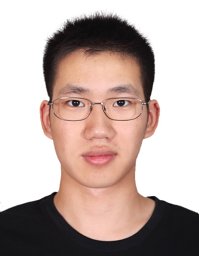
 Xingcheng ZHANG
· 4 previous affiliations
- Sensetime (China)Since 2018
- Researcher · Since 2018
- Researcher · Since 2022
- Chinese University of Hong Kong2016–2018
- MS student · 2016–2018
- Tsinghua University2011–2015
- Undergrad student · 2011–2015
Research Overview
Xingcheng ZHANG focuses on large-scale machine learning systems, efficient model inference, and distributed training architectures. His early work explored structural diversity in deep neural networks and accelerated training for massive classification tasks. More recently, his research addresses the systems challenges of deploying large language models, emphasizing memory optimization, mixed-precision quantization, and scalable reinforcement learning frameworks.
Research Trajectory
ZHANG's early research addressed fundamental challenges in scaling deep neural networks for computer vision. He introduced PolyNet: A Pursuit of Structural Diversity in Very Deep Networks, exploring structural diversity—specifically through a new family of modules called PolyInception—as an alternative to simply increasing network depth or width, which often leads to diminishing returns and high computational costs. Building on this focus on efficiency, he developed methods for Accelerated Training for Massive Classification via Dynamic Class Selection. This work enabled the accurate identification of a small number of active classes for each mini-batch, significantly reducing the memory and computational demands typically associated with massive recognition tasks.
Expanding into transformer architectures, ZHANG contributed to MDL-NAS: A Joint Multi-domain Learning Framework for Vision Transformer. This research utilized coarse-to-fine neural architecture search to allow a single Vision Transformer supernet to handle classification, detection, and segmentation simultaneously. By balancing shared and task-specific parameters, the framework mitigated task interference while drastically reducing storage requirements.
As large language models (LLMs) became prominent, ZHANG's focus shifted heavily toward optimizing their deployment and training infrastructure. He participated in the development of SKVQ: Sliding-window Key and Value Cache Quantization for Large Language Models, a technique that reorders channels and applies clipped dynamic quantization to compress memory footprints down to 2-bit keys and 1.5-bit values, enabling massive context lengths on consumer hardware. In the realm of distributed training, he collaborated on Centauri: Enabling Efficient Scheduling for Communication-Computation Overlap in Large Model Training via Communication Partitioning, which introduced hierarchical scheduling schemes and integrated multiple communication collectives to overcome bottlenecks in heterogeneous environments. His work in model serving includes MuxServe: Flexible Spatial-Temporal Multiplexing for Multiple LLM Serving, a system that colocates models based on popularity and disaggregates prefill and decoding phases to maximize throughput. This system advances the research direction of Spatial-Temporal Multiplexing for Efficient LLM Serving and the broader area of Unified Memory Pooling for Multi-Model LLM Serving. Concurrently, ZHANG led research in 3D vision, directing the development of Fisheye-GS: Lightweight and Extensible Gaussian Splatting Module for Fisheye Cameras. This work recalculated projection transformations and gradients to adapt 3D Gaussian Splatting to the extreme curvature of fisheye lenses.
In 2025, ZHANG continued to address the memory and compute walls in AI systems. He contributed to MxMoE: Mixed-precision Quantization for MoE with Accuracy and Performance Co-Design, a framework that assigns different precisions to individual linear blocks in Mixture-of-Experts models, co-designing bitwidth allocation with custom GPU kernels to accelerate inference. He also led investigations into the systems challenges of reinforcement learning for LLMs, detailing massive GPU idling and unpredictable sequence lengths in RL in the Wild: Characterizing RLVR Training in LLM Deployment. This work introduced the PolyTrace benchmark suite to accurately simulate these complex workloads. To tackle hardware fragmentation, he guided the design of H2:Towards Efficient Large-Scale LLM Training on Hyper-Heterogeneous Cluster over 1,000 Chips, addressing the complexities of training 100-billion-parameter models across diverse vendor hardware, memory limits, and communication quirks. Returning to attention mechanisms, he introduced SampleAttention: Near-Lossless Acceleration of Long Context LLM Inference with Adaptive Structured Sparse Attention, dynamically adapting sparsity patterns at runtime to accelerate long-context inference, contributing to the area of Adaptive Sparse Attention via Dynamic Budgeting. In parallel, his 3D vision systems work progressed with GS-Cache: A GS-Cache Inference Framework for Large-scale Gaussian Splatting Models, a cache-centric pipeline that reuses computations between frames and eyes for high-performance binocular rendering in VR.
Most recently, ZHANG's collaborative efforts have focused on compilers and scaling reinforcement learning. He participated in the development of FlexLinearAttention: Compiling a Unified Abstraction into Scalable Kernels for Linear Attention, a domain-specific compiler that abstracts linear attention into three canonical phases to automatically generate highly optimized, distributed kernels. He also contributed to Scaling Large Vision-Language Model RL Training via Efficient Load Balancing, which introduced the FlexRL system to decentralize data loading via ShadowLoader and adaptively shard compute-heavy sequences with FlexUlysses. Finally, addressing the growing disparity between GPU compute and interconnect speeds, he co-authored CoCoQuant: Breaking the Bandwidth Wall via Co-Optimized Communication and Computation Quantization, advancing the research direction of The Mechanics of Non-Uniform Quantization Sensitivity for distributed inference.
Current Directions
The most recent papers in the evidence address the systemic bottlenecks of scaling large language and vision-language models. A primary focus is on overcoming the "bandwidth wall" in distributed inference through co-optimized communication and computation quantization. Additionally, recent work investigates domain-specific compilers for linear attention models and efficient load-balancing systems designed to scale reinforcement learning for multimodal models across large GPU clusters.
Profile updated
Loading new papers…
Other researchers whose papers cluster into the same research directions — a proxy for overlapping technical interests and shared intellectual neighborhoods.
See something wrong? Report a mistake