

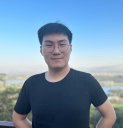
 Xingchao Liu
· 3 previous affiliations
- DeepSeek (China)Since 2024
- Researcher · Since 2024
- The University of Texas at Austin2019–2024
- PhD student · 2019–2024
- Beihang University2015–2019
- Undergrad student · 2015–2019
Research Overview
Xingchao Liu focuses on generative modeling, continuous-time probability flows, and unified multimodal systems. His early work explored formal verification and multi-objective optimization before shifting toward accelerating and controlling diffusion models through rectified flow techniques. Currently, he investigates scalable architectures that harmonize visual understanding and generation within unified large language models.
Research Trajectory
Xingchao Liu's early research at Qingdao Agricultural University addressed foundational challenges in neural network verification and multi-objective optimization. In Certified Monotonic Neural Networks, he developed a mixed-integer linear programming approach to provably guarantee monotonicity in piecewise linear networks, addressing fairness and interpretability constraints without requiring overly restrictive model structures. Expanding into optimization, he introduced a novel gradient-based algorithm in Profiling Pareto Front With Multi-Objective Stein Variational Gradient Descent. This work utilized repulsive force mechanisms and Langevin dynamics to find diverse, representative solutions, advancing techniques for navigating complex optimization landscapes.
A major inflection point in his trajectory occurred with the development of continuous-time generative models, specifically focusing on the research direction of Linear Trajectories for Fast Generative Modeling. He introduced a foundational framework in Flow Straight and Fast: Learning to Generate and Transfer Data with Rectified Flow. This approach learns ordinary differential equations (ODEs) that follow straight paths between empirical distributions, offering a unified, scalable solution for generative modeling and domain transfer that contributes significantly to the broader area of Straight Path Generative Modeling. Concurrently, he expanded the mathematical foundations of diffusion processes to non-Euclidean spaces. In Learning Diffusion Bridges on Constrained Domains, he formulated a unified framework using Doob's h-transform to drive diffusion processes across bounded, discrete, and mixed product spaces. To improve the controllability of these continuous-time models, he also developed FlowGrad: Controlling the Output of Generative ODEs with Gradients, which leverages vector-Jacobian products and non-uniform discretization to efficiently back-propagate guidance signals through ODE trajectories.
Building on the rectified flow paradigm, subsequent work focused on drastically reducing the computational cost of generative inference. He led the development of InstaFlow: One Step is Enough for High-Quality Diffusion-Based Text-to-Image Generation, which distilled multi-step sampling into a single inference step while maintaining high visual fidelity. Further addressing inference efficiency, he collaborated on PeRFlow: Piecewise Rectified Flow as Universal Plug-and-Play Accelerator. By dividing and straightening segments of the sampling path, this technique enables rapid image generation and integrates seamlessly with existing architectures, advancing the research area of Mitigating Discretization Error for Few Step Diffusion Models. Extending these continuous-time principles to discrete domains, his research group proposed LanguageFlow: Advancing Diffusion Language Generation with Probabilistic Flows, which reformulates probabilistic flow models to transport noise to text, offering a new pathway for controllable natural language generation.
Most recently, his research has pivoted toward unifying vision and language within single autoregressive architectures. He contributed to Janus: Decoupling Visual Encoding for Unified Multimodal Understanding and Generation, a transformer framework that separates visual encoding pathways for high-level semantics and fine-grained synthesis. This decoupling strategy resolves historical performance trade-offs in generalist models, contributing to the research direction of Decoupling Semantics and Pixels in Unified Multimodal Models. He subsequently extended this architecture in JanusFlow: Harmonizing Autoregression and Rectified Flow for Unified Multimodal Understanding and Generation, which directly integrates rectified flow into a large language model to harmonize visual synthesis and language tasks. The capabilities of this decoupled approach were further scaled in Janus-Pro: Unified Multimodal Understanding and Generation with Data and Model Scaling, which leveraged expanded parameters and synthetic aesthetic data to improve instruction following and visual reasoning capabilities.
Current Directions
The most recent papers in the evidence investigate the convergence of autoregressive language modeling and continuous-time visual generation. A primary focus is the development of unified multimodal foundation models that can seamlessly handle both visual understanding and high-fidelity image synthesis without sacrificing performance in either domain. To overcome the inherent tension between abstract semantic reasoning and pixel-level generation, current architectures explore decoupled representation strategies. By separating the visual encoding pathways for perception and generation, this approach allows a single transformer backbone to excel at diverse tasks.
Furthermore, ongoing research seeks to embed rectified flow mechanisms directly into large language models, harmonizing discrete token prediction with continuous probability flows to create more efficient, scalable, and versatile multimodal systems. These efforts actively advance research in areas such as Decoupling Representations for Unified Multimodal Understanding and Generation and The Visual Resolution Bottleneck in Multimodal Models.
Profile updated
Loading new papers…
Other researchers whose papers cluster into the same research directions — a proxy for overlapping technical interests and shared intellectual neighborhoods.
See something wrong? Report a mistake