

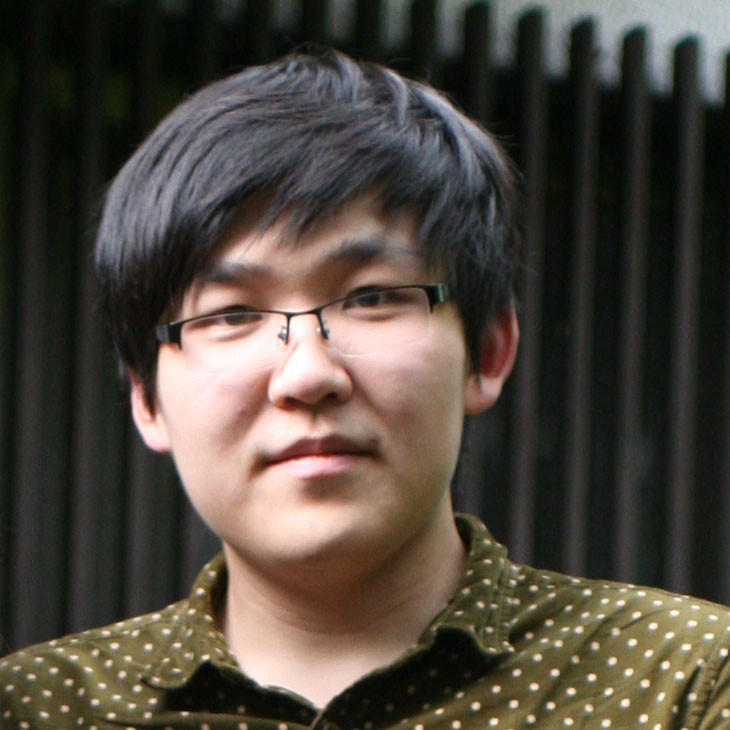
 Xing Sun
· 4 previous affiliations
- Tencent (China)Since 2016
- Director · Since 2022
- Current
- Principal Researcher · 2016–2022
- Team Manager · 2019–2022
- SHOPEE2022
- Computer Vision Algorithm Leader · 2022
- University of Hong Kong2012–2016
- Doctor of Philosophy (PhD), Electrical and Electronics Engineering · 2012–2016
- Exchange student, Electrical and Electronics Engineering · 2012
Research Overview
Xing Sun focuses on multimodal large language models, autonomous agents, and retrieval-augmented generation. His trajectory spans early work in data mining and computer vision to recent advancements in foundation models and reinforcement learning. Currently, he directs research on scaling long-context multimodal architectures and developing robust evaluation frameworks for complex reasoning agents.
Research Trajectory
Xing Sun’s research trajectory begins with foundational contributions to data mining and statistical analysis. Early in his career, he analyzed the statistical properties of frequent itemset mining in the presence of noise, detailing significance bounds and noise sensitivity in Significance and Recovery of Block Structures in Binary Matrices with Noise. He later expanded into computer vision and unsupervised learning, introducing an algorithm for human and car trajectory detection in Unsupervised Tracking With the Doubly Stochastic Dirichlet Process Mixture Model, which utilized temporal doubly stochastic Dirichlet process mixture models to capture global dependence without relying on Markov assumptions.
Transitioning toward deep learning optimization and robustness, he developed Stripe-Wise Pruning (SWP) to compress and accelerate neural networks. Detailed in Pruning Filter in Filter, this method achieved finer granularity than traditional filter pruning while maintaining hardware compatibility. He also collaborated on methods for handling annotation errors in deep neural networks. In Learning with Instance-Dependent Label Noise: A Sample Sieve Approach, he participated in developing theoretically rigorous solutions for datasets where label noise depends on the difficulty of the recognition task, advancing the research direction of Learning with Instance Dependent Label Noise.
As a Principal Researcher and Team Manager at Tencent Youtu Lab, his focus expanded to visual document understanding and universal visual perception. He introduced SeRum, an end-to-end model that bypasses traditional OCR pipelines by dynamically filtering irrelevant background pixels, as described in Attention Where It Matters: Rethinking Visual Document Understanding with Selective Region Concentration. Building on this paradigm of unified visual processing, he developed APE, a universal visual perception model detailed in Aligning and Prompting Everything All at Once for Universal Visual Perception. By treating every region as an individual instance, APE unified object detection, segmentation, and visual grounding into a single framework capable of processing thousands of prompts simultaneously.
A significant portion of his recent trajectory centers on the architecture, scaling, and evaluation of Multimodal Large Language Models (MLLMs). He addressed the critical issue of factual accuracy in Woodpecker: hallucination correction for multimodal large language models. Pushing the boundaries of native multimodal integration, he explored speech interaction in DeepTalk: Towards Seamless and Smart Speech Interaction with Adaptive Modality-Specific MoE, which preserves paralinguistic features like emotion and prosody while mitigating the catastrophic forgetting often caused by insufficient paired speech-text data. To handle increasingly complex inputs, he directed the development of Long-VITA, an open-source model capable of processing up to one million tokens or 4,000 video frames, as presented in Long-VITA: Scaling Large Multi-modal Models to 1 Million Tokens with Leading Short-Context Accuracy. Recognizing the need for rigorous evaluation in this space, he led the creation of Video-MME: The First-Ever Comprehensive Evaluation Benchmark of Multi-modal LLMs in Video Analysis, which tests models across diverse domains and temporal complexities.
Parallel to his work on multimodal architectures, he has extensively investigated language model reasoning, reinforcement learning, and autonomous agents. He evaluated the temporal and logical retrieval capabilities of LLMs in Sequential-NIAH: A Needle-In-A-Haystack Benchmark for Extracting Sequential Needles from Long Contexts. Applying reinforcement learning to natural language tasks, he introduced a two-stage curriculum and novel reward mechanism in PoLi-RL: A Point-to-List Reinforcement Learning Framework for Conditional Semantic Textual Similarity. To better understand and cultivate autonomous capabilities during model training, he developed APTBench: Benchmarking Agentic Potential of Base LLMs During Pre-Training, contributing to the broader area of The Emergent Reasoning Threshold in Language Models. Within this same research area, he oversaw the creation of a large-scale Prompt Optimization Preference dataset in FIPO: Free-form Instruction-oriented Prompt Optimization with Preference Dataset and Modular Fine-tuning Schema, refining naive prompts using offline local LLM-based optimizers.
His most recent work emphasizes the practical deployment and evaluation of computer-using agents and retrieval-augmented generation (RAG) systems. He directed the introduction of CUARewardBench: A Benchmark for Evaluating Reward Models for Computer-Using Agents, which utilizes a Unanimous Prompt Ensemble to boost the reliability of AI judges assessing task completion. To train these agents more effectively, he guided the development of SPEAR in Learn the Ropes, Then Trust the Wins: Self-imitation with Progressive Exploration for Agentic Reinforcement Learning, balancing broad tool-use exploration with self-imitation. Finally, he led the creation of a unified framework for complex multi-hop reasoning in Youtu-GraphRAG: Vertically Unified Agents for Graph Retrieval-Augmented Complex Reasoning, tightly integrating graph construction and retrieval through an adaptive schema and hierarchical knowledge tree.
Continuing to expand on multi-agent collaboration, multi-turn reasoning, and parallel model architectures, Sun contributed to Grounding Agent Reasoning with Structured Process Supervision for Multi-turn Reinforcement Learning, which introduces the ARC framework to anchor agent reasoning to interaction history and decouple process supervision from outcome signals. In collaborative inference, they co-developed PLatour and PACT-Check in On the Opportunities and Challenges of Prefill-to-Autoregressive Cross-Model Transfer, investigating cross-model prefill transfer across frozen models via learned linear bridges. Turning to parallel systems, Sun directed the design of Loop-PP in A Pipeline-Parallel System for Depth-Recurrent Models, rescheduling cyclic pipeline parallelism to reduce peak memory and raise throughput for depth-recurrent architectures. Additionally, Sun senior-authored SVGFaith: A Two-Layer Meta-Evaluation of Faithfulness Metrics for Text-to-SVG Generation, presenting a benchmark and diagnostic decomposition metric to evaluate prompt faithfulness in text-to-SVG models. Sun also contributed to OmniEVIE: Evidence-Vector-Informed Embedding for Multi-modal Retrieval, a multi-vector embedding model that unifies text, image, visual document, video, and tool retrieval through a compressed index and three-stage retrieval pipeline.
Current Directions
Recent work investigates the evaluation and training of autonomous agents, alongside advanced retrieval-augmented generation systems. The most recent papers in the evidence address the challenge of training language model agents to use tools effectively through progressive exploration and self-imitation curricula. Additionally, this work focuses on developing robust reward models and benchmarks to reliably judge the performance of computer-using agents in partially observable environments. Another major current direction involves vertically unified frameworks for GraphRAG, integrating graph construction and retrieval to improve accuracy and reduce token costs in complex, multi-hop reasoning tasks.
Profile updated
Loading new papers…
Other researchers whose papers cluster into the same research directions — a proxy for overlapping technical interests and shared intellectual neighborhoods.
See something wrong? Report a mistake