

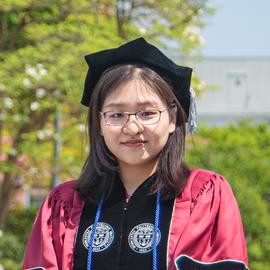
 Xin Zhang
· 2 previous affiliations
- San Diego State UniversitySince 2023
- Assistant Professor · Since 2023
- Worcester Polytechnic Institute2017–2023
- PhD student · 2017–2023
30 other authors named Xin Zhang: Xin Zhang (Chinese Academy of Sciences · 204 papers), Xin Zhang (Meta (United States) · 78 papers), Xin Zhang (Harbin Institute of Technology · Hong Kong Polytechnic University · 40 papers), Xin Zhang (Peking University · 29 papers), Xin Zhang (23 papers), and 25 more
Research Overview
Xin Zhang focuses on artificial intelligence and spatial-temporal data mining, with a particular emphasis on urban intelligence, human behavior modeling, and embodied AI. Her work integrates deep learning techniques to address challenges in smart city infrastructure, trajectory analysis, and decision-making processes in complex environments. Currently an Assistant Professor at San Diego State University, Zhang’s research trajectory has evolved from specialized imitation learning applications for urban mobility to the development of foundational generative models and zero-shot learning frameworks for autonomous agents and urban dynamics.
Research Trajectory
Zhang’s early research, beginning around 2019, focused on the intersection of imitation learning (IL) and urban computing. During this period, she addressed the problem of modeling complex human decision-making in the context of urban mobility, specifically focusing on the passenger-seeking strategies of taxi drivers. This work was motivated by the observation that driver preferences are highly dynamic and location-dependent, making them difficult to capture using traditional methods. To solve this, she developed conditional generative adversarial imitation learning (cGAIL) frameworks, which allowed for the recovery of expert-like strategies from partial and heterogeneous trajectory data. This research established a foundation for using adversarial methods to model human behavior in spatial-temporal contexts.
By 2020, Zhang’s work expanded into more fundamental methodological questions within imitation learning. She investigated the impact of different discrepancy measures on the accuracy and data efficiency of recovered policies. This led to the development of frameworks that could automatically learn optimal divergence measures from the f-divergence family, rather than relying on pre-determined metrics. This shift toward methodological flexibility allowed for more robust policy learning across diverse demonstration sets.
In the subsequent years (2021–2023), Zhang’s focus broadened to include urban dynamics prediction and the robustness of spatial-temporal representations. She addressed the challenges of predicting traffic status and travel demand in highly uncertain urban environments by applying meta-learning approaches. These methods were designed to capture irregular and rare patterns that standard time-series models often overlook. During this phase, she also participated in research regarding the security and robustness of human mobility identification, exploring how spatial-temporal models could be made resilient against adversarial attacks. Her work during this period also involved collaborative efforts in self-supervised pre-training for spatial-temporal data, aiming to create generic representations that could transfer across different urban domains and tasks, reducing the reliance on large labeled datasets.
Since 2025, Zhang’s research has increasingly centered on the application of Large Language Models (LLMs) and diffusion models to decision-making and urban intelligence. This current phase of her work emphasizes zero-shot generalization and the alignment of behavioral data with natural language. She has led research into Decision Transformers that can generalize to unseen tasks through text-behavior alignment, as well as the development of multifaceted spatial-temporal LLMs for city-scale predictions. Her most recent work also addresses the theoretical and practical aspects of diffusion models, including their acceleration through ergodic theory and the development of "unlearning" frameworks to ensure the safety and regulatory compliance of diffusion-based policies.
Current Directions
Zhang’s current research program is defined by three primary pillars: embodied AI, generative modeling for urban systems, and the safety of autonomous agents. In the realm of embodied AI, she is investigating how agents can leverage natural language descriptions to perform tasks in new environments without prior demonstrations. This involves Predictive Correlation for Validating Robot Simulators and the alignment of high-dimensional behavioral trajectories with linguistic embeddings to facilitate zero-shot transfer.
In urban intelligence, Zhang is exploring the "zero-shot" capabilities of LLMs to predict patterns in cities where no historical data is available. This direction seeks to overcome the data scarcity bottleneck in smart city applications by treating urban dynamics as a multifaceted sequence modeling problem. This work also intersects with concerns about Containerized Isolation for Reproducible Benchmarking, as the integration of web-scale training data necessitates more rigorous validation of model performance in real-world urban scenarios.
Finally, Zhang is focusing on the controllability and interpretability of generative models. This includes developing diffusion models that are not only faster to train and sample but also provide mechanisms for "forgetting" specific data points. This "unlearning" capability is critical for deploying AI in sensitive domains where privacy, safety, and the removal of biased or unsafe behaviors are paramount.
Representative Work
Unveiling Taxi Drivers' Strategies via cGAIL: Conditional Generative Adversarial Imitation Learning In this first-author work, Zhang addresses the challenge of learning passenger-seeking strategies from individual taxi trajectories. Recognizing that drivers' preferences are diverse and that individual data is often incomplete, she proposes a conditional GAIL framework. This model treats the driver's location as a condition, allowing the agent to learn location-dependent strategies that generalize across the urban environment. The work demonstrates how adversarial imitation learning can be adapted to capture the nuances of human decision-making in spatial-temporal contexts.
f-GAIL: Learning f-Divergence for Generative Adversarial Imitation Learning As the first author, Zhang investigates the fundamental question of which divergence measure is most effective for imitation learning. Rather than using a fixed divergence (like the Jensen-Shannon divergence used in standard GAIL), she introduces f-GAIL, which automatically learns the most suitable discrepancy measure from the f-divergence family. This approach improves data efficiency and the accuracy of the recovered expert policy, providing a more flexible framework for imitation learning across different types of expert demonstrations.
DAC-ML: Domain Adaptable Continuous Meta-Learning for Urban Dynamics Prediction In this first-author paper, Zhang tackles the problem of short-term urban traffic status forecasting. She identifies that urban dynamics are highly uncertain and vary significantly across geographical locations. To address this, she proposes a domain-adaptable continuous meta-learning framework. This model is designed to capture rare and irregular patterns by continuously adapting to new data distributions, moving beyond the unrealistic assumptions of static patterns found in previous urban prediction models.
Decision Transformers As Zero-Shot Learners via Text-Behavior Alignment This first-author work introduces the Text-Guided Decision Transformer (TG-DT), a framework that enables offline reinforcement learning agents to generalize to new tasks using natural language descriptions. By aligning behavioral trajectories with text in a shared latent space through a dual contrastive and matching objective, Zhang demonstrates that agents can achieve zero-shot performance that rivals or exceeds methods requiring explicit task demonstrations. This represents a significant step toward creating generalist agents capable of following complex instructions in novel environments.
Eigenvalue-Guided Explainable and Accelerated Diffusion Model Serving as the senior author (PI), Zhang presents EGEA-DM, a framework grounded in ergodic theory designed to improve the training and sampling efficiency of diffusion models. The model uses the principal eigenvalue of the L-generator to control the forward diffusion speed, allowing for adaptive adjustments of the reverse steps. This theoretical approach provides both a mechanism for accelerating the generation process and a higher degree of interpretability and fine-grained controllability in data generation.
Unlearning Diffusion Policies with Relative Fisher Forgetting In this second-author contribution, Zhang addresses the emerging need for "machine unlearning" in the context of diffusion-based offline reinforcement learning. The paper introduces Relative Fisher Forgetting (RFF), the first framework designed to remove the influence of specific, unwanted data from diffusion policies. This is achieved by addressing the spread of training influence across the denoising process, providing a method to eliminate unsafe behaviors or comply with data privacy regulations without requiring a full retraining of the model.
Profile updated
Loading new papers…
Other researchers whose papers cluster into the same research directions — a proxy for overlapping technical interests and shared intellectual neighborhoods.
See something wrong? Report a mistake