

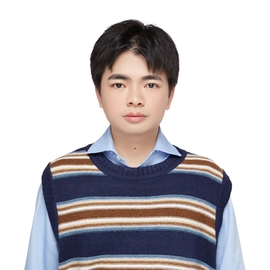
 Xin Ma
· 3 previous affiliations
- Monash UniversityCurrent
- Current
- PhD student · 2022–2025
- Institute of Automation2018–2021
- MS student · 2018–2021
- Chinese Academy of Sciences2018–2021
- MS student · 2018–2021
6 other authors named Xin Ma: Xin Ma (Columbia University · 27 papers), Xin Ma (ENN (China) · 27 papers), Xin Ma (Sichuan University · 2 papers), Xin Ma (1 paper), Xin Ma (1 paper), and 1 more
Research Overview
Xin Ma focuses on video and image generation, low-level computer vision, and multimodal representation learning. Early work addressed image restoration and heterogeneous face recognition through specialized neural architectures. More recently, the research has shifted toward large-scale generative models, emphasizing latent diffusion transformers and controllable animation for high-fidelity video synthesis.
Research Trajectory
Xin Ma’s early research focused on low-level computer vision tasks, specifically addressing the challenges of image restoration and enhancement in complex, real-world scenarios. Initial work investigated how to handle unknown degradation transformations in super-resolution, noting that real-world low-resolution images rarely result from simple bilinear down-sampling. In Style-based Variational Autoencoder for Real-World Super-Resolution, Ma proposed a pipeline that isolates complex nuisance factors in low-resolution images, transferring them to generated images to create realistic training pairs. This approach intersected with the broader area of Representing Visual Style through Neural Feature Correlations, utilizing style and attention mechanisms to improve the robustness of super-resolution networks.
Following this, the focus expanded to image inpainting, particularly the challenge of filling free-form masks that create complex visual patterns. As first author of Free-Form Image Inpainting via Contrastive Attention Network, Ma introduced a self-supervised Siamese inference network designed to encode contextual semantics from full-resolution images. This architecture improved the generalization of autoencoder-based inpainting models when dealing with irregular missing regions. During this period, Ma also participated in collaborative research on heterogeneous face recognition and few-shot model compression, contributing to architectures that extract domain-invariant features and optimize compact models by mimicking intermediate layer representations.
By 2023, Ma’s trajectory shifted significantly toward large-scale generative models and multimodal video synthesis. This transition was marked by participation in foundational text-to-video frameworks. As a core contributor to LAVIE: High-Quality Video Generation with Cascaded Latent Diffusion Models, Ma helped develop an integrated framework that leverages pre-trained text-to-image models to synthesize temporally coherent videos. The system utilized a cascaded approach—comprising a base text-to-video model, a temporal interpolation model, and a video super-resolution model—demonstrating that temporal self-attention and joint image-video fine-tuning are critical for maintaining the creative capacity of the base model while introducing motion.
Building on these diffusion-based approaches, Ma subsequently led the development of novel transformer architectures for video generation. In Latte: Latent Diffusion Transformer for Video Generation, Ma introduced a framework that extracts spatio-temporal tokens from videos and models their distribution in the latent space using a series of Transformer blocks. To handle the substantial number of tokens required for video, the research evaluated four efficient variants for decomposing spatial and temporal dimensions. This work provided rigorous empirical analysis on best practices for video clip patch embedding and temporal positional encoding, establishing a scalable alternative to standard U-Net architectures in video diffusion.
Most recently, Ma has focused on improving the controllability and temporal consistency of generative animation, addressing challenges related to the research direction of 3D Geometric Consistency in Image and Video Modeling. In Consistent and Controllable Image Animation with Motion Diffusion Models (Cinemo), Ma shifted the learning objective from direct frame prediction to modeling motion residuals. By incorporating a discrete cosine transformation-based noise refinement strategy and a structural similarity index-based control mechanism, this approach mitigates sudden motion changes and preserves the structural integrity of the original static image while allowing explicit control over motion intensity.
Continuing the emphasis on efficient, high-fidelity generation, Ma recently developed Training-free Stylized Text-to-Image Generation with Fast Inference (OmniPainter). This work leverages Latent Consistency Models to achieve rapid stylization from a single reference image, bypassing the computational overhead of traditional fine-tuning or complex inversion techniques to generate stylized outputs in under a second.
Current Directions
The most recent papers in the evidence indicate a strong focus on the efficiency, consistency, and controllability of large-scale generative models for both images and video. Current work investigates latent diffusion transformers as a scalable architecture for video synthesis, exploring how to optimally decompose spatial and temporal dimensions to handle massive token sequences without prohibitive computational costs.
Additionally, recent research addresses the challenge of temporal smoothness and identity preservation in image animation. By modeling motion residuals rather than predicting raw frames, the work seeks to ensure that animated narratives guided by textual prompts remain visually consistent with their source images. A parallel focus involves accelerating stylized text-to-image generation, utilizing latent consistency models to achieve high-quality, training-free synthesis with minimal inference latency.
Profile updated
Loading new papers…
Other researchers whose papers cluster into the same research directions — a proxy for overlapping technical interests and shared intellectual neighborhoods.
See something wrong? Report a mistake