

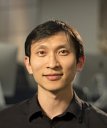
 Xin Li
· 4 previous affiliations
- Texas A&M UniversitySince 2022
- Section Chair of Visual Computing and Interactive Media · Since 2023
- Full Professor · Since 2022
- Louisiana State University2008–2022
- Full Professor · 2020–2022
- Associate Professor · 2008–2020
- Associate Professor · 2014–2020
- Assistant Professor · 2008–2014
- Stony Brook University2003–2008
- Research Assistant · 2005–2008
- Doctor of Philosophy (PhD), Computer Science · 2003–2008
- Teaching Assistant · 2003–2005
- Bachelor of Engineering (B.E.), Computer Science · 1999–2003
43 other authors named Xin Li: Xin Li (Beijing Institute of Technology · 211 papers), Xin Li (University at Albany, State University of New York · 180 papers), Xin Li (150 papers), Xin Li (Peng Cheng Laboratory · 80 papers), Xin Li (50 papers), and 38 more
Research Overview
Xin Li focuses on 3D computer vision, geometric modeling, and generative AI for complex spatial data. His trajectory spans early foundational work in surface mapping and topology to recent advancements in point cloud processing, 3D shape generation, and scene reconstruction. Currently, his research emphasizes diffusion models and disentangled representations for high-fidelity 3D synthesis and avatar generation.
Research Trajectory
Xin Li’s early research established foundational techniques in geometric modeling, specifically addressing the mathematical and computational challenges of mapping complex surfaces. He introduced a quasi-conformal surface mapping framework designed to globally minimize the stretching energy inevitably introduced between shapes of the same topology in Globally Optimal Surface Mapping for Surfaces with Arbitrary Topology. Building on this optimization work, he developed an automated pants decomposition framework to compute maps between surfaces with arbitrary topologies. This approach, detailed in Surface Mapping Using Consistent Pants Decomposition, ensures consistent segmentation and constructs global mappings through the harmonic maps of corresponding patches. This early focus on geometric properties and topological consistency laid the groundwork for his later contributions to the broader research area of Conformal Surface Parameterization.
Transitioning into the deep learning era, his focus expanded to 3D computer vision and the processing of irregular spatial data. His group investigated structural extraction techniques, such as in A Cross-Dimension Annotations Method for 3D Structural Facial Landmark Extraction. A major theme of this period became the effective representation and learning of point clouds. To address the inherent irregularity and lack of ordering in 3D points, his lab developed BLNet: Bidirectional learning network for point clouds, which optimizes feature learning through iterative feature-guided point shifting to minimize intra-class variances. Concurrently, his research addressed autonomous navigation and spatial mapping challenges, leading to methods for LiDAR-based localization using universal encoding and memory-aware regression and DeepSIR: Deep semantic iterative registration for LiDAR point clouds.
Recognizing the difficulty of training models on sparse and irregular 3D data, he proposed novel self-supervised learning paradigms to extract discriminative features without extensive annotation. He designed Cross-BERT for Point Cloud Pretraining, a cross-modal architecture that leverages implicit semantic and geometric correlations between 2D images and 3D point clouds through specialized alignment tasks. He also introduced PointSmile: Point Self-supervised Learning via Curriculum Mutual Information, a reconstruction-free approach that maximizes mutual information across point cloud replicas by imitating human curriculum learning—starting with easy tasks and gradually increasing difficulty.
In recent years, his work has heavily emphasized generative models for both 2D synthesis and 3D reconstruction. In the 2D domain, his team proposed ALR-GAN: Adaptive Layout Refinement for Text-to-Image Synthesis, which adaptively refines image layouts without auxiliary information by balancing the matching of hard and easy features. Extending generative priors to 3D, he collaborated on Surf-D: Generating High-Quality Surfaces of Arbitrary Topologies Using Diffusion Models. This method utilizes Unsigned Distance Fields (UDFs) to accommodate complex shapes and employs a point-based AutoEncoder to learn a compact latent space. This work aligns with his ongoing contributions to the research direction of Overcoming the Fixed Topology Constraint in 3D Modeling. He further advanced single-image 3D shape generation by developing SPGen: Spherical Projection as Consistent and Flexible Representation for Single Image 3D Shape Generation, which captures 3D geometry in a 2D format to leverage powerful 2D diffusion models while avoiding view inconsistencies, and explored point-based generation frameworks in PDT: Point Distribution Transformation with Diffusion Models.
His generative research also extends to human digitization and large-scale scene synthesis. He participated in developing a text-to-avatar framework in Disentangled Clothed Avatar Generation from Text Descriptions, which separates body and clothing generation using a Sequentially Offset-SMPL representation to enable high-quality downstream animation. This work is central to the broader area of Layered Disentanglement for Animatable 3D Human Avatars. Most recently, he has contributed to robust scene reconstruction and generation. This includes collaborating on 3DGS-HPC: Distractor-free 3D Gaussian Splatting with Hybrid Patch-wise Classification, which removes transient distractors like moving people from 3D Gaussian Splatting reconstructions, and Controllable 3D Outdoor Scene Generation via Scene Graphs, an interactive system that guides conditional diffusion models using sparse scene graphs to generate dense outdoor environments.
Current Directions
The most recent papers in the evidence indicate a strong focus on controllable and high-fidelity 3D generation using advanced representations and diffusion models. Recent work investigates how to overcome the limitations of traditional 3D formats by employing novel representations like Unsigned Distance Fields and Spherical Projections to handle arbitrary topologies and ensure view consistency during generation.
Additionally, current research addresses the need for user-friendly control in large-scale scene synthesis, utilizing scene graphs to guide conditional diffusion models for complex outdoor environments. Another active area involves improving the robustness and editability of 3D reconstructions. This is evidenced by recent efforts to disentangle human avatars into separate body and clothing layers for seamless animation, as well as techniques to filter transient distractors from 3D Gaussian Splatting pipelines, ensuring clean and accurate spatial captures.
Profile updated
Loading new papers…
Other researchers whose papers cluster into the same research directions — a proxy for overlapping technical interests and shared intellectual neighborhoods.
See something wrong? Report a mistake