

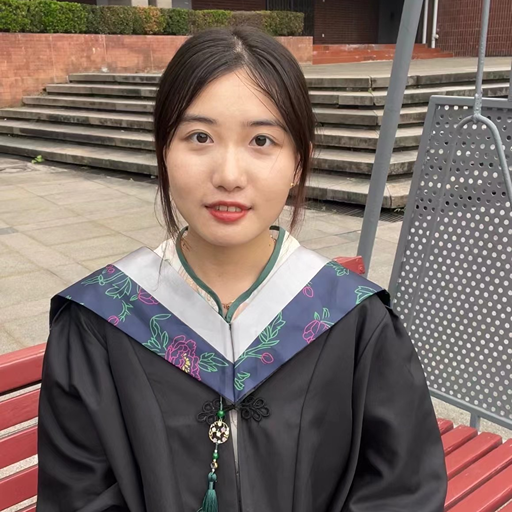
 Xin Gao
· 2 previous affiliations
- Yale UniversitySince 2026
- PhD student · 2026–2031
- Current
- Fudan University2023–2026
- MS student · 2023–2026
10 other authors named Xin Gao: Xin Gao (King Abdullah University of Science and Technology · 594 papers), Xin Gao (5 papers), Xin Gao (South China Agricultural University · 2 papers), Xin Gao (Shanghai Artificial Intelligence Laboratory · Shanghai Jiao Tong University · 2 papers), Xin Gao (ByteDance (China) · 2 papers), and 5 more
Research Overview
Xin Gao focuses on robust multimodal learning, 3D computer vision, and the reasoning capabilities of large language models. His early work addressed incomplete data and distribution shifts in medical imaging and visual SLAM systems. More recently, his research investigates verifiable reasoning in frontier AI models and the evaluation of multimodal systems for complex spatial and clinical tasks.
Research Trajectory
Gao's research trajectory begins with a focus on robust representation learning, particularly in scenarios characterized by incomplete or out-of-distribution data. In Deep Incomplete Multi-view Learning via Cyclic Permutation of VAEs, he introduced a framework that explicitly models inter-view correspondences to handle missing data modalities. By utilizing a cyclic permutation technique to establish informational priors, the method learns representations that remain consistent even when several views are absent. This interest in robust representations naturally extended to clinical applications, where data is frequently imperfect. He addressed the synthesis of missing MRI modalities in Multi-modal MRI Translation via Evidential Regression and Distribution Calibration, developing a method that quantifies prediction uncertainty to ensure reliability across diverse medical centers. Continuing this focus on challenging clinical data, he explored statistical anomalies in medical imaging with BayeSMM: Robust Deep Combined Computing Tackling Heavy-Tailed Distribution in Medical Images.
Beyond medical contexts, Gao investigated broader visual robustness, contributing to the research direction of Synthetic Outlier Exposure for Open Set Recognition. In GOOD: Training-Free Guided Diffusion Sampling for Out-of-Distribution Detection, he designed a framework utilizing off-the-shelf classifiers to steer diffusion models toward generating high-quality, diverse synthetic anomalies. This approach improves out-of-distribution detection without the need for manual outlier collection. He also participated in developing lightweight image signal processing techniques in Dark-ISP: Enhancing RAW Image Processing for Low-Light Object Detection, which decouples the processing pipeline into adaptive linear and nonlinear modules to improve detection accuracy in dark environments directly from raw sensor data.
Concurrently, Gao advanced methods for spatial understanding and 3D reconstruction. He proposed a monocular SLAM system in PAPL-SLAM: Principal Axis-Anchored Monocular Point-Line SLAM that unifies line feature representation by anchoring co-directional lines to principal axes. This significantly reduces the number of optimization parameters, leading to faster mapping and localization in structured environments. Building on efficient spatial representations, he developed ARTDECO: Towards Efficient and High-Fidelity On-the-Fly 3D Reconstruction with Structured Scene Representation. By combining 3D foundation models for tracking with a hierarchical Gaussian Splatting representation, the framework bridges the gap between slow optimization techniques and fast feed-forward reconstruction models. This spatial expertise also informed his collaborative work in robotics. He contributed to Learning Spatial-Aware Manipulation Ordering, a project addressing how robots should sequence object manipulation in cluttered environments to avoid collisions and structural collapse. This work intersects with broader research areas such as Geospatial Grounding and Physical Reasoning in Large Language Models and Dual System Architectures for Real Time Robotic Control.
In the latter part of 2025 and into 2026, Gao's focus expanded to the reasoning capabilities and evaluation of large language models (LLMs) and multimodal systems. Returning to the medical domain through an evaluation lens, he introduced MedQ-Bench: Evaluating and Exploring Medical Image Quality Assessment Abilities in MLLMs. This benchmark assesses how well multimodal models perceive clinical image degradation, contributing to the fields of Explainable Image Quality Assessment through Natural Language and Evaluating Generative AI with Large Language Models. To improve the underlying reasoning processes of these models, he investigated the area of Scaling Language Model Reasoning Beyond Verifiable Rewards. In Loong: Synthesize Long Chain-of-Thoughts at Scale through Verifiers, he demonstrated how verifiable rewards in domains like mathematics and coding can elicit deep, multi-step reasoning chains. Most recently, he collaborated on Reasoning on the Manifold: Bidirectional Consistency for Self-Verification in Diffusion Language Models, which proposes a training-free metric to verify the reasoning quality of diffusion-based language models by assessing geometric stability during a forward-masking and backward-reconstruction process. Gao also contributed to Class-Domain Incremental Learning with Extensible Multi-Center Modeling, which presents EMCift to mitigate catastrophic forgetting under simultaneous class and domain shifts through extensible tree-structured multi-center prototypes and dual-path drift harmonization.
Current Directions
The most recent papers in the evidence indicate a strong focus on the reasoning capabilities and self-verification mechanisms of large language models. Recent work investigates how to elicit and validate complex, multi-step reasoning chains, particularly through reinforcement learning with verifiable rewards and bidirectional consistency metrics in diffusion language models. Additionally, Gao continues to explore the intersection of multimodal perception and clinical evaluation, assessing the gap between frontier AI models and human experts in specialized domains like medical image quality assessment.
Profile updated
Loading new papers…
Other researchers whose papers cluster into the same research directions — a proxy for overlapping technical interests and shared intellectual neighborhoods.
See something wrong? Report a mistake