

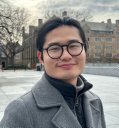
 Xin Dong
· 4 previous affiliations
- ByteDance (China)Since 2025
- Researcher · Since 2025
- Harvard UniversityCurrent
- Current
- PhD student · 2018–2023
- Nvidia (United States)2024–2025
- Researcher · 2024–2025
- Sony AI2023–2024
- Researcher · 2023–2024
4 other authors named Xin Dong: Xin Dong (ByteDance (China) · 9 papers), Xin Dong (5 papers), Xin Dong (3 papers), Xin Dong (1 paper)
Research Overview
Xin Dong focuses on the development of intelligent and efficient foundation models, with specific emphasis on neural network quantization, hybrid architectures, and reinforcement learning for reasoning. His trajectory spans early work on model compression and spiking neural networks to recent innovations in small language model architectures and multi-reward optimization. Currently, he investigates hybrid attention mechanisms and efficient reinforcement learning pipelines for advanced language modeling.
Research Trajectory
Dong’s early research addressed the computational bottlenecks of deep learning, particularly for edge devices and resource-constrained environments. He participated in developing layer-wise pruning techniques based on second-order derivatives in Learning to Prune Deep Neural Networks via Layer-wise Optimal Brain Surgeon. Building on the need for efficient inference, he introduced a novel non-uniform discretization scheme in Additive Powers-of-Two Quantization: An Efficient Non-uniform Discretization for Neural Networks. This approach represented values as sums of multiple powers-of-two, bridging the gap between high-accuracy non-uniform quantization and hardware-efficient uniform quantization. During this period, he also explored efficient natural language processing, contributing to the research direction of The Impact of Subword Fragmentation on Domain Adaptation through exBERT: Extending Pre-trained Models with Domain-specific Vocabulary Under Constrained Training Resources, which demonstrated how to adapt large pre-trained models to specialized domains using a frozen-weight extension module.
Between 2021 and 2022, his focus on efficiency expanded into neuromorphic computing and robust representations. He contributed to the area of Low-Latency Inference for High-Precision Spiking Neural Networks, as well as the related directions of Mitigating Quantization Error in ANN to SNN Conversion and Minimizing Quantization Error in Spiking Neural Networks, with A Free Lunch From ANN: Towards Efficient, Accurate Spiking Neural Networks Calibration. This work provided a highly efficient method to convert pre-trained artificial neural networks into spiking neural networks with minimal accuracy loss. Concurrently, he investigated the reliability and security of neural representations. He developed a method leveraging model activation means for out-of-distribution detection in Neural Mean Discrepancy for Efficient Out-of-Distribution Detection. He also examined privacy vulnerabilities, demonstrating in Privacy Vulnerability of Split Computing to Data-Free Model Inversion Attacks that original images could be recovered from intermediate features, challenging assumptions about split computing security. Additionally, he addressed non-i.i.d. data challenges in decentralized training by introducing a hyperspherical framework in SphereFed: Hyperspherical Federated Learning.
Returning to data efficiency and computer vision in 2024, Dong explored the utility of generative models for training data augmentation. He proposed leveraging text-to-image synthesis for generating variations of labeled real images in A Simple Background Augmentation Method for Object Detection with Diffusion Model. Expanding on the integration of synthetic data, he investigated distribution shifts in Is Synthetic Image Useful for Transfer Learning? An Investigation into Data Generation, Volume, and Utilization, introducing a two-stage framework to improve transferability and downstream classification accuracy.
Most recently, his trajectory has centered on the architecture and optimization of advanced language models. He introduced a novel approach to small language models in Hymba: A Hybrid-head Architecture for Small Language Models, which fuses Transformer attention heads and State Space Model heads in parallel to drastically reduce cache memory requirements while improving speed. He also contributed to the broader area of Hybrid Masking for Faster Parallel Decoding through his work on TiDAR: Think in Diffusion, Talk in Autoregression, which synergizes diffusion and autoregressive generation in a single forward pass. In the domain of reasoning and alignment, he participated in accelerating training pipelines with QuRL: Low-Precision Reinforcement Learning for Efficient Reasoning, addressing stability issues in quantized reinforcement learning. Further advancing this domain, he co-developed a normalized policy optimization method in GDPO: Group reward-Decoupled Normalization Policy Optimization for Multi-reward RL Optimization, which improves training stability across complex tool-calling and mathematical tasks, contributing to the broader research direction of Why Reinforcement Learning for Large Models Is Computationally Expensive.
Current Directions
The most recent work in the evidence focuses on the architecture and alignment of efficient foundation models. A primary direction involves designing hybrid architectures for small language models that combine the strengths of Transformer attention and State Space Models to optimize memory usage and inference speed. Additionally, recent research investigates novel generation paradigms that unify diffusion and autoregressive decoding to maximize GPU utilization without sacrificing output quality. Finally, there is a strong emphasis on improving reinforcement learning pipelines for language model reasoning, specifically through low-precision training techniques and decoupled reward normalization strategies that stabilize multi-objective optimization.
Profile updated
Loading new papers…
Other researchers whose papers cluster into the same research directions — a proxy for overlapping technical interests and shared intellectual neighborhoods.
See something wrong? Report a mistake