

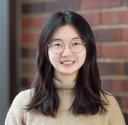
 Xijun Wang
· 2 previous affiliations
- Purdue University West LafayetteSince 2024
- Postdoc · Since 2024
- Northwestern University2018–2024
- PhD student · 2018–2024
4 other authors named Xijun Wang: Xijun Wang (Amazon (United States) · University of Maryland, College Park · 20 papers), Xijun Wang (University of Science and Technology of China · 2 papers), Xijun Wang (1 paper), Xijun Wang (Sun Yat-sen University · 1 paper)
Research Overview
Xijun Wang focuses on generative artificial intelligence, image and video enhancement, and computational photography. His trajectory spans early work in video super-resolution and atmospheric turbulence correction to recent advancements in physically grounded video generation. Currently, he investigates the intersection of generative models and real-world physical dynamics to enable scene-consistent, controllable image synthesis.
Research Trajectory
Wang’s early research concentrated on video super-resolution and temporal action localization. He explored adversarial training techniques in Spatially Adaptive Losses for Video Super-resolution with GANs, establishing a foundation for spatially aware image reconstruction. Expanding into video understanding, he developed VQK-Net in Video-Specific Query-Key Attention Modeling for Weakly-Supervised Temporal Action Localization. This architecture introduced a video-specific approach to weakly-supervised localization by learning unique action queries for individual input videos, combining abstract action knowledge with specific scene context to improve temporal alignment.
Between 2023 and 2024, his focus expanded to address complex environmental degradations, particularly atmospheric turbulence. He introduced deep learning approaches to mitigate these effects in Atmospheric Turbulence Correction via Variational Deep Diffusion and subsequently extended this to practical scenarios in Real-World Atmospheric Turbulence Correction Via Domain Adaptation. Concurrently, he continued to refine super-resolution methodologies. He contributed to Real-Time Lightweight Video Super-Resolution With RRED-Based Perceptual Constraint and proposed targeted optimization strategies in A General Method to Incorporate Spatial Information into Loss Functions for GAN-based Super-resolution Models. The latter work demonstrated that weighting loss functions to prioritize high-frequency edge areas—extracted via standard detection algorithms—enables models to generate sharper details with fewer artifacts without altering the underlying network architecture.
More recently, Wang has integrated generative AI priors into restoration pipelines to handle severe degradations and low-light conditions. In Personalized Generative Low-light Image Denoising and Enhancement, he developed DiffPGD, a system that leverages a user’s smartphone photo gallery to extract lighting-independent physical buffers. This provides a strong personalized prior that prevents the hallucinations common in generic generative restoration, achieving high identity accuracy without per-user fine-tuning. He also participated in developing specialized architectures for weather-degraded video in RainRWKV: a deep RWKV model for video deraining. Exploring novel temporal paradigms for static images, he collaborated on Progressive Image Restoration via Text-Conditioned Video Generation, which reframes image restoration as a progressive video sequence. By fine-tuning video models to "grow" a clean image over several frames, the approach successfully leverages temporal priors for super-resolution and deblurring. Applying generative restoration to specialized domains, his team introduced AstroDiff in Astrophotography turbulence mitigation via generative models, a dual-branch diffusion model designed to strip atmospheric interference from ground-based astronomical images.
In 2025, Wang’s work increasingly addressed the gap between data-driven generative models and physical camera properties. He co-authored Generative Photography: Scene-Consistent Camera Control for Realistic Text-to-Image Synthesis, which introduced a framework to control camera intrinsic settings—such as focal length and field of view—during content generation. This work ensures scene-consistent synthesis and contributes directly to the broader research direction of Decoupling Motion Planning from Pixel Synthesis in Video Generation.
Current Directions
The most recent papers in the evidence indicate a strong focus on grounding generative video models in physical reality and 3D geometry. In SeeU: Seeing the Unseen World via 4D Dynamics-aware Generation, Wang and his collaborators introduced a framework that lifts sparse 2D video frames into a continuous 4D representation. By modeling dynamics natively in 3D space and time, the system achieves physically consistent video generation suitable for novel view synthesis and complex editing.
Building on this physical grounding, he contributed to NewtonGen: Physics-consistent and Controllable Text-to-Video Generation via Neural Newtonian Dynamics. This framework integrates classical mechanics into text-to-video generation, enabling precise user control over initial conditions and ensuring that generated motions adhere to physical laws. Together, these recent advancements drive progress in the area of Aligning Video Generation Models with Physical Laws and the related field of Trajectory Controllable Video Diffusion. Furthermore, by embedding explicit mechanical constraints into neural architectures, this work actively explores the research direction of Augmenting Physical Models with Neural Residuals.
Profile updated
Loading new papers…
Other researchers whose papers cluster into the same research directions — a proxy for overlapping technical interests and shared intellectual neighborhoods.
See something wrong? Report a mistake