

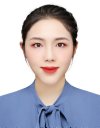
 Xihe Qiu
· 2 previous affiliations
- Associate Professor · Since 2022
- National University of Singapore2014–2018
- PhD student · 2014–2018
Research Overview
Xihe Qiu focuses on clinical artificial intelligence, reinforcement learning for healthcare, and the alignment and safety of large language models. His early work developed predictive models and optimal control strategies for critical care applications such as ventilator management and precision dosing. More recently, his research investigates multimodal foundation models, machine unlearning, and risk-sensitive reasoning for proactive AI agents.
Research Trajectory
In 2022, Qiu developed reinforcement learning approaches for critical care and clinical decision support. He introduced A latent batch-constrained deep reinforcement learning approach for precision dosing clinical decision support to optimize medication strategies, and collaborated on A model-based hybrid soft actor-critic deep reinforcement learning algorithm for optimal ventilator settings.
Moving into 2023, his work expanded into diagnostic computer vision and robust machine learning. He proposed an end-to-end framework for diagnosing benign paroxysmal positional vertigo in Gram-based Attentive Neural Ordinary Differential Equations Network for Video Nystagmography Classification, integrating medical prior knowledge into video analysis to improve diagnostic accuracy. He also participated in foundational research on out-of-distribution generalization, contributing to Provably Invariant Learning without Domain Information. This work addresses spurious correlations and advances the research direction of Machine Learning Beyond the IID Assumption and Causal Representation Learning for Out-of-Distribution Generalization. Additionally, he contributed to Self-Criticism: Aligning Large Language Models with their Understanding of Helpfulness, Honesty, and Harmlessness, exploring cost-effective alternatives to standard reinforcement learning from human feedback.
In 2024, Qiu continued to address time-series forecasting, developing A k-nearest neighbor attentive deep autoregressive network for electricity consumption prediction to capture regional dependencies and varying impact factors in energy grids. Simultaneously, his focus on language models deepened, particularly regarding safety and alignment. He led research into the area of Measuring Latent Bias via Log-Probability Preference Scoring with Promoting Equality in Large Language Models: Identifying and Mitigating the Implicit Bias based on Bayesian Theory. This work investigates how deep-seated stereotypes surface when models adopt specific personas. He also co-developed techniques for the research direction of Machine Unlearning for Large Language Models, contributing to ULMR: Unlearning Large Language Models via Negative Response and Model Parameter Average, a framework designed to selectively erase targeted information without requiring full retraining.
By 2025, Qiu's trajectory increasingly integrated multimodal capabilities with clinical applications. He directed research on Visual-Semantic Knowledge Conflicts in Operating Rooms: Synthetic Data Curation for Surgical Risk Perception in Multimodal Large Language Models. This work addresses the research direction of The Disconnect Between Visual Perception and Parametric Memory, introducing a synthetic dataset to benchmark how models perceive surgical risks when visual evidence contradicts textual safety rules. He further advanced the area of Explainable Deep Learning for Clinical Diagnostics with EEG-VLM: A Hierarchical Vision-Language Model with Multi-Level Feature Alignment and Visually Enhanced Language-Guided Reasoning for EEG Image-Based Sleep Stage Prediction, adapting vision-language models for complex physiological signal analysis using a stage-wise chain-of-thought strategy.
Returning to critical care optimization in 2025, Qiu developed Data-Augmented Offline Reinforcement Learning with Bidirectional Temporal Reconstruction for Ventilator Parameter Optimization. This framework contributes to the area of Safe Offline Reinforcement Learning for High Stakes Environments by synthesizing high-quality training trajectories that maintain temporal consistency both forward and backward in time. In the domain of language model alignment, he oversaw Reflective Personalization Optimization: A Post-hoc Rewriting Framework for Black-Box Large Language Models, which decouples factual generation from stylistic personalization using a two-stage rewriting approach.
The most recent phase of Qiu's work in 2026 extends into proactive agent design and advanced 3D vision. He directed the development of PRISM: Festina Lente Proactivity—Risk-Sensitive, Uncertainty-Aware Deliberation for Proactive Agents, a framework that utilizes a dual-process reasoning architecture to calibrate when an AI assistant should intervene, reducing false alarms. His clinical diagnostic research continued with MIMAR-OSA: Enhancing obstructive sleep apnea diagnosis through multimodal data integration and missing modality reconstruction. Additionally, he collaborated on Gradient-Direction-Aware Density Control for 3D Gaussian Splatting, contributing to the research direction of Distinguishing Structure from Texture via Gradient Coherence to improve memory efficiency and rendering sharpness in 3D scene reconstruction.
Current Directions
The most recent papers in the evidence indicate a strong focus on multimodal foundation models for high-stakes clinical environments. Recent work investigates how to align vision-language models with expert diagnostic reasoning for physiological signals like EEGs, as well as how to resolve visual-semantic knowledge conflicts in surgical settings. Concurrently, Qiu is addressing the design of proactive AI agents, focusing on risk-sensitive deliberation and uncertainty calibration to improve the reliability and timing of agent interventions. Finally, he continues to advance safe offline reinforcement learning for critical care, utilizing generative data augmentation to optimize treatment protocols without risking patient safety.
Profile updated
Loading new papers…
Other researchers whose papers cluster into the same research directions — a proxy for overlapping technical interests and shared intellectual neighborhoods.
See something wrong? Report a mistake