

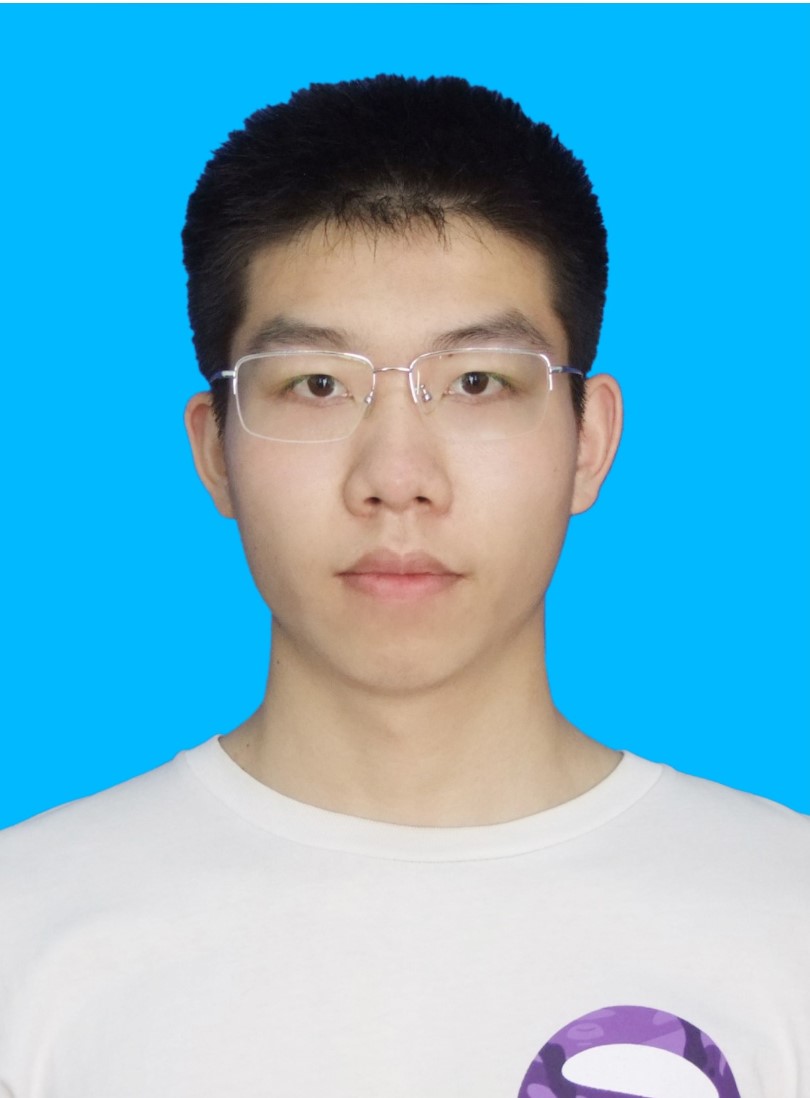
 Xiaqiang Tang
· 2 previous affiliations
- Current
- PhD student · 2024–2027
Research Overview
Xiaqiang Tang focuses on retrieval-augmented generation, efficient sequence modeling, and probabilistic approaches to embodied spatial reasoning. His trajectory spans from enhancing large language models with dynamic knowledge graphs to developing closed-loop control mechanisms for recurrent neural networks. Most recently, his work addresses robust robot navigation through probabilistic scene graphs in complex physical environments.
Research Trajectory
In 2025, Tang investigated the integration of structured knowledge into large language models to improve their reasoning capabilities and factual accuracy. Deploying large language models in real-world scenarios frequently exposes their limitations in memorizing extensive, continuously updating world knowledge. To address this, he introduced a framework in Adapting to Non-Stationary Environments: Multi-Armed Bandit Enhanced Retrieval-Augmented Generation on Knowledge Graphs that leverages retrieval-augmented generation (RAG) over structured knowledge graphs. Recognizing that real-world deployments face continuously evolving, non-stationary environments, he formulated a multi-armed bandit approach to dynamically balance system performance and responsiveness. This work contributes to the broader research direction of Multi-Objective Reinforcement Learning via Reward Scalarization, providing a mechanism to optimize competing system requirements during language generation.
Also in 2025, Tang collaborated on advancing the fundamental architecture of sequence models, aiming to bridge the performance gap between attention-based models and recurrent architectures. He participated in the development of Comba, detailed in Improving Bilinear RNN with Closed-loop Control. This model applies closed-loop control theory to Bilinear Recurrent Neural Networks, integrating feedback mechanisms into both memory updates and output generation. By treating the sequence generation process as a dynamic system requiring continuous adjustment, the architecture achieves Transformer-level performance on recall-intensive tasks while maintaining the linear scaling efficiency characteristic of RNNs. The resulting model demonstrated significant speedups over prior state-of-the-art linear models like Gated-DeltaNet. This collaborative effort intersects with several critical research areas, primarily advancing the research area of Hybrid Architectures for Efficient Long-Context Modeling and addressing the related area of The Memory Bottleneck of Fixed-Size Recurrent States. The architectural improvements also touch upon themes relevant to the area of Iterative Self-Corrective Retrieval Augmented Generation and the broader area of Open Reproduction and Auditing of Proprietary AI.
Expanding his focus into embodied artificial intelligence, Tang's trajectory moved toward spatial reasoning and robotics in 2026. He contributed to PSG-Nav: Probabilistic Scene Graph Navigation via Multiverse Decision Making, which presents a probabilistic approach to autonomous robot navigation. Moving away from deterministic mapping strategies that force single labels onto ambiguous objects, this system maintains a 3D Probabilistic Scene Graph. By reasoning across multiple "possible worlds" through a Multiverse Decision framework, the approach allows robotic agents to evaluate competing hypotheses about their environment simultaneously. This enables the system to handle perception errors gracefully and avoid premature failures in complex, open-vocabulary environments. This work directly advances the research direction of Hierarchical 3D Scene Graphs for Embodied Spatial Reasoning.
Current Directions
The most recent papers in the evidence indicate a current focus on embodied spatial reasoning and probabilistic decision-making for autonomous agents. Specifically, Tang's recent collaborative work investigates how robots can navigate complex, open-vocabulary environments by maintaining probabilistic representations of 3D scenes. Rather than relying on rigid, deterministic maps that are brittle to perception errors, this direction emphasizes the use of multiverse decision frameworks to manage perceptual ambiguity. This suggests an ongoing interest in bridging advanced representation learning—such as hierarchical scene graphs—with robust, real-time navigation and planning in physical spaces, ensuring that autonomous systems can recover from uncertainty in real-world deployments.
Profile updated
Loading new papers…
Other researchers whose papers cluster into the same research directions — a proxy for overlapping technical interests and shared intellectual neighborhoods.
See something wrong? Report a mistake