

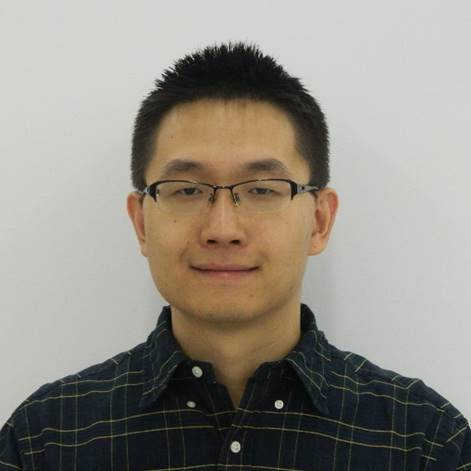
 Xiaoyang Wang
· 6 previous affiliations
- zoomSince 2025
- Tech Lead & Senior Research Scientist · Since 2026
- Senior Researcher · Since 2025
- Tencent (China)2019–2025
- Senior Researcher · 2019–2025
- Nokia (Germany)2015–2019
- Researcher · 2015–2019
- Bell Labs, Nokia (Alcatel-Lucent)2015–2019
- Researcher · 2015–2019
- Rensselaer Polytechnic Institute2010–2015
- PhD student · 2010–2015
- Tsinghua University2007–2010
- M.S. Student & Research Assistant · 2007–2010
7 other authors named Xiaoyang Wang: Xiaoyang Wang (UNSW Sydney · 141 papers), Xiaoyang Wang (Shandong University · Shanghai Artificial Intelligence Laboratory · 10 papers), Xiaoyang Wang (Amazon (United States) · 8 papers), Xiaoyang Wang (Drexel University · 1 paper), Xiaoyang Wang (1 paper), and 2 more
Research Overview
Xiaoyang Wang focuses on computer vision, attribute-based learning, and the development of reasoning capabilities in large language models (LLMs). Wang’s work has evolved from early investigations into probabilistic event recognition and sparse coding for attribute augmentation to more recent efforts in autonomous model evolution and parallel reasoning architectures. This trajectory reflects a broader shift from specialized pattern recognition in visual and auditory domains toward generalized intelligence and self-improving systems.
Research Trajectory
The initial phase of Wang’s research, spanning approximately 2011 to 2014, was primarily situated within the domain of computer vision and surveillance analytics. During this period, the work addressed the challenges of event recognition in environments characterized by low image resolution and significant intra-class variation. A central theme was the utilization of "attributes"—manually specified semantic descriptions—to bridge the gap between low-level visual features and high-level event categories. Wang explored how these attributes could be treated as hidden knowledge to improve the robustness of probabilistic models.
By 2015, Wang’s focus expanded to include speech recognition and multilingual processing. This transition applied the concepts of attribute augmentation to articulatory features in phoneme recognition, particularly in cross-language contexts such as English-Tibetan translation. This period also saw an engagement with network security and traffic analysis, specifically addressing Continuous Risk Assessment for Evolving Cyber Threats. This work moved beyond static security audits toward dynamic monitoring systems capable of identifying quality of experience (QoE) metrics within encrypted data streams.
In the early 2020s, Wang’s research became increasingly concerned with the limitations of standard machine learning paradigms, such as the reliance on large-scale labeled datasets and the assumption of memoryless noise. This led to investigations into Non-Markovian Dynamics and Environmental Memory in Open Quantum Systems, which challenged the traditional Markovian treatment of quantum gate failures. Simultaneously, Wang contributed to the field of meta-learning, developing methods for model fusion that do not require direct access to training data, thereby addressing privacy and data scarcity constraints.
The most recent phase of Wang’s work, beginning around 2023, centers on the reasoning and generative capabilities of LLMs. This research addresses the "expertise gap" in AI agents, moving from simple code completion to complex, end-to-end data science tasks. Major themes in this current period include Coherent Synthesis from Extractive Text Fragments and Measuring Factual Accuracy in Neural Abstractive Summarization. These efforts seek to mitigate hallucinations and improve the narrative flow of generated text. Furthermore, Wang has participated in the development of Multimodal Instruction Tuning for Zero-Shot Generalization, aiming to create models that can generalize across diverse tasks without extensive fine-tuning.
Current Directions
Wang’s current research program is defined by three primary pillars: autonomous self-evolution, compositional reasoning, and parallel thinking.
The work in autonomous evolution seeks to overcome the bottleneck of human-curated data. By developing frameworks where models can generate, refine, and learn from their own experiences, Wang aims to move toward systems that can surpass human-level performance in specialized reasoning tasks. This is complemented by research into Anomaly Detection via Normalizing Flow Density Estimation, which provides tools for identifying out-of-distribution behaviors in complex datasets.
In the realm of reasoning, Wang is exploring how to unlock "easy-to-hard" generalization. This involves moving away from linear, token-by-token generation toward architectures that support "parallel thinking"—the ability to explore multiple reasoning paths concurrently before converging on a solution. This approach is intended to mirror human-like divergent thinking, allowing models to handle complex problem-solving that requires backtracking and multi-step planning.
Representative Work
A novel probabilistic approach utilizing clip attribute as hidden knowledge for event recognition As the lead author of this work, Wang introduced a probabilistic framework that incorporates clip attributes as auxiliary hidden information. The model addresses the high intra-class variations in surveillance video by using these attributes to better capture the joint probability distribution between an event and its visual observations. This approach demonstrated that even when attributes are only available during the training phase, they can significantly enhance recognition performance in low-resolution environments.
Attribute Augmentation with Sparse Coding In this first-author paper, Wang addressed the inherent incompleteness of manually specified semantic attributes. The proposed method uses sparse coding to minimize the reconstruction error between original image data and its attribute representation, thereby generating "augmented attributes." These sparse, learned features supplement human descriptions, improving the accuracy of object and facial expression recognition systems, particularly in zero-shot learning scenarios.
Meta-learning without data via Wasserstein distributionally-robust model fusion Serving as the second author, Wang contributed to a novel meta-learning framework designed for scenarios where pre-trained models are available but their underlying training data is not. The work utilizes Wasserstein distributionally-robust optimization to fuse these models effectively. This approach provides a mathematically grounded method for leveraging existing model weights to adapt to new tasks while maintaining robustness against distribution shifts.
Skills-in-Context Prompting: Unlocking Compositionality in Large Language Models In this collaborative work, Wang explored the problem of compositional generalization in LLMs. The researchers proposed "Skills-in-Context" (SKiC) prompting, a strategy that instructs models on how to decompose complex problems into basic skills and then re-compose them for a final solution. The findings suggest that demonstrating both individual skills and the logic of their composition is essential for enabling models to solve problems significantly more difficult than those encountered during training.
R-Zero: Self-Evolving Reasoning LLM from Zero Data Wang contributed to the development of R-Zero, a framework for creating self-evolving LLMs that do not rely on human-labeled tasks. The system initializes two distinct roles—a "Challenger" and a "Solver"—which interact to generate and resolve increasingly difficult reasoning problems. This autonomous loop allows the model to scale its intelligence by learning from its own generated data, potentially bypassing the limitations of finite human datasets.
Parallel-R1: Towards Parallel Thinking via Reinforcement Learning This work introduces a reinforcement learning framework designed to activate "parallel thinking" in LLMs. Unlike standard models that reason in a linear fashion, Parallel-R1 uses a progressive curriculum to encourage the exploration of multiple reasoning paths. By rewarding the model for divergent exploration followed by successful convergence, the framework enables more effective problem-solving in complex, real-world reasoning tasks that require non-linear thought processes.
Profile updated
| Paper | Venue | Year |
|---|---|---|
| R-Zero: Self-Evolving Reasoning LLM from Zero DataGitHubChengsong-Huang/ | ICLR | 2026 |
Loading new papers…
Other researchers whose papers cluster into the same research directions — a proxy for overlapping technical interests and shared intellectual neighborhoods.
See something wrong? Report a mistake