

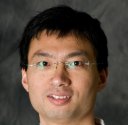
 Xiaowei Huang
· 1 previous affiliation
- University of LiverpoolCurrent
- Full Professor · Current
Research Overview
Xiaowei Huang focuses on the formal verification, safety testing, and robustness of artificial intelligence systems. His trajectory spans from early work in logic-based model checking for multi-agent systems to the development of safety and reliability frameworks for deep neural networks. Currently, he investigates the security, interpretability, and spatial reasoning capabilities of large multimodal and vision-language models.
Research Trajectory
Huang’s early research concentrated on formal methods and logic-based verification for complex systems. He developed a symbolic BDD-based model checking algorithm for epistemic strategy logic, which he applied to train control systems in Symbolic Model Checking Epistemic Strategy Logic. He continued exploring the formal properties of strategic interactions in Bounded model checking of strategy ability with perfect recall. This foundational work contributed to the broader area of Rational Verification for Strategic Multi-Agent Systems, establishing methods to rigorously guarantee the behavior of autonomous agents.
As deep learning became prominent in safety-critical applications like autonomous driving, Huang shifted his focus toward the verification and testing of neural networks. He introduced an automated verification framework based on Satisfiability Modulo Theory (SMT) to evaluate image classifiers against adversarial perturbations in Safety Verification of Deep Neural Networks. Expanding on this need for provable guarantees, he developed DeepGO, a framework that treats networks as Lipschitz continuous functions to provide strict output bounds, detailed in Reachability Analysis of Deep Neural Networks with Provable Guarantees. Concurrently, he advanced software testing techniques adapted for AI, participating in the creation of DeepConcolic, a framework bridging concrete execution and symbolic analysis to navigate high-dimensional input spaces in Concolic testing for deep neural networks. He also proposed feature-guided techniques using object detection methods like SIFT for evaluating classifiers without requiring internal network knowledge, as seen in Feature-Guided Black-Box Safety Testing of Deep Neural Networks. These efforts significantly advanced the research direction of Structural Coverage Metrics for Deep Learning Testing.
Moving from individual network verification to system-level assurance, Huang's research began addressing how machine learning components fit into broader safety arguments. He collaborated on evaluating classifiers through the lens of operational profiles in Assessing the Reliability of Deep Learning Classifiers Through Robustness Evaluation and Operational Profiles, contributing to the area of Reliability Assessment via Operational Profiles. This system-level perspective culminated in Reliability Assessment and Safety Arguments for Machine Learning Components in System Assurance, which formalized approaches within the domain of Structured Safety Cases for High-Risk Systems.
In recent years, Huang has applied his expertise to complex, multi-modal perception systems. He guided research on transfer learning strategies for fusing visual and infrared bands in airborne hyperspectral imagery, presented in Two-Stage Transfer Learning for Fusion and Classification of Airborne Hyperspectral Imagery. Addressing autonomous driving, his group integrated object detection modalities directly into visual language models (VLMs) using architectures like Llama-Adapter and YOLOS to enhance environmental awareness in Integrating Object Detection Modality into Visual Language Model for Enhanced Autonomous Driving Agent.
His most recent trajectory focuses heavily on the safety, alignment, and fundamental capabilities of large foundation models. To defend against jailbreaks in VLMs, his team developed SPO-VLM, combining activation steering with preference optimization in Activation Steering Meets Preference Optimization: Defense Against Jailbreaks in Vision Language Model. He also tackled the challenge of machine unlearning—removing sensitive or dangerous knowledge from large language models without degrading general performance—via contrastive orthogonal unalignment in FALCON: Fine-grained Activation Manipulation by Contrastive Orthogonal Unalignment for Large Language Model. These works align with the broader research direction of Cross-Modal Safety Guardrails for Multimodal Models.
Beyond security and alignment, Huang has explored architectural improvements and evaluation frameworks. He investigated mitigating the over-squashing of long-range dependencies in transformers through Bottleneck Regularized Linear Attention in Toward Linearly Regularizing the Geometric Bottleneck of Linear Generalized Attention. He also formalized strategies for applying AI to scientific discovery in AI for Science Strategic Compass: Aligning Discovery Tensions with Core AI Functions. Looking toward the rigorous evaluation of model capabilities, he introduced Spatial-DISE, a benchmark for assessing dynamic and static spatial reasoning in VLMs, in Spatial-DISE: A Unified Benchmark for Evaluating Spatial Reasoning in Vision-Language Models, and investigated few-shot class-incremental learning in You look from old classes: Towards accurate few shot class-incremental learning.
Current Directions
The most recent papers in the evidence indicate a strong focus on the safety, alignment, and architectural refinement of large language and vision-language models. Recent work investigates mechanisms for defending multimodal systems against adversarial jailbreaks using activation steering and preference optimization. Additionally, Huang is exploring fine-grained machine unlearning techniques to selectively remove sensitive or dangerous knowledge from foundation models while preserving their core capabilities. Beyond security and alignment, his current research addresses fundamental model limitations, including the development of new benchmarks to evaluate complex spatial reasoning in vision-language models and the design of regularized linear attention mechanisms to improve the efficiency of transformers on long sequences.
Profile updated
Loading new papers…
Other researchers whose papers cluster into the same research directions — a proxy for overlapping technical interests and shared intellectual neighborhoods.
See something wrong? Report a mistake