

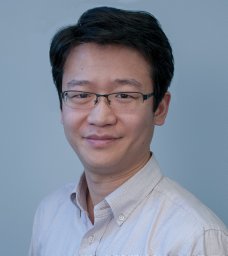
 Xiaosong Wang
· 7 previous affiliations
- Principal Researcher · Since 2022
- Alibaba Group (China)2021–2022
- Senior staff Algorithm Engineer · 2021–2022
- Nvidia (United States)2018–2021
- Senior Research Scientist · 2018–2021
- National Institutes of Health Clinical Center2015–2018
- Visiting Fellow · 2015–2018
- National Institutes of Health2015–2018
- Visiting Fellow · 2015–2018
- United Imaging Healthcare (China)2011–2015
- Product Manager, Advanced Workstation · 2013–2015
- Algorithm/Product Manager · 2011–2015
- Manager & TL in CAD Dept. · 2012–2013
- Algorithm Engineer · 2011–2012
- University of Bristol2005–2011
- PhD student · 2006–2011
- MSc, Computer Science with Distinction · 2005–2006
Research Overview
Xiaosong Wang focuses on computer vision, multimodal machine learning, and their applications in medical imaging. His trajectory spans from foundational dataset curation and robust image classification to advanced multimodal frameworks for clinical diagnostics. Recently, his work emphasizes optimizing large language models for complex medical reasoning and automated biological protocol generation.
Research Trajectory
Wang’s early recent work addresses the fundamental challenges of applying deep learning to specialized clinical environments, particularly the scarcity of annotated data and the unreliability of human labels. He introduced MedFMC: A Real-world Dataset and Benchmark For Foundation Model Adaptation in Medical Image Classification (2023), providing a diverse resource for evaluating few-shot learning and foundation model adaptation across various imaging modalities. This dataset directly supports the broader research direction of Learning from Limited Data in Specialized Medical Domains. To tackle the variance and noise inherent in medical annotations, he developed Learning Quality Labels for Robust Image Classification (2024). This learning-to-vote meta-learning framework dynamically weights different labelers during training, allowing models to favor high-quality annotations over erroneous noise and significantly improving classification performance.
As a principal researcher at Shanghai AI Laboratory, his focus expanded into complex, multimodal diagnostic systems and population-scale screening. He guided the development of BrainSCK: Brain Structure and Cognition Alignment via Knowledge Injection and Reactivation for Diagnosing Brain Disorders (2024), which utilizes transfer learning and neuroimaging to identify common neurological bases across different brain disorders. Concurrently, his group addressed the complexities of cancer treatment research with Multi-modal Data Binding for Survival Analysis Modeling with Incomplete Data and Annotations (2024). This framework mitigates the biases introduced by censored survival labels and missing modalities, enabling more accurate patient survival predictions.
By 2025, Wang’s research heavily integrated large language models (LLMs) and reinforcement learning to enhance clinical reasoning. Contributing to the area of Evaluating Medical Language Models Beyond Lexical Overlap, his team presented Improving Medical Reasoning with Curriculum-Aware Reinforcement Learning (2025). This multimodal framework, MedCCO, unifies close-ended and open-ended reasoning tasks through a curriculum-driven approach, achieving strong out-of-distribution generalization without relying on manually crafted reasoning chains. He also oversaw the creation of Chiron-o1: Igniting Multimodal Large Language Models towards Generalizable Medical Reasoning via Mentor-Intern Collaborative Search (2025). By employing a strategy where large models propose reasoning steps and smaller models validate them, this work generated high-quality medical Chain-of-Thought datasets, advancing the research direction of Intermediate Step Supervision for Verifiable Reasoning.
A major theme in his subsequent work is the optimization of inference-time compute for these large reasoning models. He directed the research behind AdaThink-Med: Medical Adaptive Thinking with Uncertainty-Guided Length Calibration (2025) and the related study Optimizing Inference-Time Compute for Medical Reasoning via Uncertainty Quantification (2026). These end-to-end frameworks teach medical LLMs to adaptively scale their reasoning chains—deploying rigorous analysis for complex cases while remaining concise for straightforward queries—thereby drastically reducing output length and inference costs without sacrificing diagnostic accuracy.
Continuing this pursuit of efficiency, Wang participated in the development of Token-Sparse Medical Multimodal Reasoning via Dual-Stream Reinforcement Learning (2026). This project introduced ViToS, a framework that prunes redundant visual tokens in medical images, allowing vision-language models to focus exclusively on clinically relevant regions for faster and more accurate inference. Most recently, his scope has broadened to include automated scientific workflows. He led the team behind Unleashing Scientific Reasoning for Bio-experimental Protocol Generation via Structured Component-based Reward Mechanism (2026), introducing the Thoth framework. Utilizing a novel dataset and a structured reward mechanism that prioritizes logical ordering, this work enables LLMs to generate precise, reproducible biological experimental protocols.
Current Directions
The most recent papers in the evidence highlight a sustained focus on the efficiency, verifiability, and application scope of large reasoning models in biomedicine. A primary current direction is adaptive medical reasoning, where reinforcement learning and uncertainty quantification are used to dynamically calibrate how much computational effort an LLM expends on a given clinical query. This approach seeks to resolve the tension between the deep reasoning required for complex diagnostics and the need for low-latency, cost-effective inference in practical deployments.
Additionally, recent work investigates the optimization of multimodal perception. By developing techniques to prune redundant visual information and align text-image data more effectively, these models are being trained to isolate clinically significant features in medical imagery automatically. Finally, the research is expanding beyond traditional diagnostic visual question answering into the generation of executable scientific workflows, exploring how structured reward mechanisms can teach models the strict logical sequencing required to design reproducible biological experiments.
Profile updated
Loading new papers…
Other researchers whose papers cluster into the same research directions — a proxy for overlapping technical interests and shared intellectual neighborhoods.
See something wrong? Report a mistake