

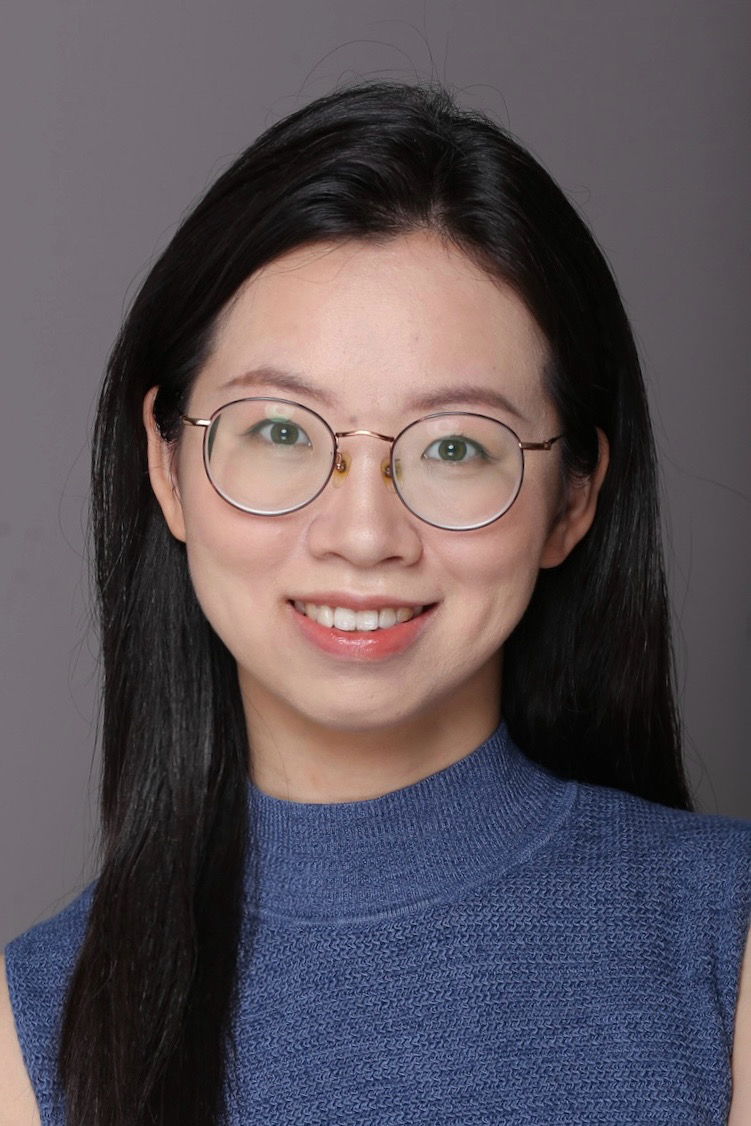
 Xiaoqing Guo
· 4 previous affiliations
- Hong Kong Baptist UniversitySince 2024
- Assistant Professor · Since 2024
- University of Oxford2023–2024
- Postdoc · 2023–2024
- City University of Hong Kong2018–2022
- PhD student · 2018–2022
- Beihang University2014–2018
- Undergrad student · 2014–2018
1 other author named Xiaoqing Guo: Xiaoqing Guo (1 paper)
Research Overview
Xiaoqing Guo focuses on medical image analysis, computer vision, and machine learning, developing intelligent systems for human-machine collaboration and clinical decision-making. Her trajectory spans from annotation-efficient deep learning and domain adaptation to recent work on multimodal foundation models and automated ultrasound workflows. She currently investigates vision-language model interpretability and personalized medical image segmentation.
Research Trajectory
Xiaoqing Guo’s early research concentrated on accelerating and refining medical image alignment. In 2017, she introduced an unsupervised, end-to-end deep learning framework in Unsupervised End-to-end Learning for Deformable Medical Image Registration. By integrating Spatial Transformer Networks, this system learned to align 2D CT and MRI scans without ground-truth labels, significantly accelerating inference compared to traditional iterative optimization. This contribution anchored her early focus on the research direction of Differentiable Warping for Unsupervised Image Registration and the broader area of Amortized Optimization for Real-Time Deformable Image Registration, advancing methods for Real-Time Volumetric Image Registration via Deep Learning.
Expanding into complex segmentation and classification tasks, she developed a 3D dilated multi-fiber network for brain tumor sub-region segmentation and survival prediction in Domain Knowledge Based Brain Tumor Segmentation and Overall Survival Prediction. Her focus on annotation-efficient learning continued with Semi-supervised WCE image classification with adaptive aggregated attention, which addressed wireless capsule endoscopy classification, and Dynamic-weighting hierarchical segmentation network for medical images, which proposed hierarchical approaches to medical image segmentation.
Around 2021, her research expanded to tackle domain shifts and noisy labels in unsupervised domain adaptation (UDA). In MetaCorrection: Domain-Aware Meta Loss Correction for Unsupervised Domain Adaptation in Semantic Segmentation, she introduced a domain-aware meta-learning strategy to model and correct the noise distribution of pseudo-labels generated during model adaptation. She subsequently addressed the "open set" challenge—where models encounter unseen categories during adaptation—in Unknown-Oriented Learning for Open Set Domain Adaptation. This framework treated unknown categories as complex, multi-faceted distributions rather than single outliers. She further formalized mixed closed-set and open-set label noises using a simplex noise transition matrix in SimT: Handling Open-set Noise for Domain Adaptive Semantic Segmentation.
Building on these adaptive frameworks, she proposed Structured Motif Matching (SOMA) to distinguish novel objects from environmental noise in Novel Scenes & Classes: Towards Adaptive Open-set Object Detection. Returning to the constraints of medical imaging, where multi-hospital data is often unavailable, she collaborated on Infproto-Powered Adaptive Classifier and Agnostic Feature Learning for Single Domain Generalization in Medical Images. This work contributed to the area of Hierarchical Feature Alignment for Domain Adaptation by enabling models trained on a single source domain to generalize across diverse clinical environments.
Her recent work continues to push the boundaries of 3D medical imaging and semi-supervised learning. She developed an instance-dependent transition matrix guided by geometric priors for intra-oral scans in GeoT: Geometry-guided Instance-dependent Transition Matrix for Semi-supervised Tooth Point Cloud Segmentation. In neuroimaging, she contributed to IterMask3D: Unsupervised anomaly detection and segmentation with test-time iterative mask refinement in 3D brain MRI, which refines spatial masks to reduce false positives in unsupervised anomaly detection.
Most recently, her trajectory has heavily emphasized multimodal foundation models, vision-language models (VLMs), and automated clinical workflows. To bridge visual and linguistic comprehension, she co-developed a framework that decouples objects into constituent parts for generalized zero-shot semantic segmentation in Bridge the Gap Between Visual and Linguistic Comprehension for Generalized Zero-shot Semantic Segmentation. In the ultrasound domain, she introduced Pose-guidenet: Automatic scanning guidance for fetal head ultrasound from pose estimation to assist sonographers, and MMSummary: Multimodal Summary Generation for Fetal Ultrasound Video to automate keyframe extraction and captioning. Evaluating the limits of current foundation models, she led the creation of U2-BENCH: Benchmarking Large Vision-Language Models on Ultrasound Understanding, highlighting the problem of Spatial Blindness in Medical Vision Language Models. To improve the reliability of these models, she introduced the EAGLE framework in Where MLLMs Attend and What They Rely On: Explaining Autoregressive Token Generation, which quantifies the influence of visual evidence versus language priors. Finally, addressing the subjective nature of clinical interpretation, she developed D-Persona in Diversified and personalized multi-rater medical image segmentation, a framework that aligns with emerging work in Steering Large Language Models with Expert Personas by generating personalized segmentations that reflect individual expert preferences.
Current Directions
Recent work investigates the intersection of multimodal large language models (MLLMs) and clinical decision-making. A primary focus is on improving the interpretability and spatial reasoning capabilities of vision-language models in specialized domains like ultrasound, addressing critical gaps in how these models ground their autoregressive token generation in visual evidence rather than language priors. Additionally, ongoing research explores human-machine collaboration by modeling expert disagreement and personalizing medical image segmentation to reflect diverse clinical interpretations, moving beyond single-ground-truth paradigms in healthcare AI.
Profile updated
Loading new papers…
Other researchers whose papers cluster into the same research directions — a proxy for overlapping technical interests and shared intellectual neighborhoods.
See something wrong? Report a mistake