

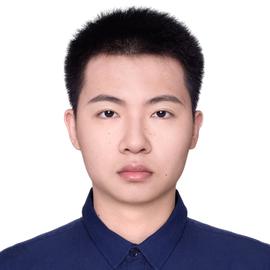
 Xiaolong Wang
· 2 previous affiliations
- Ant Group (China)Since 2025
- Researcher · Since 2025
- Zhejiang UniversityCurrent
- Current
- MS student · 2022–2025
- Undergrad student · 2018–2022
8 other authors named Xiaolong Wang: Xiaolong Wang (University of California San Diego · 209 papers), Xiaolong Wang (98 papers), Xiaolong Wang (12 papers), Xiaolong Wang (9 papers), Xiaolong Wang (2 papers), and 3 more
Research Overview
Xiaolong Wang focuses on 3D computer vision, cross-view geo-localization, and multimodal large language models. His early work addressed the alignment of ground-level and satellite imagery for robust navigation in GPS-denied environments. Recently, his research has expanded to unified multimodal architectures, exploring how large language models can process point clouds and perform autoregressive image segmentation.
Research Trajectory
Wang’s research trajectory demonstrates a progression from specialized geometric alignment problems in computer vision to the development of large-scale, multimodal foundation models. In 2023, his work primarily addressed the challenges of cross-view geo-localization, a critical component for autonomous navigation when GPS signals are unreliable or degraded. As first author, he introduced Fine-Grained Cross-View Geo-Localization Using a Correlation-Aware Homography Estimator. This work proposed a method to align warped ground images with GPS-tagged satellite maps by employing a differentiable spherical transform. By adhering to geometric principles, the transform effectively placed both ground and aerial images on the same plane, reducing the complex localization task to an image alignment problem. The correlation-aware homography estimator was specifically designed to handle common real-world challenges such as occlusion, limited overlapping fields of view, and seasonal variations.
During the same period, Wang participated in related collaborative research extending these localization techniques to unmanned aerial vehicles (UAVs). He was a contributing author to A Novel Geo-Localization Method for UAV and Satellite Images Using Cross-View Consistent Attention. This research utilized an image transformation technique combined with a single-stage training method to extract cross-view information, enabling UAVs to query pre-obtained satellite images for accurate positioning without relying on active GPS signals.
As the field of computer vision increasingly intersected with natural language processing, Wang’s focus expanded into 3D scene understanding and large language models (LLMs). He played a leading role in bridging these domains as the first author of the ECCV 2024 paper PointLLM: Empowering Large Language Models to Understand Point Clouds. Recognizing that LLMs had largely been confined to text and 2D visual data, PointLLM introduced a multi-modal architecture capable of processing colored object point clouds alongside human instructions. By fusing geometric, appearance, and linguistic information through a specialized 3D encoder, the model demonstrated an ability to generate contextually appropriate responses and reason about 3D structures. To support this architecture, the project also introduced a massive dataset of 730,000 point-text pairs, addressing the scarcity of training data in 3D-text multimodal learning.
Alongside his work in deep learning architectures, Wang has also contributed to applied hardware-software systems for spatial mapping. In 2024, he was a middle author on MS-Mapper: A LiDAR Mapping System by Switching Between Mobile and Stationary Configurations. This research detailed the design of a LiDAR system featuring an adjustable mechanical structure that alternates between stationary mapping—used for generating highly detailed point clouds and correcting pose drift—and mobile mapping, which ensures comprehensive coverage and fills map cavities.
By 2025, Wang’s research had scaled toward highly efficient, unified foundation models. As first author, he presented Ming-Flash-Omni: A Sparse, Unified Architecture for Multimodal Perception and Generation. This work tackled the computational bottlenecks of multimodal integration by developing a 100-billion parameter sparse Mixture-of-Experts (MoE) model. Designed to unify understanding and generation across vision, speech, and text, the architecture activates only 6.1 billion parameters per token, maintaining computational efficiency while achieving strong performance in tasks like contextual speech recognition and high-fidelity image generation.
Continuing this theme of unified generative frameworks, Wang also led the development of ARGenSeg: Image Segmentation with Autoregressive Image Generation Model. This 2025 paper reframed traditional image segmentation as an autoregressive generation task. By enabling Multimodal Large Language Models to produce dense masks directly as visual tokens, and implementing a multi-scale, parallel token prediction strategy, the framework achieved significant speedups over traditional sequential generation methods while maintaining high segmentation accuracy.
Current Directions
The most recent papers in the evidence indicate that Wang’s current research is heavily focused on the efficiency and unification of Multimodal Large Language Models (MLLMs). A primary direction involves sparse architectures, specifically utilizing Mixture-of-Experts (MoE) frameworks to scale model capacity for complex multimodal tasks—spanning vision, speech, and text—without incurring prohibitive computational costs during inference.
Additionally, recent work investigates the convergence of generative AI and dense prediction tasks. By treating fundamental computer vision problems, such as image segmentation, as autoregressive token generation tasks, Wang is exploring how the reasoning capabilities of LLMs can be directly applied to pixel-level visual understanding. This includes developing parallel token prediction strategies to overcome the latency issues typically associated with autoregressive generation in high-resolution visual domains.
Profile updated
Loading new papers…
Other researchers whose papers cluster into the same research directions — a proxy for overlapping technical interests and shared intellectual neighborhoods.
See something wrong? Report a mistake