

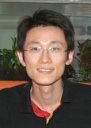
 Xiaoliang Wan
· 1 previous affiliation
- Louisiana State UniversitySince 2021
- Full Professor · Since 2021
Research Overview
Xiaoliang Wan focuses on the intersection of scientific computing, deep generative modeling, and the numerical solution of high-dimensional partial differential equations. His trajectory spans early work in stochastic uncertainty quantification to the development of adaptive sampling techniques for physics-informed neural networks. Currently, he investigates hybrid numerical-neural solvers and uncertainty-aware machine learning frameworks for complex physical systems.
Research Trajectory
The evolution of Xiaoliang Wan’s research demonstrates a consistent focus on overcoming the curse of dimensionality in scientific computing, transitioning from classical numerical methods to advanced deep learning frameworks. His early work established foundational methods for uncertainty quantification in systems with stochastic inputs. In Multi-Element Generalized Polynomial Chaos for Arbitrary Probability Measures (2006), he developed a multi-element generalized polynomial chaos (ME-gPC) method. By decomposing the random space into smaller elements and constructing orthogonal polynomials element-by-element, this approach enabled the solution of ordinary and partial differential equations (PDEs) governed by arbitrary probability measures.
Over time, his focus expanded to include complex dynamical systems and the integration of machine learning techniques. He explored variational approaches in A Minimum Action Method for Dynamical Systems with Constant Time Delays (2021), addressing the computational challenges of systems with memory. Concurrently, he began investigating how deep generative models could enhance traditional numerical estimators. This shift is evident in Coupling the reduced-order model and the generative model for an importance sampling estimator (2020), which utilized generative architectures to improve sampling efficiency.
A major breakthrough in his trajectory was the development of KRnet, a flow-based generative model designed to handle complex probability distributions. In VAE-KRnet and its applications to variational Bayes (2020), he and his collaborators introduced a hybrid model that combined the dimension-reduction capabilities of Variational Autoencoders with the flexible density modeling of KRnet. This significantly improved posterior approximations in high-dimensional Variational Bayes problems, contributing to the broader research area of Mitigating the Curse of Dimensionality in Density Estimation. He subsequently refined this architecture in Augmented KRnet for density estimation and approximation (2021). By framing the model as an exactly invertible discretization of a neural ordinary differential equation and adding "buffer" dimensions, Augmented KRnet achieved more efficient nonlinear updates and exact gradient computations.
Building on these generative modeling advances, Wan began applying them directly to the solution of high-dimensional PDEs. In Adaptive deep density approximation for Fokker-Planck equations (2022), he participated in developing ADDA-KR, an adaptive deep learning approach that combined KRnet with an adaptive sampling strategy to approximate probability density functions. This work advanced the research direction of Density Estimation with Invertible Neural Networks.
This concept of using generative models to intelligently sample training points became a central theme in his subsequent research on neural PDE solvers. In Adaptive importance sampling for Deep Ritz (2023), he utilized a bounded version of KRnet to place training points in regions of high importance, treating the PDE's variational loss integrand as a probability density. This significantly improved the accuracy of the Deep Ritz method for low-regularity problems. He formalized this framework for Physics-Informed Neural Networks (PINNs) in DAS-PINNs: A deep adaptive sampling method for solving high-dimensional partial differential equations (2023). By coupling PINNs with deep generative models to dynamically sample points where the PDE residual is highest, DAS-PINNs provided a robust way to tackle previously intractable high-dimensional equations. This work anchored his contributions to the field of Adaptive Sampling for Physics Informed Neural Networks and the closely related area of Residual Based Adaptive Sampling for Physics Informed Neural Networks.
Wan further expanded on adaptive sampling by incorporating optimal transport theory. In Adversarial Adaptive Sampling: Unify PINN and Optimal Transport for the Approximation of PDEs (2024), he contributed to a minmax framework where a generative model is trained adversarially to "hunt" for regions with high PDE residuals. This smoothed the residual profile across the domain and reduced statistical errors, expanding his work into the direction of Adversarial Min-Max Optimization for High Dimensional PDEs.
Recognizing the limitations of purely neural solvers, Wan has also explored hybrid architectures that merge classical numerical guarantees with deep learning flexibility. In A hybrid FEM-PINN method for time-dependent partial differential equations (2024), he guided the development of a solver that uses Finite Element Method (FEM) basis functions for the time dimension and neural networks for spatial coefficients, achieving massive speedups over traditional causal PINNs.
His most recent work continues to refine both the theoretical foundations and the architectural capabilities of these models. In Bounded KRnet and Its Applications to Density Estimation and Approximation (2025), he formalized the extension of normalizing flows to handle complex probability distributions on bounded domains. He also addressed fundamental neural network limitations in Overcoming Spectral Bias via Cross-Attention (2025), introducing a multiscale Random Fourier Feature bank with cross-attention to capture high-frequency details in oscillatory PDEs, directly addressing challenges in the area of Spectral Bias in Physics-Informed Neural Networks. Concurrently, he has pushed into probabilistic scientific machine learning with LVM-GP: Uncertainty-Aware PDE Solver via coupling latent variable model and Gaussian process (2025), and applied his adaptive sampling techniques to complex dynamical phenomena in Estimating committor functions via deep adaptive sampling on rare transition paths (2026).
Current Directions
Recent work investigates the integration of probabilistic frameworks with neural operators to provide reliable uncertainty quantification in physical simulations. The most recent papers in the evidence address fundamental limitations of neural network architectures, such as spectral bias, by designing cross-attention mechanisms that capture both low- and high-frequency details in complex regression tasks and oscillatory PDEs. Additionally, ongoing research explores deep adaptive sampling techniques to estimate committor functions, focusing on the accurate modeling of rare transition paths in dynamical systems. A parallel focus remains on developing confidence-aware solvers that combine the structured uncertainty of Gaussian Processes with latent variable models to handle noisy or sparse experimental data in both forward and inverse problems.
Profile updated
Loading new papers…
Other researchers whose papers cluster into the same research directions — a proxy for overlapping technical interests and shared intellectual neighborhoods.
See something wrong? Report a mistake