

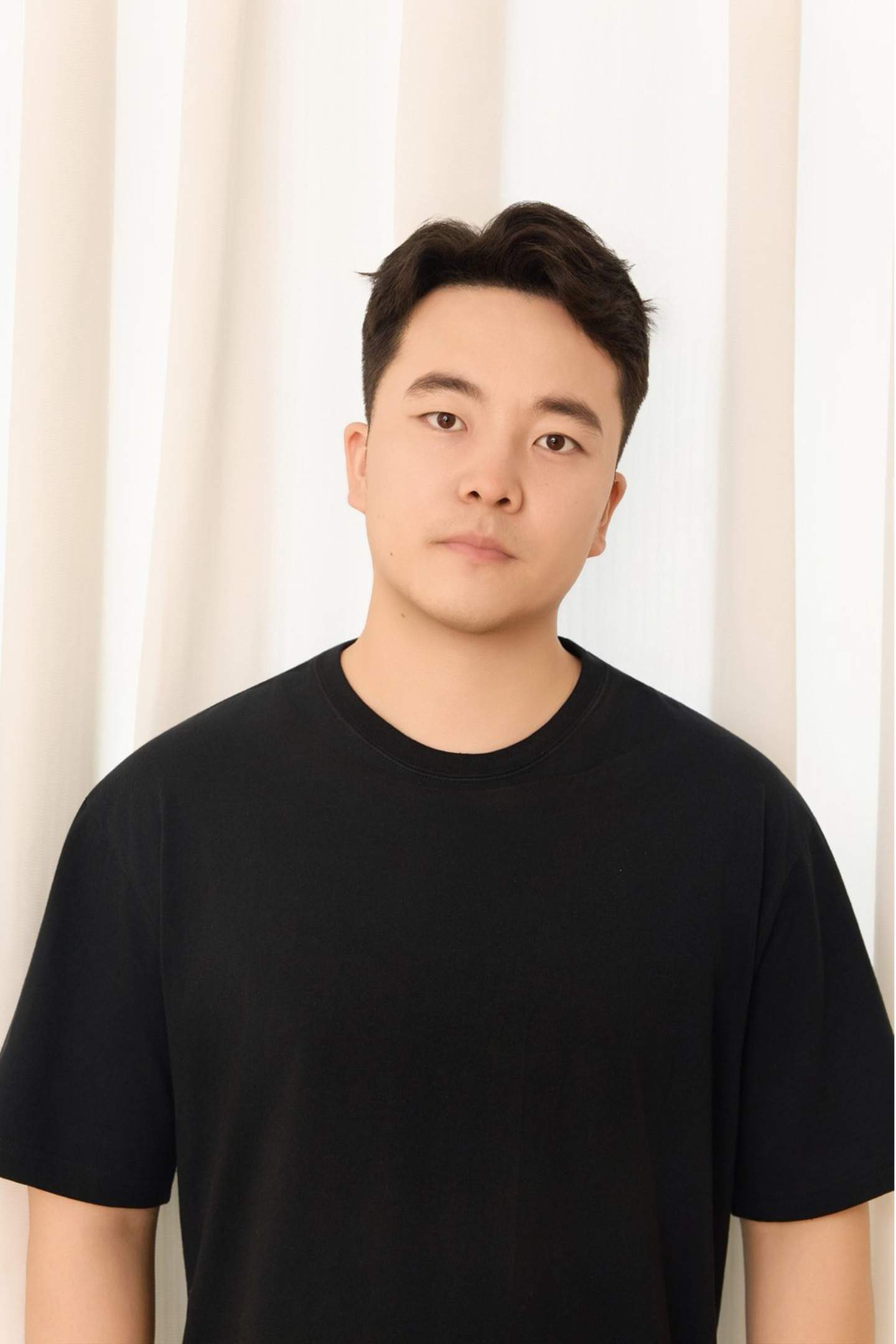
 Xiaofeng Zhang
· 4 previous affiliations
- Soochow UniversitySince 2026
- Assistant Professor · Since 2026
- Current
- PhD student · 2022–2026
- Alibaba Group (China)2023–2025
- Researcher · 2023–2025
- MS student · 2018–2021
3 other authors named Xiaofeng Zhang: Xiaofeng Zhang (Harbin Institute of Technology · 147 papers), Xiaofeng Zhang (6 papers), Xiaofeng Zhang (2 papers)
Research Overview
Xiaofeng Zhang focuses on multimodal large language models, visual attention mechanisms, and image restoration. His early work addressed spatial modeling and degradation recovery in computer vision before shifting toward the internal mechanics of vision-language models. His current research investigates inference-time interventions and feature attribution to mitigate hallucinations in complex reasoning tasks.
Research Trajectory
Xiaofeng Zhang’s research trajectory begins with a strong foundation in computer vision, specifically focusing on spatial modeling and image restoration. In 2023, he introduced SpA-Former:An Effective and lightweight Transformer for image shadow removal, addressing complex illumination degradations with a lightweight architecture. This interest in restoration extended to cultural heritage preservation in 2024, where he contributed to MuralDiff: Diffusion for Ancient Murals Restoration on Large-Scale Pre-Training. This work combined U-Net architectures for crack detection with edge-guided masking and diffusion models to digitally restore ancient murals while preserving original structural information. Concurrently, his research explored spatial systems and geometric perception. He guided the development of AerialLaneNet in Building Lane-Level Maps from Aerial Images, a two-stage deep learning approach for extracting topological structures for autonomous driving. He also investigated the architectural trade-offs of vision models in Improving Depth Gradient Continuity in Transformers: A Comparative Study on Monocular Depth Estimation with CNN, introducing a Depth Gradient Refinement module and an Optimal Transport Depth Loss to resolve the depth gradient continuity issues inherent in Transformer-based monocular depth estimation.
A significant shift occurred in 2024 as Zhang began investigating the internal mechanics of Multimodal Large Language Models (MLLMs), particularly concerning the area of Attention Imbalance and Modality Dominance in Multimodal Models. He introduced From Redundancy to Relevance: Enhancing Explainability in Multimodal Large Language Models, utilizing an information flow method to visualize how visual and textual tokens interact during complex reasoning tasks. This focus on attention mechanisms naturally led to a deep investigation of model hallucinations. In Seeing Clearly by Layer Two: Enhancing Attention Heads to Alleviate Hallucination in LVLMs, he demonstrated that hallucinations are closely tied to the density of attention sinks across shallow and deep layers of the network. Building on these architectural insights, he contributed to DOPRA: Decoding Over-accumulation Penalization and Re-allocation in Specific Weighting Layer, which advanced the research direction of Inference Time Decoding Interventions for Vision Language Models. DOPRA applied decoding-specific penalties to redistribute attention weights, effectively mitigating hallucinations without requiring supplementary training data or external knowledge sources. Around the same time, he also participated in research on pure language reasoning, contributing to Instance-adaptive Zero-shot Chain-of-Thought Prompting to dynamically differentiate prompt efficacy across individual instances rather than relying on uniform, task-level prompts.
In 2025, Zhang continued to refine MLLM reasoning and multimodal alignment. He developed Enhancing Multimodal Large Language Models Complex Reason via Similarity Computation to improve the models' capacity for complex logical deduction. Expanding on his prior attention sink analysis, he published Shallow Focus, Deep Fixes: Enhancing Shallow Layers Vision Attention Sinks to Alleviate Hallucination in LVLMs, further isolating the specific layers and heads responsible for visual grounding failures. He also collaborated on MCA-LLaVA: Manhattan Causal Attention for Reducing Hallucination in Large Vision-Language Models, which identified how long-term decay in Rotary Position Encoding (RoPE) causes positional bias—specifically a tendency to over-index on bottom-right image tokens—leading to multimodal misalignment.
By 2026, his work increasingly focused on the area of Faithful Feature Attribution via Gradient-Weighted Attention. In Hallucination Begins Where Saliency Drops, he introduced a gradient-aware metric demonstrating that hallucinations are reliably preceded by a sharp drop in the saliency of prior output tokens. To counter this, he proposed inference-time interventions that significantly reduce hallucinations with minimal computational overhead. He also investigated diffusion-based MLLMs in Context Tokens are Anchors: Understanding the Repeat Curse in dMLLMs from an Information Flow Perspective. By analyzing internal information flow, he helped develop a training-free, entropy-guided decoding method to eliminate the text repetition caused by standard caching techniques. Concurrently, Zhang maintained his foundational interest in the broader area of All-in-One Image Restoration for Compound Degradations. He introduced Memory Augment is All You Need for Image Restoration, presenting MemoryNet, a framework that leverages contrastive learning and memory modules to preserve deep image features and handle complex, overlapping degradations like shadows, rain, and blur.
Current Directions
The most recent papers in the evidence indicate a dual focus on the internal dynamics of multimodal large language models and advanced image restoration techniques. A primary objective is mitigating hallucinations and repetitive generation in vision-language models through inference-time interventions. This involves analyzing gradient-aware saliency metrics, understanding the impact of positional encoding decay, and managing internal information flow to maintain context stability during decoding. Alongside these architectural investigations into language and vision models, recent work also addresses composite image degradations, utilizing memory-augmented networks and contrastive learning to achieve robust, generalized image restoration across diverse environmental conditions.
Profile updated
Loading new papers…
Other researchers whose papers cluster into the same research directions — a proxy for overlapping technical interests and shared intellectual neighborhoods.
See something wrong? Report a mistake