

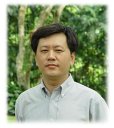
 Xiaofeng Meng
· 1 previous affiliation
- Renmin University of ChinaSince 2000
- Full Professor · Since 2000
Research Overview
Xiaofeng Meng focuses on data management, privacy-preserving computation, and knowledge-aware recommender systems. Over a career spanning more than two decades, this work has evolved from foundational web data extraction and XML search to advanced applications in local differential privacy and distributed stream processing. Most recently, the research emphasizes federated learning privacy, contrastive learning for recommendation, and applied anomaly detection in complex time series.
Research Trajectory
Meng’s early research addressed the challenges of information retrieval and data extraction in structured and semi-structured web environments. A significant focus during this period was improving the expressiveness and efficiency of XML keyword search. As senior author, Meng guided the development of MCN: A New Semantics Towards Effective XML Keyword Search, which introduced the Meaningful Connected Network semantics to better capture relationships between keywords in XML documents, supported by novel indexing strategies.
As mobile and continuous data collection became ubiquitous in the 2010s, the research trajectory expanded to address the privacy implications and system-level challenges of managing this data. In the domain of location privacy, Meng co-authored You Can Walk Alone: Trajectory Privacy-Preserving through Significant Stays Protection. This work recognized that background knowledge attacks often target specific points of interest rather than entire transit routes, proposing a generalization approach for stay points that reduced information loss compared to whole-trajectory anonymization. Concurrently, Meng investigated the infrastructure required to process high-velocity data. This is exemplified by Automating Characterization Deployment in Distributed Data Stream Management Systems, which presented a framework for dynamically predicting and configuring deployment strategies in distributed stream processing systems to optimize throughput and resource utilization.
In subsequent years, privacy-preserving computation remained a central theme, particularly the application of Local Differential Privacy (LDP) to complex data structures. Meng contributed to collaborative efforts addressing the high implementation complexity and utility degradation typically associated with LDP in graph analysis. This work included LF-GDPR: A Framework for Estimating Graph Metrics With Local Differential Privacy, which established a framework for collecting atomic graph metrics—such as adjacency vectors and node degrees—directly from local nodes while maintaining strong privacy guarantees.
More recently, Meng has led research into knowledge-aware recommender systems, utilizing advanced graph neural networks and self-supervised learning to mitigate data sparsity. As senior author on KRec-C2: A Knowledge Graph Enhanced Recommendation with Context Awareness and Contrastive Learning, Meng directed the design of a category-level contrastive learning module intended to model underlying node relationships and extract robust signals from noisy real-world knowledge graphs.
Current Directions
The most recent papers in the evidence indicate a continued focus on privacy-preserving machine learning, alongside new applications of data mining in specialized scientific domains and participation in foundation model development. Recent work investigates cross-silo federated learning, specifically addressing the need for record-level personalized differential privacy. This direction seeks to accommodate varying privacy requirements across different data points without relying on a uniform, one-size-fits-all privacy budget.
Additionally, Meng's recent research addresses unsupervised time series anomaly detection in astronomical observations. This work tackles the unique noise characteristics of celestial data, where independent signals are frequently disrupted by random concurrent interference, aiming to reduce false alarm rates in the detection of physical phenomena. Finally, Meng has recently participated as a co-author in large-scale collaborative efforts to develop open video generative foundation models, contributing to the broader community's work on scalable pre-training and data curation for diffusion transformers.
Profile updated
Loading new papers…
Other researchers whose papers cluster into the same research directions — a proxy for overlapping technical interests and shared intellectual neighborhoods.
See something wrong? Report a mistake