

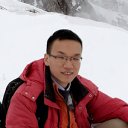
 Xiaofeng Gao
· 4 previous affiliations
- Amazon (United States)Since 2021
- Scientist · Since 2021
- Discover2017–2022
- PhD student · 2017–2022
- Researcher · 2021
- Fudan University2013–2017
- Undergrad student · 2013–2017
1 other author named Xiaofeng Gao: Xiaofeng Gao (464 papers)
Research Overview
Xiaofeng Gao focuses on embodied artificial intelligence, human-robot collaboration, and multimodal reasoning. His trajectory spans from modeling social affordances and building high-fidelity simulation environments to developing cognitively inspired cooperative agents that understand complex visual and linguistic cues. Recently, his work emphasizes grounding large language models for precise spatial reasoning and evaluating agentic systems in open-ended environments.
Research Trajectory
Xiaofeng Gao’s research trajectory began with a strong focus on human-robot interaction and cognitive modeling. Early work involved participating in the development of frameworks to infer real-time motion, as seen in Learning social affordance grammar from videos: Transferring human interactions to human-robot interactions. Recognizing the need for robust training environments, he developed VRKitchen: an Interactive 3D Virtual Environment for Task-oriented Learning, a high-fidelity simulation platform designed to bootstrap reinforcement learning models through human demonstrations. This interest in bridging human cognition and robotic systems expanded into explainable AI with Joint Mind Modeling for Explanation Generation in Complex Human-Robot Collaborative Tasks, which proposed hierarchical mind models to enable pedagogic, human-like communication from robots. Further contributions to cognitive modeling included collaborative work on Predicting Task-Driven Attention via Integrating Bottom-Up Stimulus and Top-Down Guidance.
Moving into the early 2020s, Gao deepened his focus on the physical and social dynamics of human-robot collaboration. He introduced Reachability-Expressive Motion Planning in Show Me What You Can Do: Capability Calibration on Reachable Workspace for Human-Robot Collaboration, a framework that optimizes robotic trajectories to communicate physical limits to human partners, advancing the broader area of Bayesian inverse planning for social reasoning. This theme of aligning robotic behavior with human expectations was also explored in In situ bidirectional human-robot value alignment. Simultaneously, he continued to advance simulation infrastructure, co-developing VRKitchen2.0-IndoorKit: A Tutorial for Augmented Indoor Scene Building in Omniverse to streamline indoor scene synthesis and bridge 3D environments with deep learning frameworks. This work supported the broader goal of scaling synthetic data diversity for robust sim-to-real transfer. He also participated in creating ARNOLD: A Benchmark for Language-Grounded Task Learning With Continuous States in Realistic 3D Scenes, addressing the challenge of continuous state understanding in realistic environments.
More recently, Gao’s research has increasingly integrated large multimodal models with embodied intelligence and generative synthesis. He contributed to the MIDAS framework in Mastering Robot Manipulation with Multimodal Prompts through Pretraining and Multi-task Fine-tuning, enabling robots to follow interleaved text and image instructions. In the domain of visual understanding, he co-developed Groundhog Grounding Large Language Models to Holistic Segmentation, which directly advances the research direction of Reasoning Segmentation with Multimodal Large Language Models by incorporating pixel-level representations into language models. He further extended multimodal reasoning capabilities by developing START: Spatial and Textual Learning for Chart Understanding, a framework that improves how models interpret complex data charts through spatial grounding and code generation.
In parallel, Gao has contributed to the optimization of generative models. He participated in the development of T2V-Turbo-v2: Enhancing Video Model Post-Training through Data, Reward, and Conditional Guidance Design, which intersects with the research direction of One-Step Generative Synthesis through Simplified Distillation. He also collaborated on ProxT2I: Efficient Reward-Guided Text-to-Image Generation via Proximal Diffusion, exploring efficient sampling methods and contributing to the area of Group Relative Policy Optimization for Large Reasoning Models. Most recently, he directed the development of the SciCrafter benchmark in Can Current Language Models Close the Discovery to Application Loop?, operationalizing the evaluation of scientific discovery and complex engineering tasks in open-ended environments.
Current Directions
Recent work investigates the intersection of multimodal foundation models, generative synthesis, and open-ended agentic evaluation. The most recent papers in the evidence address the challenge of grounding large language models for precise spatial reasoning, whether for holistic image segmentation or complex chart understanding. Concurrently, ongoing research explores the optimization of text-to-image and video diffusion models through efficient sampling and reward-guided post-training. A major emerging theme is the evaluation of general intelligence in embodied agents, specifically testing their capacity to close the loop between scientific discovery and functional application in procedurally generated environments.
Profile updated
Loading new papers…
Other researchers whose papers cluster into the same research directions — a proxy for overlapping technical interests and shared intellectual neighborhoods.
See something wrong? Report a mistake