

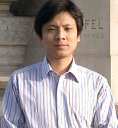
 Xiaofei Liao
· 1 previous affiliation
- Full Professor · Since 2012
- Associate Professor · 2007–2012
- PhD student · 2002–2007
Research Overview
Xiaofei Liao focuses on the systems-level challenges of distributed computing, large-scale graph processing, and the optimization of Large Language Model (LLM) inference. Liao’s work bridges the gap between high-level algorithmic requirements and low-level hardware constraints, with a particular emphasis on reducing latency and memory overhead in complex dataflows. Currently, the research program centers on efficient long-context LLM processing and the development of benchmarks for agentic frameworks, building on a long-term trajectory of optimizing data movement and resource orchestration in distributed environments.
Research Trajectory
Liao’s research evolution reflects a consistent interest in mitigating the "performance taxes" inherent in distributed and virtualized systems. In the mid-2000s, this work was primarily concerned with the fundamental overheads of networking and task orchestration. During this period, Liao explored techniques for Bypassing the Kernel for Ultra-Low Latency Networking, addressing the bottlenecks caused by context switches and interrupt handling in traditional operating system models. This focus on low-level efficiency extended to the "centralization paradox" in Hierarchical Scheduling for Distributed Task Orchestration, where the research sought to balance global resource visibility with the scalability requirements of high-frequency task processing.
By the late 2000s, Liao’s interests shifted toward the structural alignment of virtual and physical infrastructures. This included work on Aligning Logical Overlays with Physical Network Infrastructure, which aimed to optimize decentralized networks by accounting for the underlying physical topology. Concurrently, Liao addressed the emerging challenges of cloud-native architectures, specifically Mitigating Cold Start Latency in Serverless Computing, a persistent performance barrier in elastic resource models.
In the late 2010s and early 2020s, Liao transitioned toward massive-scale data analytics, focusing on the unique challenges posed by non-uniform data structures. This included developing Topology Aware Caching for Graph Memory Hierarchies, which optimized memory access patterns for graphs where a small number of "hub" nodes dominate connectivity. To further improve throughput in these environments, Liao explored Barrierless Asynchronous Execution for Massive Graph Analytics, moving away from the synchronous bottlenecks of traditional Bulk Synchronous Parallel (BSP) models to allow for more fluid, straggler-resistant computation.
Current Directions
Liao’s current research is concentrated on the systems infrastructure required to support Large Language Models (LLMs) at scale. As LLMs move from static benchmarks to real-world deployment, the primary bottlenecks have shifted from raw compute to memory bandwidth and orchestration efficiency. Liao’s recent work addresses these challenges through three primary lenses: memory management for long-context inference, the compilation of generative dataflows, and the systematic benchmarking of agentic frameworks.
A central theme in this current phase is the management of the Key-Value (KV) cache, which represents a significant memory burden during the inference of long sequences. Liao’s work in this area focuses on "task-aware" eviction strategies that reduce memory peaks without sacrificing the model's reasoning capabilities. Additionally, Liao is investigating the modularity of LLM pipelines, treating complex Retrieval-Augmented Generation (RAG) and agentic workflows as declarative dataflows that can be optimized and scaled linearly across distributed resources.
Finally, Liao is contributing to the development of rigorous evaluation frameworks for LLM agents. While most existing benchmarks focus on task success rates, Liao’s work emphasizes the efficiency of the underlying frameworks—measuring scalability, communication overhead, and runtime performance to ensure that agentic systems are viable for production environments.
Representative Work
Liao’s recent contributions demonstrate a leadership role in optimizing the LLM inference lifecycle, particularly regarding memory efficiency and framework transparency.
In TAKE: Task-Aware Chunked KV Cache Eviction for Efficient Long-Context LLM Prefill, Liao serves as the senior author, leading the development of a training-free framework designed to optimize memory usage during the prefill stage of LLM inference. While existing methods often focus on pruning the KV cache during the decoding phase, TAKE addresses the memory peaks that occur during the initial processing of long sequences. By partitioning sequences into chunks and performing incremental fusion and eviction, the framework avoids the need for full-sequence processing, thereby reducing both memory and compute overhead while preserving task-relevant information.
Liao also participated in the development of SAGE: A Dataflow-Native Framework for Modular, Controllable, and Transparent LLM-Augmented Reasoning. This work treats LLM inference pipelines as first-class compilation targets rather than a collection of individual model calls. By representing agentic workflows as declarative dataflows with explicit resource contracts, the SAGE framework achieves near-linear scaling and significantly reduces tail latency, providing a more predictable infrastructure for complex RAG systems.
The challenges of evaluating LLM memory in dynamic environments are addressed in Neuromem: A Granular Decomposition of the Streaming Lifecycle in External Memory for LLMs. Liao contributed to this open-source testbed, which moves beyond static "build-then-query" benchmarks to a realistic streaming protocol where data insertion and retrieval are interleaved. The findings from this work highlight a "latency tax" associated with complex generative optimizations, suggesting that robust data structures and simple heuristics often outperform more intricate methods in real-time production settings.
In the domain of agentic systems, Liao contributed to AgentRace: Benchmarking Efficiency in LLM Agent Frameworks. This research introduces the first benchmark specifically designed to evaluate the systematic efficiency of LLM agent frameworks. By focusing on runtime performance, scalability, and communication overhead across representative workloads, AgentRace provides a controlled environment for comparing the operational costs of different agent architectures, filling a critical gap in a field previously dominated by accuracy-centric metrics.
Profile updated
Loading new papers…
Other researchers whose papers cluster into the same research directions — a proxy for overlapping technical interests and shared intellectual neighborhoods.
See something wrong? Report a mistake