

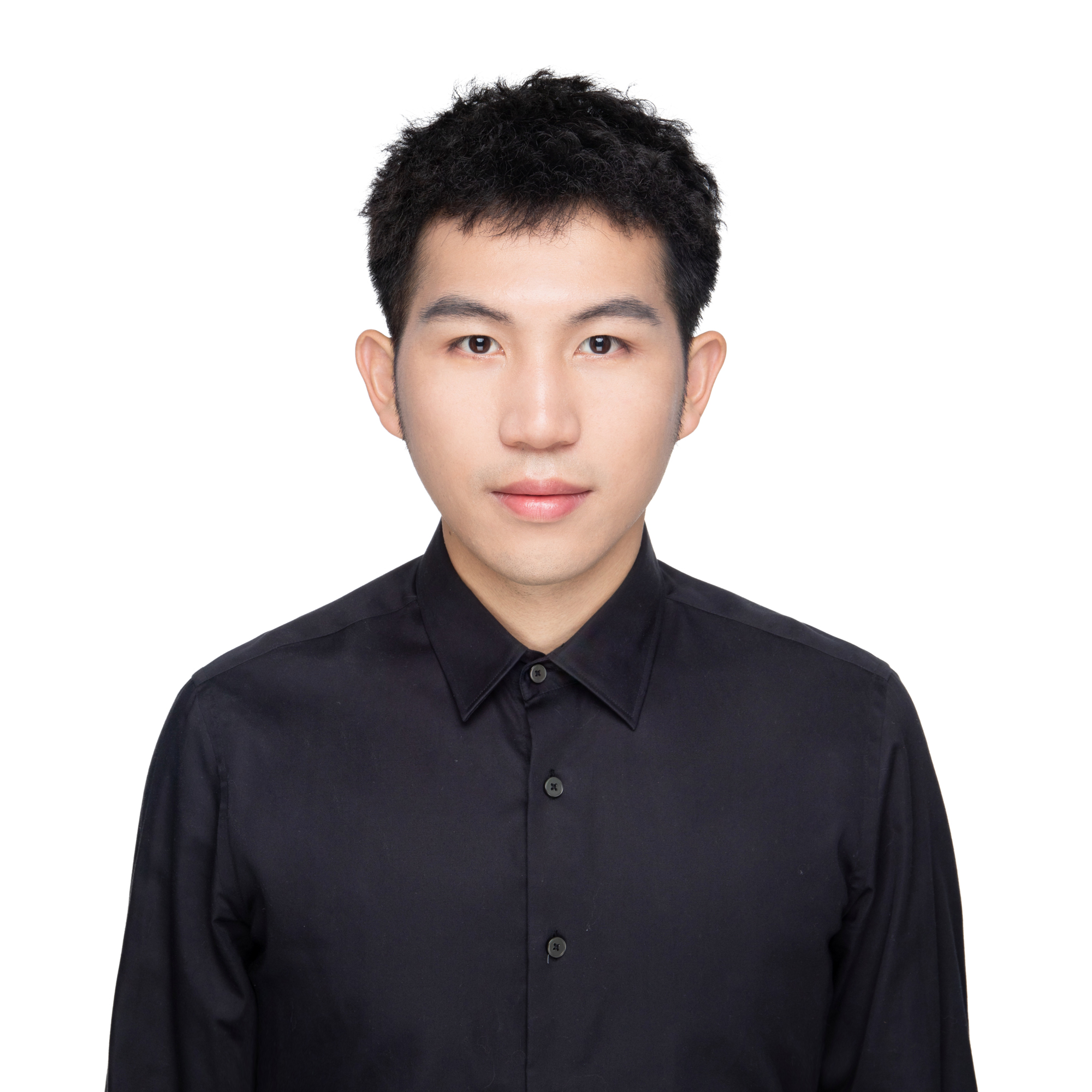
 Xiaochang Li
· 3 previous affiliations
- William & MarySince 2022
- PhD student · Since 2022
- Current
- East China Normal University2018–2021
- MS student · 2018–2021
- Zhejiang University of Technology2014–2018
- Undergrad student · 2014–2018
Research Overview
Xiaochang Li focuses on foundation models, multi-modal reasoning, and network traffic analysis. His early work established comprehensive benchmarks and knowledge-guided architectures for evaluating and generating network data. More recently, his research has expanded into robotics, exploring scalable world models and multi-modal systems to bridge the embodiment gap across diverse physical platforms.
Research Trajectory
Xiaochang Li’s research trajectory is unified by an interest in designing and evaluating foundation models for complex, domain-specific data. His early work focused heavily on applying large-scale machine learning techniques to network security and management. In 2024, he addressed the need for standardized evaluation protocols in the research area of Overcoming the Encrypted Traffic Visibility Gap by introducing NetBench: A Large-Scale and Comprehensive Network Traffic Benchmark Dataset for Foundation Models. This work unified data processing pipelines across seven diverse datasets and twenty distinct tasks—spanning both classification and generation—to enable fair comparisons and accelerate the development of foundation models tailored for network environments. Prior to this work, the lack of unified datasets hindered the systematic evaluation of large models in cybersecurity contexts.
Building on this infrastructure, he subsequently developed Lens: A Knowledge-Guided Foundation Model for Network Traffic in 2025. By integrating domain-specific network knowledge directly into the pre-training phase, this architecture improved the model's ability to understand complex traffic patterns. The approach demonstrated significant improvements in classifying unseen traffic categories and generating realistic network simulations, contributing to the broader research direction of Pre-Training Language Models on Specialized Corpora. This demonstrated how injecting structured domain knowledge can overcome the limitations of purely data-driven pre-training in specialized technical domains.
More recently, his research interests have expanded into physical embodiment and robotics, applying the principles of foundation models to multi-modal physical reasoning. In 2026, he collaborated on WestWorld: A Knowledge-Encoded Scalable Trajectory World Model for Diverse Robotic Systems. This project tackled the challenge of learning underlying dynamics across 89 different robotic platforms simultaneously. By utilizing a "System-aware Mixture-of-Experts" (Sys-MoE) architecture alongside structural embeddings that encode physical robot morphology, the system achieved robust zero-shot generalization for complex real-world tasks, such as controlling a Unitree Go1 robot. This collaborative work advances several interconnected research areas, including Bridging the Embodiment Gap in Robotic Foundation Models, Mixture of Experts for Multi-Modal Motion Control, and Bridging the Exteroceptive Sensing Gap in Robotic Locomotion.
Current Directions
The most recent papers in the evidence indicate a shift toward multi-modal reasoning and the development of foundation models for embodied agents. Current work investigates how scalable trajectory world models can learn generalized dynamics across highly diverse robotic systems rather than being constrained to a single physical platform. A central open problem in this domain is enabling zero-shot generalization for complex physical tasks, such as legged locomotion, by effectively encoding a robot's physical morphology and utilizing mixture-of-experts architectures. This direction aims to empower multi-modal models with the reasoning capabilities necessary to navigate and interact with complex, real-world physical environments.
Profile updated
Loading new papers…
Other researchers whose papers cluster into the same research directions — a proxy for overlapping technical interests and shared intellectual neighborhoods.
See something wrong? Report a mistake