

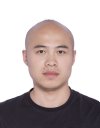
 Xiao Zhang
· 1 previous affiliation
- Shandong UniversitySince 2019
- Associate Professor · Since 2023
- Assistant Professor · 2019–2023
21 other authors named Xiao Zhang: Xiao Zhang (Renmin University of China · 96 papers), Xiao Zhang (University of Pennsylvania · 74 papers), Xiao Zhang (Helmholtz Center for Information Security · 35 papers), Xiao Zhang (24 papers), Xiao Zhang (South Central Minzu University · 19 papers), and 16 more
Research Overview
Xiao Zhang focuses on distributed and federated learning, edge intelligence, and data mining, particularly in resource-constrained environments. Their work spans human activity recognition via multimodal sensing, robust time series analysis, and the optimization of large-scale models across heterogeneous devices. Recently, Zhang has concentrated on advancing federated learning theory and systems, addressing challenges like data heterogeneity, model diversity, and continual learning in decentralized networks.
Research Trajectory
Zhang's early research explored the intersection of ubiquitous computing and human behavior analysis using smartphone and wearable sensor data. In MoodExplorer: Towards Compound Emotion Detection via Smartphone Sensing, they investigated automatic compound emotion detection by correlating self-reported emotional states with smartphone usage patterns and sensing data. This work utilized feature extraction and factor graph models to achieve high recognition accuracy. Subsequent work expanded into multimodal human activity recognition. With collaborators, they developed AttnSense: Multi-level Attention Mechanism For Multimodal Human Activity Recognition, which combined attention mechanisms with CNN and GRU networks to capture spatial-temporal dependencies in sensing signals, contributing to the area of Robust Physiological Monitoring Under Severe Motion Artifacts. Zhang also led research on Inferring Mood Instability via Smartphone Sensing: A Multi-View Learning Approach, proposing a method to automatically detect mood instability using multi-view learning classifiers.
As their research evolved, Zhang began addressing challenges in data scarcity and heterogeneous relations. In Modeling Heterogeneous Relations across Multiple Modes for Potential Crowd Flow Prediction, they introduced the MOHER framework, utilizing a cross-mode relational GCN to predict crowd flow for new transportation sites, advancing work in Forecasting Under Historical Data Scarcity. Returning to human activity recognition, Zhang proposed HarMI: Human Activity Recognition Via Multi-Modality Incremental Learning, a model designed for continuous learning that mitigates catastrophic forgetting using elastic weight consolidation. This was followed by ASM2TV: An Adaptive Semi-supervised Multi-Task Multi-View Learning Framework for Human Activity Recognition, which intelligently shared knowledge across sensors and users, reducing model parameters while maintaining high accuracy.
A significant portion of Zhang's recent trajectory focuses on federated learning (FL) and distributed systems, particularly addressing resource constraints and heterogeneity. In Theoretical Convergence Guaranteed Resource-Adaptive Federated Learning with Mixed Heterogeneity, they contributed to an adaptive learning paradigm where heterogeneous local submodels are jointly trained, providing rigorous convergence proofs. They also explored Robust communication-efficient decentralized learning with heterogeneity. Addressing privacy and data sparsity in recommendation systems, Zhang introduced PrefFedPOI in Fine-Grained Preference-Aware Personalized Federated POI Recommendation with Data Sparsity. Furthermore, they proposed an end-to-end framework for human mobility prediction in Federated Representation Learning With Data Heterogeneity for Human Mobility Prediction, utilizing clustering and graph learning to overcome heterogeneous mobility patterns.
Zhang's work in federated learning expanded to self-supervised and continual learning paradigms. In Resource-Aware Federated Self-Supervised Learning with Global Class Representations, they helped develop FedMKD, a multi-teacher knowledge distillation framework addressing deviated representation abilities in Federated Learning with Diverse Model Architectures. They further explored data-free continual learning in Data-Free Continual Learning of Server Models in Model-Heterogeneous Federated learning, leveraging pre-trained diffusion models for generative replay, contributing to Generative Replay for Continual Learning and Knowledge Retention in Continual Deep Learning. To tackle the straggler bottleneck and resource limitations, Zhang investigated semi-asynchronous collaborative training in Unity is Power: Semi-Asynchronous Collaborative Training of Large-Scale Models With Structured Pruning in Resource-Limited Clients, proposing the Co-S²P framework, which aligns with efforts in Mitigating the Straggler Bottleneck in Distributed Learning.
Current Directions
Zhang's most recent work continues to push the boundaries of distributed systems, multi-agent collaboration, and machine unlearning. They are investigating parameter-efficient co-evolution in multi-agent systems, as seen in PE-MA: Parameter-Efficient Co-Evolution of Multi-Agent Systems. Additionally, Zhang is exploring the integration of large language models (LLMs) with multi-modal observation data for system diagnostics in TAMO:Fine-Grained Root Cause Analysis via Tool-Assisted LLM Agent with Multi-Modality Observation Data. Their research also addresses alignment-flexible zero-shot vertical federated learning in FEZE: Alignment-Flexible Zero-Shot Vertical Federated Learning. Furthermore, Zhang is tackling the complex challenge of on-demand unlearning in decentralized networks, proposing frameworks that allow for arbitrary-time class unlearning while preserving other knowledge, as demonstrated in Forgetting Whenever You Want: A Decentralized Continual Learning Framework with On-Demand Unlearning.
Profile updated
Loading new papers…
Other researchers whose papers cluster into the same research directions — a proxy for overlapping technical interests and shared intellectual neighborhoods.
See something wrong? Report a mistake