

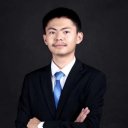
 Xiao Wang
· 3 previous affiliations
- TikTokSince 2025
- Researcher · Since 2025
- University of Washington2024–2025
- Postdoc · 2024–2025
- Purdue University West Lafayette2018–2023
- PhD student · 2018–2023
20 other authors named Xiao Wang: Xiao Wang (Anhui University · 304 papers), Xiao Wang (163 papers), Xiao Wang (Beihang University · 140 papers), Xiao Wang (Northwestern University · 111 papers), Xiao Wang (Oak Ridge National Laboratory · 69 papers), and 15 more
Research Overview
Xiao Wang focuses on the development of self-supervised learning frameworks, representation learning, and the application of foundation models to complex biological and physical systems. Their work explores how neural networks can capture intrinsic structural patterns from unlabeled data, moving from early applications in intelligent transportation to fundamental contributions in contrastive learning and, more recently, to large-scale models for genomics and structural biology.
Research Trajectory
The early phase of Wang’s research, beginning around 2018, was centered on applying deep learning to specific domain-driven problems in intelligent transportation. This work focused on capturing the temporal dependencies and memory effects of human drivers, utilizing data-driven approaches to reduce the need for manual feature engineering. This period established an interest in how models can learn from sequential, real-world observations without heavy human interference.
By 2019, Wang’s focus shifted toward the fundamental challenges of semi-supervised and self-supervised learning. This transition was marked by an investigation into how self-supervised representations—learned by predicting transformations applied to data—could enhance performance in settings where labeled data is scarce. This line of inquiry led to the development of the Ensemble AutoEncoding Transformations (EnAET) framework. During this period, Wang explored the role of Automated Discovery of Structural Patterns in Graphs, seeking to move beyond hand-crafted heuristics toward models that autonomously identify non-linear dynamics within complex datasets.
Between 2021 and 2022, Wang’s work matured into a concentrated study of contrastive learning and transformation equivariance. A significant portion of this research addressed the "redundancy trap" in representation learning, where models often fail to distinguish between essential features and noise. Wang introduced methods for adversarial contrast, where negative samples are learned dynamically rather than sampled heuristically. This period also saw an expansion into Adversarial Disentanglement for Robust Multimodal Representation, aiming to separate modality-specific details from shared information in multi-source data environments. This era of work was characterized by a move toward senior-level oversight, directing research into how models can learn representations that are equivariant to generic groups of transformations.
In the most recent phase of their career (2024–2026), Wang has pivoted toward the emerging field of biomedical foundation models. This work applies the principles of self-supervised representation learning to high-dimensional biological data, such as chromosome conformation capture (Hi-C) and cryo-electron microscopy (cryo-EM). These efforts address the challenges of Task-Agnostic Shift Detection via Predictive Uncertainty, ensuring that large-scale models remain robust when applied across different species or experimental conditions. Wang’s recent contributions also include participation in large-scale benchmarking for the trustworthiness of medical vision-language models and the synthesis of the broader biomedical foundation model landscape.
Current Directions
Wang’s current research is increasingly focused on the intersection of generative modeling and structural biology. A primary area of interest is the development of foundation models that can integrate multi-omics data, such as chromatin architecture and epigenomic assays, into a unified representation. This involves addressing the inherent hierarchies of biological networks, often utilizing Graph Representation Learning in Hyperbolic Space to account for the non-Euclidean nature of genomic interactions.
Additionally, Wang is exploring efficient 3D reconstruction techniques in structural biology, specifically utilizing 3D Gaussian Splatting to overcome the computational bottlenecks of traditional Fourier-space or neural radiance field (NeRF) methods. This work aims to provide high-fidelity reconstructions of molecular structures from massive cryo-EM datasets. There is also an emerging focus on the security and integrity of these large-scale models, touching upon Non-Invasive Ownership Verification for Machine Learning Models to protect the significant intellectual and computational investments required to train foundation models.
Representative Work
Capturing Car-Following Behaviors by Deep Learning In this 2018 first-author paper, Wang proposed a neural network-based car-following model that incorporates temporal dependencies by taking multiple previous time intervals as input. This work departed from traditional models that relied solely on instantaneous velocity and position, demonstrating that a data-driven approach could effectively embed the "memory effect" of human drivers.
EnAET: A Self-Trained Framework for Semi-Supervised and Supervised Learning With Ensemble Transformations As the first author of this 2021 journal article, Wang introduced a framework that integrates self-supervised representations into semi-supervised learning. By using an ensemble of AutoEncoding Transformations (AET), the model learns to decode various transformations applied to images, which significantly improves the consistency and confidence of predictions in label-constrained environments.
AdCo: Adversarial Contrast for Efficient Learning of Unsupervised Representations From Self-Trained Negative Adversaries In this second-author contribution to CVPR 2021, Wang helped develop a method to directly learn a set of negative adversaries for contrastive learning. Unlike standard methods that maintain a static queue of negative samples, AdCo updates negative representations through an adversarial process, allowing the model to more closely track changes in the learned representation space over time.
Learning Generalized Transformation Equivariant Representations Via AutoEncoding Transformations Serving as the senior author, Wang oversaw the development of deterministic (AET) and probabilistic (AVT) models designed to learn visual representations from generic groups of transformations. This work expanded the concept of translation equivariance in CNNs to a broader set of visual structures, providing a more generalized approach to capturing intrinsic data geometry.
A generalizable Hi-C foundation model for chromatin architecture, single-cell and multi-omics analysis across species In this 2025 first-author paper, Wang introduced HiCFoundation, a foundation model designed to handle the pairwise nature of Hi-C data. The model addresses the resolution mismatch between 3D genomic data and linear epigenomic assays, enabling integrative analysis across species and providing a unified tool for understanding 3D genome architecture. This work utilizes Dual Frequency Spectral Filters for Heterophilic Graph Learning principles to manage the complex signal-to-noise ratios inherent in chromatin interaction maps.
Biomedical Foundation Model: A Survey As the senior author of this 2025 survey, Wang provided a comprehensive overview of the evolution of foundation models in the biomedical sector. The paper categorizes the transition from task-specific AI to large-scale pre-trained models like LLMs and VLMs, analyzing their capacity to understand complex biological phenomena and their potential for advancing medical research.
Profile updated
Loading new papers…
Other researchers whose papers cluster into the same research directions — a proxy for overlapping technical interests and shared intellectual neighborhoods.
See something wrong? Report a mistake