

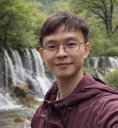
 Xiao Li
· 2 previous affiliations
- Shenzhen Research Institute of Big DataSince 2020
- Associate Professor · Since 2026
- Assistant Professor · 2020–2025
- Current
- PhD student · 2016–2020
12 other authors named Xiao Li: Xiao LI (University of Hong Kong · 398 papers), Xiao Li (China University of Political Science and Law · 64 papers), Xiao Li (60 papers), Xiao Li (Microsoft (United States) · Microsoft Research Asia (China) · 19 papers), Xiao Li (Shanghai Jiao Tong University · 17 papers), and 7 more
Research Overview
Xiao Li focuses on continuous optimization, with a primary emphasis on developing efficient optimization methods for large language models (LLMs). His research spans the theoretical analysis of nonsmooth and nonconvex optimization and the practical design of memory-efficient algorithms for supervised finetuning (SFT), preference optimization, and reasoning models. Currently, his work addresses the challenges of scaling optimization techniques to handle the high-dimensional parameter spaces and massive datasets characteristic of modern transformer-based architectures, particularly in the context of Dynamic Rank Allocation for Parameter Efficient Fine Tuning.
Research Trajectory
The evolution of Li’s research reflects a transition from the foundational mathematics of signal processing and matrix recovery toward the large-scale optimization challenges of modern machine learning.
Foundations in Robust Matrix Recovery and Weak Convexity (2017–2021)
Early in his career, Li’s work was centered on structured sparse sensing and robust matrix recovery. During this period, he investigated how to recover low-rank matrices from corrupted linear measurements, a problem central to signal processing and data science. His approach often involved nonsmooth, nonconvex formulations, utilizing $\ell_1$-loss functions to ensure robustness against outliers. This phase of his work established a rigorous foundation in handling nondifferentiable objectives and nonconvex constraints, particularly through the lens of Riemannian optimization.
By 2019, his focus expanded to broader classes of optimization problems, specifically Sequence Labeling via Semi-Markov Segment Modeling and weakly convex optimization. He contributed to the convergence theory of incremental methods—such as subgradient descent and proximal point algorithms—extending their applicability from traditional convex settings to the more complex nondifferentiable nonconvex regime. This theoretical work was often applied to problems involving the Stiefel manifold, where he developed Riemannian subgradient-type methods with provable iteration complexity.
Stochastic Methods and Decentralized Optimization (2022–2024)
As his research progressed, Li increasingly addressed the "messiness" of real-world machine learning optimization. This period saw a shift toward analyzing stochastic gradient descent (SGD) variants and decentralized algorithms. He explored the probabilistic behaviors of random reshuffling (RR), providing high-probability guarantees that characterize the performance of a single run rather than just expected behavior. This work was significant for its ability to handle heavy-tailed stochastic gradient errors without relying on common simplifications like sub-Gaussian assumptions.
Furthermore, he turned his attention to decentralized and non-descent optimization methods. He participated in the development of finite-time analyses for decentralized actor-critic algorithms in multi-agent reinforcement learning, contributing to the understanding of Formal Task Specification Using Temporal Logic. During this time, he also developed a comprehensive framework for analyzing the convergence of Adam, bridging the gap between the practical success of adaptive methods and their theoretical underpinnings under relaxed conditions.
Optimization for Large Language Models (2024–Present)
Li’s current research is almost exclusively focused on the optimization of LLMs. This work is motivated by the practical memory and computational constraints of training and finetuning models with billions of parameters. He has developed several specialized algorithms, such as BAdam (a block coordinate descent method for full-parameter finetuning) and StreamBP (a memory-efficient exact backpropagation method for long-sequence training). His most recent work explores "self-help" online supervised finetuning (OSFT) for reasoning tasks, aiming to achieve the performance of reinforcement learning through more efficient, reward-free training strategies.
Current Directions
Li’s current research program is organized around three primary pillars:
- Memory-Efficient LLM Finetuning: Developing methods that allow for full-parameter or high-rank finetuning on limited hardware. This includes investigating block coordinate descent and landscape expansion techniques to overcome the limitations of standard backpropagation.
- Reasoning and Preference Optimization: Designing training paradigms that enhance the reasoning capabilities of LLMs. This involves moving beyond static datasets toward online methods where models generate and learn from their own data.
- Theoretical Frameworks for Modern Optimizers: Continuing to refine the mathematical understanding of adaptive and non-descent optimizers (like Adam and FedAvg) to provide guarantees that match their empirical performance in large-scale deep learning.
Representative Work
Nonconvex Robust Low-Rank Matrix Recovery In this work, Li addresses the problem of recovering low-rank matrices from random linear measurements corrupted by arbitrary outliers. He proposes a nonsmooth nonconvex formulation using a factored representation of the matrix variable and an $\ell_1$-loss function. The paper proves that as long as the measurement operators satisfy an $\ell_1/\ell_2$-restricted isometry property, the proposed approach can recover the matrix even when a significant fraction of measurements are corrupted.
Incremental Methods for Weakly Convex Optimization This paper extends the convergence theory of incremental methods to the nondifferentiable nonconvex regime. Li analyzes incremental subgradient descent, the incremental proximal point algorithm, and the incremental prox-linear algorithm under a weakly convex setting. He establishes a convergence rate of $\mathcal{O}(k^{-1/4})$ and demonstrates that these methods achieve local linear convergence when the objective function satisfies a sharpness regularity condition.
Weakly Convex Optimization over Stiefel Manifold Using Riemannian Subgradient-Type Methods Li investigates nonsmooth optimization problems over the Stiefel manifold where the objective is weakly convex in the ambient Euclidean space. He introduces a family of Riemannian subgradient-type methods—including incremental and stochastic variants—and establishes their iteration complexity for reaching stationary points. This work bridges Riemannian geometry with nonsmooth nonconvex optimization theory.
A New Random Reshuffling Method for Nonsmooth Nonconvex Finite-sum Optimization This research introduces norm-PRR, an algorithm designed for complex machine learning optimization problems. By utilizing the "normal map" mathematical tool, Li develops a method that is theoretically faster and more robust than existing techniques for nonsmooth, nonconvex problems. The work emphasizes the practical advantages of random reshuffling over standard sampling in finite-sum optimization.
A KL-based Analysis Framework with Applications to Non-Descent Optimization Methods As the senior author, Li presents a framework for analyzing "non-descent" algorithms like SGD, Federated Averaging (FedAvg), and Decentralized Gradient Descent (DGD). These methods often exhibit noisy behavior where the objective function does not decrease at every step. The framework uses the Kurdyka-Łojasiewicz (KL) property to provide convergence guarantees for these widely used but theoretically challenging algorithms.
Online SFT for LLM Reasoning In this recent work, Li proposes Online Supervised Finetuning (OSFT), a reward-free method for enhancing LLM reasoning. In this paradigm, the model generates its own responses and is immediately finetuned on this self-generated data. The study demonstrates that OSFT can achieve performance on mathematical reasoning tasks comparable to more complex reinforcement learning methods like GRPO, while remaining significantly more computationally efficient.
Profile updated
| Paper | Venue | Year |
|---|---|---|
| Incremental Methods for Weakly Convex OptimizationGitHubxiao-li-hub/ | arXiv | 2019 |
Loading new papers…
Other researchers whose papers cluster into the same research directions — a proxy for overlapping technical interests and shared intellectual neighborhoods.
See something wrong? Report a mistake