

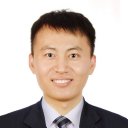
 Xiang Gao
· 2 previous affiliations
- Beihang UniversitySince 2021
- Associate Professor · 2021–2050
- Current
- National University of Singapore2016–2021
- PhD student · 2016–2021
10 other authors named Xiang Gao: Xiang Gao (34 papers), Xiang Gao (Intuit (United States) · 18 papers), Xiang Gao (New York University · 6 papers), Xiang Gao (5 papers), Xiang Gao (Stony Brook University · Futurewei Technologies (United States) · 4 papers), and 5 more
Research Overview
Xiang Gao focuses on automated program repair, software security, and the intersection of formal methods with machine learning. His early work established robust techniques for protecting on-device neural networks from extraction and adversarial attacks. More recently, his research investigates the integration of large language models into software engineering, emphasizing rigorous verification and automated test generation to improve code reliability.
Research Trajectory
Gao’s early trajectory includes foundational work on the structural manipulation of neural networks, demonstrated by Patching Weak Convolutional Neural Network Models through Modularization and Composition (2022) and its subsequent journal extension, Reusing Convolutional Neural Network Models through Modularization and Composition (2024). This research explored how complex models could be decomposed and recombined to address localized weaknesses without requiring complete retraining.
This interest in model structure naturally extended into the research direction of Securing Model Intellectual Property in Edge Deployment. As deep learning models increasingly moved to mobile and edge devices, they became vulnerable to extraction and white-box attacks because mobile frameworks often expose model parameters. Gao and collaborators investigated these vulnerabilities in Investigating White-Box Attacks for On-Device Models (2024). To defend against such threats, they developed ModelObfuscator: Obfuscating Model Information to Protect Deployed ML-Based Systems (2023) and the related Model Obfuscation for Securing Deployed Neural Networks (2023). These systems applied structural obfuscation to models and their associated libraries, raising the difficulty of reverse engineering while preserving inference performance. The team further advanced dynamic defense strategies with DynaMO: Protecting Mobile DL Models through Coupling Obfuscated DL Operators (2024), which coupled obfuscated operators with linear transformations to thwart dynamic instrumentation. Pushing this concept to its logical extreme, Gao contributed to Model-less Is The Best Model: Generating Pure Code Implementations to Replace On-device DL Models (2024), a novel approach that entirely eliminated explicit model representations by converting on-device models into pure C++ code, thereby neutralizing standard extraction techniques.
By 2024, Gao’s focus expanded to include the broader area of Language Agnostic Representations for Cross Language Portability, leveraging his background in software engineering to improve how Large Language Models (LLMs) interact with code. A major theme in this period was automated test generation. With collaborators, he introduced LLM-based Unit Test Generation via Property Retrieval (2024), which enhanced retrieval-augmented generation by aligning structural and behavioral code properties with formal test structures. This was followed by LLM-based Unit Test Generation for Dynamically-Typed Programs (2025), which tackled the specific challenges of Python codebases lacking type hints by teaching LLMs to infer types through project-wide call graphs. During this time, he also participated in research applying LLMs to mobile task automation, contributing to UICOMPASS: UI Map Guided Mobile Task Automation via Adaptive Action Generation (2025), which utilized static analysis to build structured UI maps that guide LLM-driven interactions.
Moving into 2025 and 2026, Gao's research increasingly addressed the reliability of autonomous coding systems and the optimization of large models. He led the development of CABS: Conflict-Aware and Balanced Sparsification for Enhancing Model Merging (2025), a framework that uses sequential masking and block pruning to prevent parameter interference when combining multiple fine-tuned models. In the domain of software repair, he contributed to InfCode: Adversarial Iterative Refinement of Tests and Patches for Reliable Software Issue Resolution (2025). This work intersects with areas such as Autonomous Environment Orchestration for LLM Agents and Overfitting in Automated Program Repair by forcing test-generation and code-generation agents to co-evolve adversarially, significantly improving patch correctness on complex repository-level benchmarks.
Most recently, Gao has focused on the rigorous evaluation and self-correction capabilities of code-generating models. In the area of Rigorous Verification for LLM Code Generation, he co-authored Code2Bench: Scaling Source and Rigor for Dynamic Benchmark Construction (2026), which dynamically sources fresh GitHub code and applies property-based testing to prevent models from relying on memorized benchmark solutions. Addressing the research direction of The Solver Verifier Gap for LLM Self Improvement, he contributed to PGS: Effective LLM Code Refinement via Property-Oriented and Structurally Minimal Feedback (2026). This framework shifts LLM debugging away from mass test-case generation toward providing high-level, property-oriented counterexamples, markedly improving the models' ability to refine their own code. Concurrently, Gao maintains a broad perspective on the evolution of software platforms, evidenced by his contribution to Software Engineering for OpenHarmony: A Research Roadmap (2026), which outlines future research opportunities for emerging mobile ecosystems.
Current Directions
Gao’s most recent work investigates the critical gap between the code-generation capabilities of large language models and their ability to verify and correct that code. A primary focus is the development of dynamic, rigorous evaluation frameworks that move beyond static, easily memorized benchmarks by employing property-based testing on real-world, continuously updated codebases. Furthermore, he is actively exploring multi-agent adversarial frameworks and property-oriented feedback mechanisms. By forcing models to iteratively refine patches against structurally minimal counterexamples, his current research aims to build highly reliable, autonomous software engineering tools that resist overfitting and can resolve complex, repository-level issues.
Profile updated
| Paper | Venue | Year |
|---|---|---|
| Model-less Is The Best Model: Generating Pure Code Implementations to Replace On-device DL ModelsGitHubzhoumingyi/ | In Proceedings of the 33nd ACM Sigsoft International Symposium on Software Testing and Analysis (issta'24) | 2024 |
Loading new papers…
Other researchers whose papers cluster into the same research directions — a proxy for overlapping technical interests and shared intellectual neighborhoods.
See something wrong? Report a mistake