

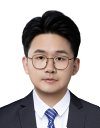
 Xiang Chen
· 2 previous affiliations
- Full Professor · Since 2024
- Zhejiang University2020–2024
- PhD student · 2020–2024
10 other authors named Xiang Chen: Xiang Chen (Nanjing University of Science and Technology · 75 papers), Xiang Chen (Hunan University · 74 papers), Xiang Chen (Adobe Systems (United States) · 58 papers), Xiang Chen (Peking University · 47 papers), Xiang Chen (Zhongguancun Academy · 8 papers), and 5 more
Research Overview
Xiang Chen focuses on natural language processing, knowledge graph construction, and the trustworthy reasoning of large foundation models. His early work addressed relation extraction and specialized language understanding through prompt tuning and retrieval augmentation. Currently, his research emphasizes mitigating hallucinations in multimodal models, evaluating agentic workflows, and developing robust frameworks for continual and compositional learning.
Research Trajectory
In 2021, Chen's research primarily addressed the structural challenges of information extraction. He introduced DocuNet in Document-level Relation Extraction as Semantic Segmentation, which reformulated the extraction task as an image segmentation problem. By applying a U-shaped network to a grid of potential entity pairs, the model captured global interdependencies between multiple relations, advancing methods for modeling global interdependencies in relation extraction.
By 2022, his focus expanded to prompt tuning and retrieval-augmented methods to improve how language models handle rare or complex patterns. He developed approaches to treat relation extraction as an open-book exam in Relation Extraction as Open-book Examination: Retrieval-enhanced Prompt Tuning, allowing models to reference external knowledge rather than relying solely on parametric memorization. He also integrated label semantics into the tuning process with KnowPrompt: Knowledge-aware Prompt-tuning with Synergistic Optimization for Relation Extraction, which reduced the need for manual template engineering. To further address the tension between generalization and rote memorization, he introduced the RetroPrompt framework in Decoupling Knowledge from Memorization: Retrieval-augmented Prompt Learning. This work helped models balance learning from atypical instances and shallow patterns, contributing to the area of Token Level Probability Interpolation with k Nearest Neighbors.
Alongside these methodological advances, Chen contributed to foundational resources and toolkits for specialized domains. He participated in developing DeepKE: A Deep Learning Based Knowledge Extraction Toolkit for Knowledge Base Population, an extensible framework designed to handle low-resource and multimodal data, supporting broader efforts in learning from limited labels in specialized domains. He also helped create CBLUE: A Chinese Biomedical Language Understanding Evaluation Benchmark, a comprehensive suite of tasks that highlighted the linguistic complexities of medical texts and contributed to the research direction of Recognizing Nested and Overlapping Named Entities.
In 2023 and 2024, his work addressed cross-domain adaptation and the architectural limitations of sequence labeling. He proposed Collaborative Domain-Prefix Tuning in One Model for All Domains: Collaborative Domain-Prefix Tuning for Cross-Domain NER to transfer knowledge across multiple source domains without requiring entirely separate models for each target. He also reformulated sequence labeling to avoid error propagation in Sequence Labeling as Non-Autoregressive Dual-Query Set Generation, enabling models to locate and assign spans in parallel.
Concurrently, his research began addressing the reliability and continuous learning capabilities of multimodal systems and large language models (LLMs). He contributed to gradient modulation for balanced multimodal learning by developing a framework for Continual Multimodal Knowledge Graph Construction that mitigates catastrophic forgetting when processing streaming multimedia data. To tackle the critical issue of model reliability, he worked on hallucination detection, participating in the creation of FactCHD: Benchmarking Fact-Conflicting Hallucination Detection. This benchmark evaluates complex reasoning patterns like multi-hop queries, advancing explainable fact verification via claim decomposition. He further expanded this to multimodal contexts with MHaluBench in Unified Hallucination Detection for Multimodal Large Language Models. Exploring the planning capabilities of autonomous agents, he also introduced WORFBENCH in Benchmarking Agentic Workflow Generation to evaluate how well LLMs generate complex, graph-based workflows, contributing to directed acyclic graph planning for autonomous agents.
Current Directions
The most recent papers in the evidence address the refinement, editing, and reasoning capabilities of multimodal foundation models. Recent work investigates how to dynamically update model knowledge, as seen in the introduction of MultiMedEdit: A Scenario-Aware Benchmark for Evaluating Knowledge Editing in Medical VQA, which evaluates the trade-offs between stable and precise parameter updates in healthcare applications. Another active focus is improving reasoning through curriculum learning; in Tailored Teaching with Balanced Difficulty: Elevating Reasoning in Multimodal Chain-of-Thought via Prompt Curriculum, multimodal chain-of-thought processes are guided by task complexity and model uncertainty to reduce instability.
Additionally, recent research explores the area of Modeling Context-Dependent Visual Attributes. In Graph-guided Cross-composition Feature Disentanglement for Compositional Zero-shot Learning, visual primitives are explicitly disentangled to help models generalize to unseen combinations of attributes and objects. Finally, Chen continues to refine retrieval-augmented architectures, extending earlier prompt-learning frameworks to broader foundation models in Retrieval-augmented Prompt Learning for Pre-trained Foundation Models to improve few-shot and zero-shot generalization across both vision and language tasks.
Profile updated
Loading new papers…
Other researchers whose papers cluster into the same research directions — a proxy for overlapping technical interests and shared intellectual neighborhoods.
See something wrong? Report a mistake