

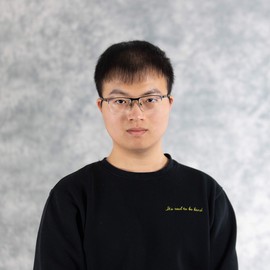
 Xianfeng Tang
· 6 previous affiliations
- Microsoft (United States)Since 2025
- Principal Applied Scientist · Since 2025
- Amazon (United States)2021–2025
- Researcher · 2021–2025
- Snap Inc.2020
- Research Intern · 2020
- Pennsylvania State University2016–2020
- Research Assistant · 2016–2020
- Teaching Assistant · 2017–2019
- Research Intern · 2020
- Bachelor of Engineering (BEng), Computer Science and Technology · 2012–2016
Research Overview
Xianfeng Tang focuses on machine learning, graph-structured data mining, and the development of foundation models for search and reasoning tasks. His early research addressed spatial-temporal prediction and the robustness of graph neural networks. More recently, his work investigates large language model reasoning, multimodal personalization, and the security of machine unlearning.
Research Trajectory
Tang’s early research addressed urban computing and spatial-temporal data analysis. He contributed to Deep Multi-View Spatial-Temporal Network for Taxi Demand Prediction, which sought to improve resource allocation in smart cities by forecasting ride-hailing needs. Building on this domain, he introduced a framework for citywide traffic volume inference in Joint Modeling of Dense and Incomplete Trajectories for Citywide Traffic Volume Inference, overcoming the limitations of relying solely on dense GPS tracking by accounting for vehicles with incomplete or missing trajectory data.
Around 2020, his focus expanded to the properties and applications of graph neural networks (GNNs). He investigated structural limitations in Investigating and Mitigating Degree-Related Biases in Graph Convoltuional Networks, demonstrating theoretically and empirically that GCNs are biased toward high-degree nodes and proposing methods to mitigate this performance gap for low-degree nodes. He subsequently explored generative graph models, presenting Semi-Supervised Graph-to-Graph Translation to address the scarcity of high-quality paired graph datasets by encoding intrinsic semantic changes across different relational scenarios. Continuing in the graph domain, he participated in research on dataset distillation for discrete structures, as seen in Condensing Graphs via One-Step Gradient Matching, which aimed to synthesize small, efficient training datasets for deep learning models.
By 2024, Tang’s work shifted toward foundation models, particularly in the context of search, recommendation, and generative retrieval. He guided the development of Language Models as Semantic Indexers, a self-supervised framework that trains generative models to assign hierarchical semantic IDs directly to documents, replacing traditional two-step embed-and-cluster pipelines to improve downstream retrieval. In the e-commerce domain, he contributed to SESSION-AWARE PRODUCT FILTER RANKING IN E- COMMERCE SEARCH, which leverages a user's browsing history to dynamically recommend search filters. He also oversaw Towards Unified Multi-Modal Personalization: Large Vision-Language Models for Generative Recommendation and Beyond, framing diverse personalization tasks as an instruction-tuned vision-language problem to improve generalization across users and domains.
In 2025, Tang made significant contributions to the security and reliability of generative models, particularly in the research area of Overcoming Hyperparameter Sensitivity in Machine Unlearning. He co-authored Keeping an Eye on LLM Unlearning: The Hidden Risk and Remedy, which identified a vulnerability where unlearning signals could be maliciously associated with common words, and proposed a scope-aware loss function to localize forgetting. Further investigating the area of Fragility of Machine Unlearning Under Model Quantization, he collaborated on Catastrophic Failure of LLM Unlearning via Quantization, revealing that standard 4-bit quantization can inadvertently recover up to 83% of supposedly erased knowledge. In parallel work on model security, he led the development of DiffKGW: Stealthy and Robust Diffusion Model Watermarking, adapting large language model watermarking techniques to image generation without disrupting the initial latent distributions.
Tang’s most recent trajectory heavily emphasizes the reasoning capabilities of large language and multimodal models. To advance the area of Process Based Evaluation of Large Language Model Reasoning and the related direction of Intermediate Step Supervision for Verifiable Reasoning, he participated in creating ViLBench: A Suite for Vision-Language Process Reward Modeling, a benchmark and reward model designed for step-wise reasoning verification in vision-language tasks. He also explored the theoretical underpinnings of reasoning in A Theoretical Understanding of Chain-of-Thought: Coherent Reasoning and Error-Aware Demonstration, analyzing how coherent reasoning steps improve a transformer's error correction. Addressing efficiency and the broader area of Distilling Reasoning Trajectories into Small Language Models, he co-authored Efficient Long CoT Reasoning in Small Language Models. This work tackles the research direction of Negative Scaling and Overthinking in Large Reasoning Models by pruning redundant steps from complex reasoning traces before distilling them into smaller models. He also contributed to AgentTTS: Large Language Model Agent for Test-time Compute-optimal Scaling Strategy in Complex Tasks, a framework that dynamically allocates inference compute across multi-stage workflows.
Extending reasoning to applied multimodal domains, he contributed to Synthesizing High-Quality Visual Question Answering from Medical Documents with Generator-Verifier LMMs, utilizing generator-verifier architectures to synthesize exam-grade medical datasets. Finally, in From Seeing to Thinking: Decoupling Perception and Reasoning Improves Post-Training of Vision-Language Models, he and his collaborators demonstrated that staged post-training—separating visual perception improvements from textual and visual reasoning—yields more robust vision-language models with shorter reasoning traces.
Current Directions
The most recent papers in the evidence indicate a strong focus on the reasoning capabilities and security of foundation models. A primary direction involves improving Chain-of-Thought (CoT) reasoning, both by theoretically analyzing how coherent steps aid error correction and by distilling long reasoning traces into smaller, more efficient language models. This extends into the multimodal domain, where recent work investigates decoupling visual perception from reasoning during post-training and developing process-supervised reward models to verify step-wise logic in vision-language tasks.
Additionally, current research addresses the safety and deployment of these models, exploring the vulnerabilities of machine unlearning—particularly how quantization can recover erased data—and developing robust watermarking techniques for diffusion models. Finally, there is an ongoing interest in optimizing test-time compute, using agentic frameworks to dynamically scale inference resources across complex tasks to maximize both speed and accuracy.
Profile updated
Loading new papers…
Other researchers whose papers cluster into the same research directions — a proxy for overlapping technical interests and shared intellectual neighborhoods.
See something wrong? Report a mistake