

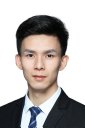
 Xianda Guo
· 4 previous affiliations
- Wuhan UniversitySince 2024
- PhD student · 2024–2028
- Current
- Phigent2021–2024
- Researcher · 2021–2024
- Xiaomi (China)2019–2021
- Researcher · 2019–2021
- Dalian University of Technology2016–2019
- MS student · 2016–2019
Research Overview
Xianda Guo focuses on computer vision and autonomous driving, with particular emphasis on stereo matching, depth estimation, and multimodal large language models. His trajectory spans foundational benchmarks for 3D perception to end-to-end generative driving frameworks. Currently, he investigates spatial reasoning in vision-language models and high-fidelity scene reconstruction for autonomous systems.
Research Trajectory
Beginning in 2023, his research addressed foundational challenges in 3D perception, specifically focusing on depth estimation and stereo matching. He developed OpenStereo, a comprehensive benchmark and flexible codebase that standardized the evaluation of various stereo matching network architectures for practical applications. Concurrently, he contributed to the area of Hybrid CNN-Transformer Architectures for Global-Local Vision through CompletionFormer. This depth completion framework coupled convolutional attention with vision transformers to model long-range pixel relationships while preserving essential local feature details.
Moving into 2024, his focus on depth and stereo estimation expanded to address generalization and computational efficiency. He introduced Stereo Anything, a data-centric framework that unified diverse labeled datasets with synthetic monocular pairs to improve zero-shot generalization in stereo matching models. To accelerate these matching processes, he developed LightStereo, which optimized the channel dimension of 3D cost volumes to bypass computationally heavy 4D cost aggregation, enabling more efficient real-time applications. In parallel, his research in the areas of Dense Depth Estimation from Sparse Geometric Supervision and Generative Diffusion in Compressed Latent Spaces led to DiffusionDepth. This approach reformulated monocular depth estimation as an iterative denoising diffusion process operating within a compressed latent space, guided by monocular visual conditions.
During this period, his work increasingly intersected with autonomous driving and multimodal intelligence. He participated in the development of GenAD, exploring a generative paradigm for end-to-end autonomous driving that predicts the structural evolution of traffic rather than relying on traditional progressive perception-to-planning pipelines. He also introduced MaskFuser, an end-to-end framework utilizing masked auto-encoder pre-training to fuse image and LiDAR data into a unified token representation, enhancing driving stability under sensor occlusion. Recognizing the need for advanced spatial reasoning in these systems, he created DriveMLLM, a benchmark evaluating multimodal large language models on absolute and relative spatial tasks in driving environments. This work engaged directly with the broader research direction of Reinforcement Learning for Reasoning in Large Language Models.
In 2025, his research in autonomous driving matured to incorporate high-fidelity scene reconstruction and distilled cognitive strategies. He proposed DriveSplat, a framework utilizing partitioned neural Gaussians to decouple static backgrounds from dynamic actors, significantly improving novel-view synthesis and geometric accuracy for driving scenes. To bridge explicit perception and implicit reasoning, he developed InsightDrive, a lightweight system that distills human-like cognitive strategies from large language models into a compact onboard adapter for real-time trajectory planning. Continuing his evaluation of vision-language models, he introduced SURDS, a benchmark for spatial understanding in driving scenarios that utilized alignment methods related to the area of Group Relative Policy Optimization for Large Reasoning Models to improve model performance.
Alongside his primary focus on driving and 3D perception, he has also contributed to biometrics and photometric analysis. In 2025, he addressed gait recognition through Gait Recognition in the Wild, which introduced a large-scale unconstrained dataset and a neural architecture search-based baseline. He further explored cross-domain generalization in this domain with Exploring Generalized Gait Recognition, a framework designed to reduce data redundancy and disentangle metric learning across multiple datasets to prevent supervision conflicts. Most recently, his collaborative work in 2026 includes Light of Normals, a universal photometric stereo framework that explicitly decouples lighting information from surface geometry to recover high-frequency surface details.
Current Directions
The most recent papers in the evidence indicate a dual focus on advanced spatial reasoning for autonomous systems and high-fidelity 3D scene reconstruction. Recent work investigates how vision-language models can be aligned to better understand complex spatial relationships in driving environments, utilizing reinforcement learning techniques to bridge the gap between human cognitive strategies and onboard planning models. Concurrently, ongoing research addresses the geometric accuracy of scene representations, employing techniques like neural Gaussian splatting to decouple dynamic and static elements in traffic scenarios, as well as advancing universal photometric stereo to recover intricate surface details under unconstrained lighting conditions.
Profile updated
Loading new papers…
Other researchers whose papers cluster into the same research directions — a proxy for overlapping technical interests and shared intellectual neighborhoods.
See something wrong? Report a mistake