

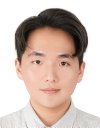
 Woo Kyoung Han
· 3 previous affiliations
- Korea UniversitySince 2024
- PhD student · Since 2024
- MS student · 2022–2024
- Soongsil University2016–2022
- Undergrad student · 2016–2022
Research Overview
Woo Kyoung Han focuses on image restoration, implicit neural representations, and generative modeling. His early work addresses quantization artifacts and image stitching by developing continuous formulations for decoding and spatial alignment. More recently, his research investigates the internal mechanics of diffusion models, specifically leveraging attention decomposition to improve image fidelity and semantic coherence.
Research Trajectory
Han’s early work targets the fundamental challenges of image quantization and bit-depth expansion. In modern display technologies, compression codecs often force images into low bit-depth formats, resulting in visual artifacts such as banding and blurring. To address this, he introduced a novel approach in ABCD : Arbitrary Bitwise Coefficient for De-Quantization. This work utilizes an implicit neural function equipped with a bit query mechanism to recover high bit-depth images from arbitrarily quantized inputs. By developing a phasor estimator that exploits information from neighboring pixels, this method effectively mitigates banding artifacts, demonstrating strong performance on both natural images and user-generated content datasets.
Building on the use of implicit neural functions for image restoration, Han extended these concepts to JPEG compression artifacts. In JDEC: JPEG Decoding via Enhanced Continuous Cosine Coefficients, he proposed a practical decoding framework that leverages a local implicit neural representation combined with a continuous cosine formulation. Because standard JPEG algorithms heavily quantize discrete cosine transform (DCT) spectra, significant quality degradation occurs during encoding. Han designed a continuous cosine spectrum estimator to restore these distorted spectra. By utilizing local DCT formulations, the network simultaneously handles dequantization and upsampling, allowing compressed images to be decoded directly across varying quality factors. This research contributes to the broader area of Continuous Image Representation via Implicit Neural Fields and intersects with the research direction of Efficient Temporal Alignment for High Fidelity Video Restoration.
Alongside his work on image restoration and decoding, Han has collaborated on complex spatial alignment problems. In Learning Residual Elastic Warps for Image Stitching under Dirichlet Boundary Condition, he participated in developing solutions for aligning images that suffer from large parallax errors. While learning-based elastic warps have improved deep image stitching, they often struggle with discontinuities or holes between overlapping and non-overlapping regions, typically requiring secondary modules like seam finders or inpainting networks to hide the artifacts. This work introduces Recurrent Elastic Warps (REwarp), which applies a Dirichlet boundary condition and residual learning to naturally resolve these boundary discontinuities. This contribution advances the research direction of Resolving Parallax Induced Misalignment in Multi View Alignment.
Most recently, Han’s research has shifted toward the internal mechanics of generative models, specifically diffusion models. In Balancing Fidelity and Diversity in Diffusion Models via Symmetric Attention Decomposition: Hopfield Perspective, he and his collaborators investigated the role of the attention matrix in resolving incoherent generated images. They demonstrated that the asymmetry within a diffusion model's attention matrix is critical for image coherence. By decomposing the attention mechanism into a "stability" component (representing the energy landscape) and a "movement" component (representing circulation), the team developed a training-free "circulation knob." This mechanism helps models escape poor local minima during generation, thereby improving overall image fidelity and resolving issues with semantic blending.
Current Directions
The most recent papers in the evidence indicate a strong focus on the interpretability and control of generative diffusion models. Han’s current work investigates how the internal representations of these models—particularly their attention matrices—can be mathematically decomposed to yield practical, training-free interventions. By analyzing diffusion processes through frameworks like the Hopfield perspective, this research aims to balance fidelity and diversity. The overarching goal of this direction is to provide new mechanisms that steer generative models away from semantic blending errors and poor local minima, improving output coherence without the computational overhead of retraining the underlying models.
Profile updated
| Paper | Venue | Year |
|---|---|---|
| JDEC: JPEG Decoding via Enhanced Continuous Cosine CoefficientsGitHubWooKyoungHan/ | CVPR | 2024 |
Loading new papers…
Other researchers whose papers cluster into the same research directions — a proxy for overlapping technical interests and shared intellectual neighborhoods.
See something wrong? Report a mistake