

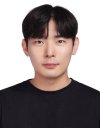
 Wonyong Jeong
· 6 previous affiliations
- FramizeSince 2026
- Chief Executive Officer · Since 2026
- Ph.D. student · Since 2020
- Research Intern · 2019–2020
- PhD, Artificial Intelligence
- Deepauto.ai2023–2026
- Chief Technology Officer · 2023–2026
- AITRICS2020–2022
- Lead, ML Platform · 2022
- Research Intern · 2020–2022
- Brookhaven National Laboratory2018–2019
- Scientific Associate · 2019
- Research Intern · 2018–2019
- BS, Computer Science, Applied Mathematics & Statitics
Research Overview
Wonyong Jeong focuses on federated learning, neural network architecture search, and the efficient deployment of large language models. His early work addressed the challenges of data heterogeneity and parameter interference in distributed learning environments. More recently, his research has shifted toward automated machine learning pipelines, weight generation techniques, and optimizing transformer architectures for long-context inference and agentic workflows.
Research Trajectory
Jeong’s early research focused heavily on the complexities of distributed and federated learning, particularly addressing how to manage heterogeneous data across multiple clients without compromising model performance. In 2020, collaborative work introduced Federated Continual Learning with Weighted Inter-client Transfer, a paradigm designed for scenarios where multiple clients learn sequentially on private data streams. The proposed framework balanced knowledge transfer among clients while preventing interference from irrelevant tasks, reducing communication costs compared to prior methods.
Expanding on the challenge of adapting models to specific tasks, he proposed a novel approach to neural network search in Task-Adaptive Neural Network Search with Meta-Contrastive Learning. Rather than merely generating architectures, this work focused on finding optimal pretrained networks from a model zoo for novel datasets under specific constraints, addressing the suboptimality that occurs when target tasks differ significantly from a supernet's original training data. Concurrently, he investigated practical federated learning scenarios where client-side data lacks annotations. In Federated Semi-Supervised Learning with Inter-Client Consistency & Disjoint Learning, he addressed the deficiency of labels in distributed environments, contributing to the broader area of Sparse Parameter Updates for Instance-Adaptive Neural Networks.
A major theme in Jeong’s federated learning research has been managing extreme heterogeneity, such as mismatched label spaces or entirely different domains across clients. To tackle this, he developed factorization-based methods, detailed in Factorized-FL: Personalized Federated Learning with Parameter Factorization & Similarity Matching and Agnostic Personalized Federated Learning with Kernel Factorization. By factorizing model parameters and selectively aggregating knowledge based on task similarity, these approaches advanced the research direction of Overcoming Parameter Interference in Model Merging. He further extended personalized federated learning to graph-structured data in Personalized Subgraph Federated Learning. This framework utilized random graphs to probe model similarity and applied personalized sparse masks to update only the most relevant parameters for each client's subgraph, effectively preventing the "knowledge collapse" that often occurs when averaging models across distinct graph communities.
In recent years, Jeong’s focus has expanded to include automated machine learning (AutoML), generative approaches to network weights, and the optimization of large language models (LLMs). In Diffusion-based Neural Network Weights Generation, he introduced a framework utilizing latent diffusion models to generate high-performing neural network weights tailored to specific datasets. By learning the distribution of weights directly from a model zoo, the approach produces optimized parameters for architectures ranging from simple classifiers to complex language models.
His work on LLMs encompasses both their application in automated pipelines and the optimization of their underlying architectures. Collaborative research presented AutoML-Agent: A Multi-Agent LLM Framework for Full-Pipeline AutoML, which automates the entire machine learning pipeline—from data retrieval to deployment—using natural language prompts, retrieval-augmented planning, and a training-free search strategy. On the architectural front, he participated in research addressing the computational bottlenecks of long-context transformers. The resulting paper, A Training-Free Sub-quadratic Cost Transformer Model Serving Framework with Hierarchically Pruned Attention, exploited attention locality to reduce computational costs to sub-quadratic levels, contributing to areas such as Overcoming the Quadratic Bottleneck in Self Attention, Scaling Transformers via Information Preserving Sparse Attention, and Hierarchical Memory for Long Context Transformer Inference.
Most recently, Jeong has investigated the evaluation of complex, multi-agent systems. In Multi-View Encoders for Performance Prediction in LLM-Based Agentic Workflows, recent collaborative work developed a lightweight model designed to estimate a workflow's success rate prior to execution. By simultaneously analyzing code, prompts, and agent connections through a multi-view approach, the method provides a surrogate for performance that avoids the slow trial-and-error traditionally required to design agentic workflows.
Current Directions
The most recent papers in the evidence indicate a strong focus on the intersection of large language models, automated machine learning, and efficient inference. Current work investigates the design and evaluation of LLM-based agentic workflows, seeking methods to predict workflow performance and automate complex ML pipelines without relying on expensive trial-and-error execution. Additionally, Jeong continues to explore training-free optimization strategies for transformer architectures, focusing on hierarchical pruning and sparse attention mechanisms to enable efficient, long-context processing on standard hardware.
Profile updated
Loading new papers…
Other researchers whose papers cluster into the same research directions — a proxy for overlapping technical interests and shared intellectual neighborhoods.
See something wrong? Report a mistake